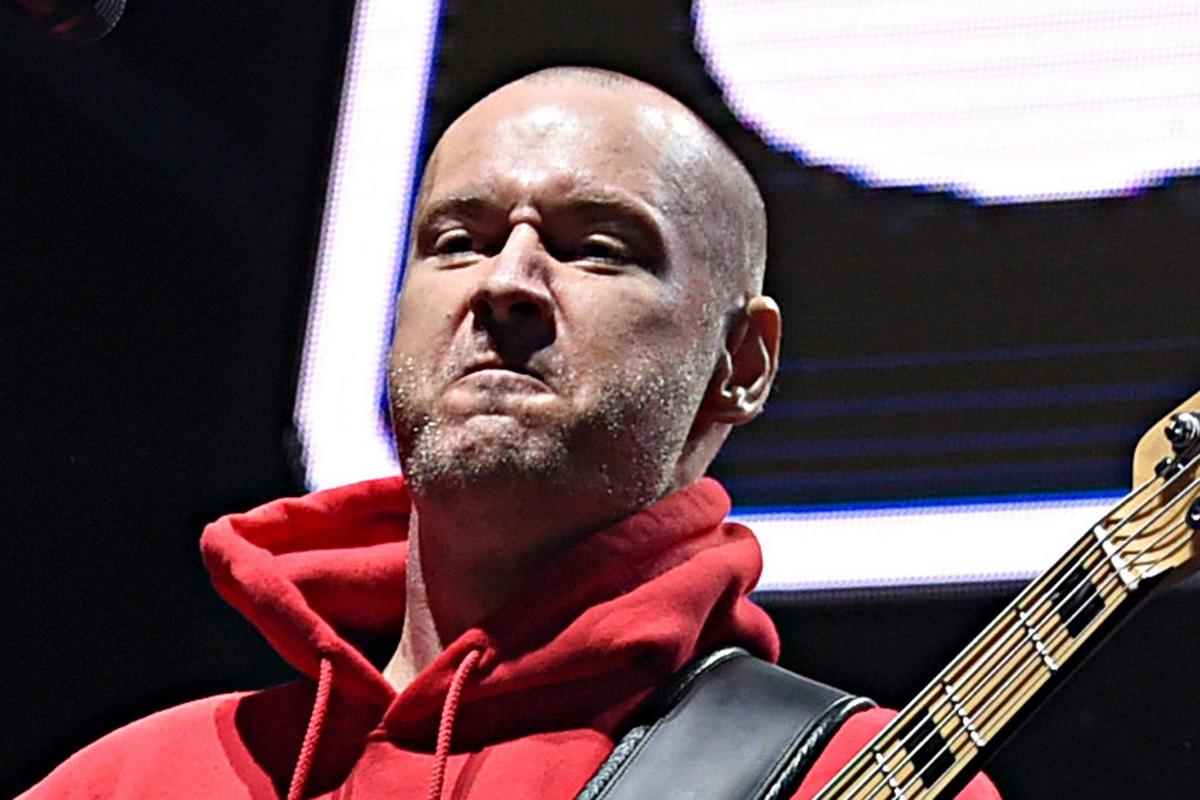
He was the guy in the back with the glowing LED fret markers. While Fred Durst was jumping into the crowd and Wes Borland was painting his entire body black, Sam Rivers was the actual engine. Honestly, if you strip away the red caps and the face paint, Limp Bizkit’s music is basically just a conversation between Sam’s bass and John Otto’s drums.
It’s heavy. It’s funky. It’s arguably the most important rhythmic foundation of the nu-metal era.
Sadly, the music world lost Sam Rivers on October 18, 2025, at the age of 48. Since then, fans have been looking back at his career with a mix of nostalgia and a realization of just how much he held that band together. People forget he was only 19 when Three Dollar Bill, Y'all dropped. He was a kid from Jacksonville who started on the tuba. Yeah, the tuba.
The Jacksonville Garage That Changed Everything
Limp Bizkit didn’t start in a boardroom. It started because Fred Durst saw Sam playing in a local bar called Pier 7 and was completely floored. Sam was playing a five-string bass—which wasn't exactly common in the local scene back then—and he had this "smooth" gift that made everything else disappear.
Fred basically begged him to join.
Sam said, "Killer. I'm in." That was it. No contracts, just a vibe. He brought in his cousin, John Otto, to play drums. They started jamming in a garage, mixing grunge influences like Pearl Jam and Alice in Chains with the heavy grooves Fred wanted.
Why the "Family" Rhythm Section Worked
Most bands have a drummer and a bassist. Limp Bizkit had a unit. Because Sam and John were family (first cousins), their timing was almost telepathic. You can hear it on tracks like "Rearranged" or "My Way."
- Sam would lay down a melodic, almost jazzy line.
- John would syncopate the kick drum to match Sam's ghost notes.
- The result was a "bounce" that other nu-metal bands couldn't replicate.
They weren't just playing loud; they were playing tight.
The Custom Gear and That Signature Tone
If you ever saw Sam live, you noticed the bass. For years, he was the face of Warwick Streamer Stage I custom 5-strings. He loved those German-made instruments because they had a "growl" that could cut through Wes Borland’s wall of experimental guitar noise.
He was picky about his tone, too.
He used Ibanez monorail bridges on his custom Warwicks because he liked the feel from his early days playing Ibanez. Later in his career, especially around 2019, he started leaning into Fender Jazz V basses and Aguilar amplification. He wasn't afraid to change. He moved from a very "dry" signal in the 90s to a more grit-filled, overdriven tone using pedals like the Black Cat and the Prescription Electronics Depth Charge.
Fun fact: Sam actually played guitar on the Results May Vary album while Wes Borland was away. He was way more than "just the bass player."
The Health Battle No One Saw Coming
For a long time, Sam was the "quiet one." He stayed out of the tabloids. But in 2015, he disappeared from the touring lineup. Rumors flew. Some said it was degenerative disc disease (which he did struggle with), but the truth was much heavier.
He was dying of liver disease.
Years of the "rockstar lifestyle" had caught up to him. He eventually admitted that his drinking had reached a point where his organs were failing. He needed a liver transplant.
The 2017 Turning Point
He got the transplant. It was a perfect match. For a few years, it looked like he’d beaten the odds. He returned to the stage in 2018, looking healthier and playing with more energy than he had in a decade. He was open about his sobriety, telling Variety that he had to change everything or he wouldn't see his 40s.
He made it to 48. While the band didn't specify the exact cause of his death in October 2025, the toll that those years took on his body was no secret. He lived a second life for eight years, and he spent every second of it making music.
Beyond the Bizkit: The Producer Side
Sam didn't just play in one of the biggest bands in the world; he was a mentor. Back in Jacksonville, he was the guy you went to if you wanted to get your record right. He produced local acts like Burn Season and The Embraced.
He also had side projects that showed off his range:
- Sleepkillers: A hard rock project with Damien Starkey and Bobby Amaru.
- Black Light Burns: He contributed to Wes Borland's solo work.
- Soundtracks: He worked with David Draiman and Marilyn Manson on the Queen of the Damned music.
He was a "musician's musician." He cared about the frequency, the pocket, and the "soul in the sound," as the band put it in their tribute.
What Sam Rivers Left Behind
As we look at the landscape of heavy music in 2026, Sam’s influence is everywhere. You see it in the way modern "trap-metal" artists use syncopated bass lines. You see it in the resurgence of the 5-string bass in alternative rock.
He proved that you could be in a "rap-rock" band and still be a technical monster. He didn't just play root notes. He slapped, he popped, he used chords, and he used silence.
Most importantly, he was the "calm in the chaos." Limp Bizkit was a circus, and Sam was the guy making sure the tent didn't blow away.
Key Lessons from Sam’s Career:
- Master the Foundation: You can't have a "monster riff" without a pocket to sit in.
- Resilience is Everything: Coming back from a transplant to tour the world again is legendary.
- Keep it Local: Even at the height of fame, he never truly left the Jacksonville scene.
Next Steps for Fans and Bassists:
If you want to truly understand Sam's contribution, go back and listen to the isolated bass tracks for Significant Other. Pay attention to how he uses the low B string to create tension before a chorus. You can also check out the 2019 Sleepkillers debut album to hear how he approached song construction when he wasn't in a "nu-metal" box. His work is a masterclass in playing for the song while still showing off enough "flavor" to be unmistakable.