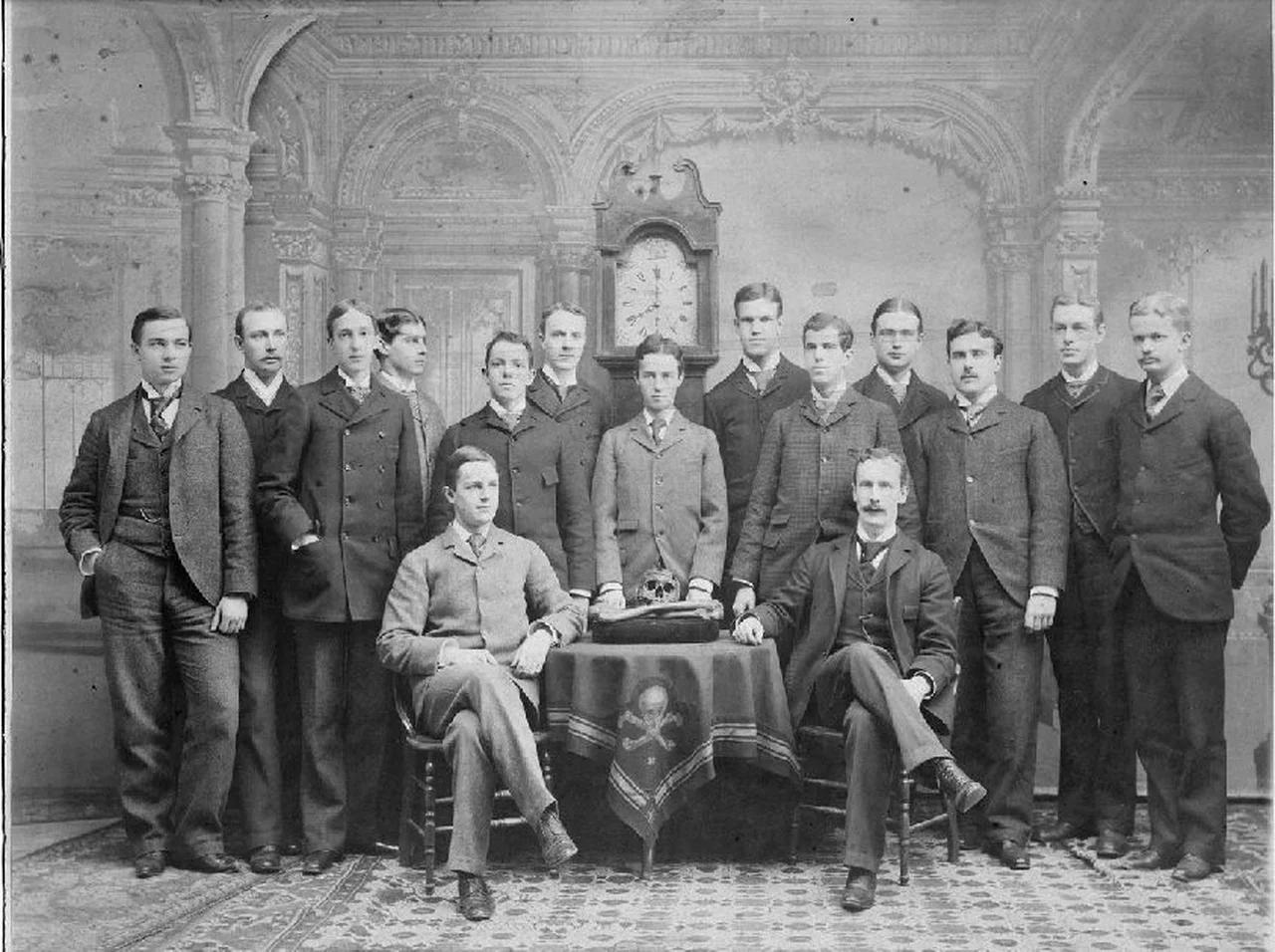
You’ve probably seen the tomb. It’s a brownstone, windowless block on High Street in New Haven, looking more like a mausoleum than a clubhouse for Ivy League seniors. This is the home of Skull and Bones, a society that has sparked more feverish late-night internet rabbit holes than almost any other organization in American history. People love a good conspiracy. When you have a club that counts three U.S. Presidents, Supreme Court justices, and CIA directors among its alumni, people are going to talk. They're going to wonder if the world is being run by a group of guys who spent their Saturday nights in a crypt.
Honestly? The truth is a weird mix of mundane networking and bizarre, 19th-century German-inspired ritual.
The Origins of Chapter 322
It all started back in 1832. William Huntington Russell and Alphonso Taft—yes, the father of the future President William Howard Taft—founded the group after a dispute over Yale’s existing award system. They didn't just want a club; they wanted something modeled after European secret societies Russell had seen in Germany. This is why you see the number "322" everywhere. Legend says it refers to 322 BC, the year the Greek orator Demosthenes died. In the Bonesmen's lore, the goddess of eloquence, Eulogia, ascended to heaven then and supposedly returned to inhabit their tomb in 1832.
It sounds ridiculous. To an outsider, it is. But for the fifteen seniors tapped each year, it’s the beginning of a lifelong bond that historically opened doors to the highest echelons of power.
Why Skull and Bones Still Matters in the 2020s
You might think secret societies are a relic of a bygone era. You’d be wrong. While Yale has dozens of "secret" societies now—Manuscript, Scroll and Key, Book and Snake—Bones remains the heavy hitter because of its sheer legacy. Think about the 2004 election. You had George W. Bush running against John Kerry. Both were Bonesmen. When asked about it, Bush famously wrote in his autobiography, "It’s so secret, I can’t say anything more." Kerry was equally tight-lipped. That’s the power of the brand. It creates a vacuum that people fill with theories about the Illuminati or New World Order.
The reality is usually more about "old boy" networking. If you’re a 21-year-old and you’re suddenly on a first-name basis with the heads of massive investment firms or former Secretaries of State, your career trajectory changes. Instantly.
The Rituals: Myths vs. Reality
Let's get into the "bones" of it. Every Thursday and Sunday, the fifteen members meet in the Tomb. Rumors about what happens inside range from the macabre to the psychological. Alexandra Robbins, who wrote Secrets of the Tomb, did some of the best investigative work on this. Members are reportedly required to recount their entire sexual and personal histories to the group. It’s called "CB" or "connubial bliss" sessions. The goal is to create a level of intimacy and shared vulnerability that makes the members inseparable for life.
Then there’s the grave robbing.
There is a long-standing, persistent claim that Bonesmen stole the skull of Geronimo from Fort Sill in 1918. In 2009, Geronimo’s descendants actually filed a lawsuit against the society and Yale University. The suit was eventually dismissed on technical grounds, but the society has never explicitly denied having "remains." They just don't talk. Silence is their greatest marketing tool.
The Selection Process: Who Gets In?
Tap Day is a spectacle. Every spring, juniors gather on the Old Campus, waiting for a tap on the shoulder. Historically, it was for the WASP elite—the blue bloods of New England. But times have changed. Sorta.
To stay relevant, Skull and Bones had to diversify. They didn't even admit women until 1991, and that only happened after a massive internal legal battle where the alumni tried to lock the doors to keep the students from letting women in. Today, the "Bones" delegation usually looks like a curated slice of the Yale elite: the football captain, the head of the Yale Daily News, a few campus activists, and maybe a brilliant poet or two. They want influencers. They want the people who will be running things twenty years from now.
Breaking Down the Conspiracy Theories
Is it a shadow government? No. Is it a powerful fraternity of the elite? Absolutely.
The problem with conspiracy theories is that they overlook the most obvious explanation: people like to help people they know. When a Bonesman is looking to fill a seat on a board or find a new partner for a law firm, they look at the list. It’s not a mustache-twirling plot to take over the world; it’s just the ultimate version of "it’s not what you know, it’s who you know."
However, the secrecy breeds distrust. When the members of a society are sworn to never speak of what happens behind those windowless walls, the public naturally assumes the worst. Whether they are lying in coffins or just eating dinner and talking about their feelings, the exclusivity is the point. It makes the members feel special and the outsiders feel curious.
Key Figures You Should Know
- William Howard Taft: The only person to serve as both U.S. President and Chief Justice.
- George H.W. Bush: Former President and CIA Director.
- George W. Bush: 43rd President.
- Henry Stimson: Secretary of War during WWII.
- Averell Harriman: A titan of industry and diplomacy.
How to Approach the Lore
If you're researching this, you have to separate the archival facts from the "creepy-pasta" style legends. Yale University itself doesn't technically own the society; it’s owned by the Russell Trust Association, a tax-exempt organization. This separation is key. It allows the society to operate with a level of independence that a standard campus club wouldn't have.
If you ever find yourself in New Haven, walk by the Tomb. It's at 64 High Street. You can't go in. You probably won't see anyone go in. But the silence of the building tells you everything you need to know about how power maintains itself. It doesn't shout. It just stays quiet and waits for the next generation of leaders to walk through the door.
Actionable Insights for Further Investigation
To get the real story behind the legend, follow these steps instead of just scrolling through TikTok theories:
- Read the Primary Investigative Texts: Skip the blogs and go straight to Secrets of the Tomb by Alexandra Robbins or Ron Rosenbaum’s extensive reporting in Esquire. These authors actually interviewed members and went as deep as legally possible.
- Search the Russell Trust Association Filings: If you want to see the "business" side of the secret, look up their IRS Form 990 filings. It strips away the mystery and shows you the assets and financial footprint of the society.
- Visit the Yale University Library Digital Collections: Look for "Tap Day" photos from the early 20th century. Seeing the evolution of the members over 150 years provides a fascinating look at how the American elite has changed (and stayed the same).
- Contextualize with Other Societies: Compare the Bonesmen to Yale's "Scroll and Key" or "Wolf's Head." Understanding that it's part of a larger ecosystem of Yale societies helps demystify the "world domination" angle and frames it more as a specific, albeit intense, collegiate tradition.
The mystery of Skull and Bones isn't about what they are hiding in the basement. It's about how a small group of people can leverage a shared secret into a century of influence.