You know that specific sound. The pop of a vacuum-sealed lid and the immediate, sweet-and-salty scent that follows. For most of us, Smuckers peanut butter and jelly isn't just a product in the pantry; it’s a childhood core memory. It's the smell of third-grade cafeterias and late-night snacks during college finals.
But let’s be real for a second.
The market is currently flooded with "artisanal" nut butts that cost twelve dollars and require a degree in chemistry to stir back together. Yet, Smucker’s remains. Why? Because honestly, consistency is king. While other brands try to reinvent the wheel with flax seeds or honey-infused almond blends, the J.M. Smucker Company has spent over a century perfecting the ratio of fruit to sugar to pectin. It’s reliable. You know exactly what that Goober Grape is going to taste like before you even grab a spoon.
There's a weird kind of comfort in that.
The Physics of the Swirl: Smuckers Peanut Butter and Jelly Goober
We have to talk about Goober. Introduced in 1968, it’s arguably the most "engineered" comfort food in history. If you look at a jar of Smuckers Goober Grape, the stripes are almost suspiciously perfect. It’s not just slapped in there. The company actually uses a specific filling process where the peanut butter and the jelly are extruded through separate nozzles simultaneously to create those vertical stripes.
It’s basically edible art.
People have strong opinions on Goober. Some think it’s a shortcut for the lazy—and yeah, it saves you about ten seconds—but for kids, it’s a visual experience. The peanut butter used in Goober is slightly different from their standalone "Natural" line. It has to be. To keep the jelly from migrating into the peanut butter and making it a soggy, purple mess, the moisture activity levels have to be meticulously balanced.
If the jelly was too watery, the peanut butter would seize. If the peanut butter was too oily, the jelly would slide to the bottom. It’s a delicate chemical dance happening right there on your grocery shelf.
Why Concord Grapes Matter
Most people don't realize that Smucker’s actually started with apple butter, not jelly. Jerome Monroe Smucker began by pressing cider at a mill in Orrville, Ohio, back in 1897. But the real game-changer was the Concord grape.
The Concord grape is a "slip-skin" variety. This means the skin pops right off the pulp. It has that deep, musk-like aroma that we’ve all come to identify as "purple flavor." Smucker's uses real fruit, and they’ve maintained long-standing contracts with growers in regions like the Grand Traverse Bay in Michigan and parts of Washington state. When you taste that specific Smuckers peanut butter and jelly combo, you're tasting a supply chain that has been refined for over a hundred years.
Is Smuckers Peanut Butter and Jelly Actually Healthy?
Let’s tackle the elephant in the room. This is a sugar-forward product. If you’re looking for a keto-friendly, low-carb health food, you’re in the wrong aisle.
However, there’s a nuance here that people miss.
Smucker's was one of the first major brands to lean into the "Natural" peanut butter trend before it was cool. Their Natural line contains just peanuts and a hint of salt. No palm oil. No hydrogenated fats. That's a big deal. Most "standard" grocery store peanut butters are loaded with stabilizers to keep them creamy at room temperature. Smucker’s Natural requires you to stir the oil back in, which is annoying, sure, but it’s a sign of a cleaner label.
- Protein: You're getting about 7-8 grams per serving.
- Fats: Mostly monounsaturated, which is the "good" kind for heart health.
- Sugar: This is where it gets tricky. The jelly is the culprit.
If you’re worried about the sugar spike, the move is to go heavy on the Natural Peanut Butter and light on the Jam. Or, better yet, look for their "Low Sugar" fruit spreads. They use a different pectin set to keep the texture without needing a mountain of cane sugar.
The Uncrustables Phenomenon
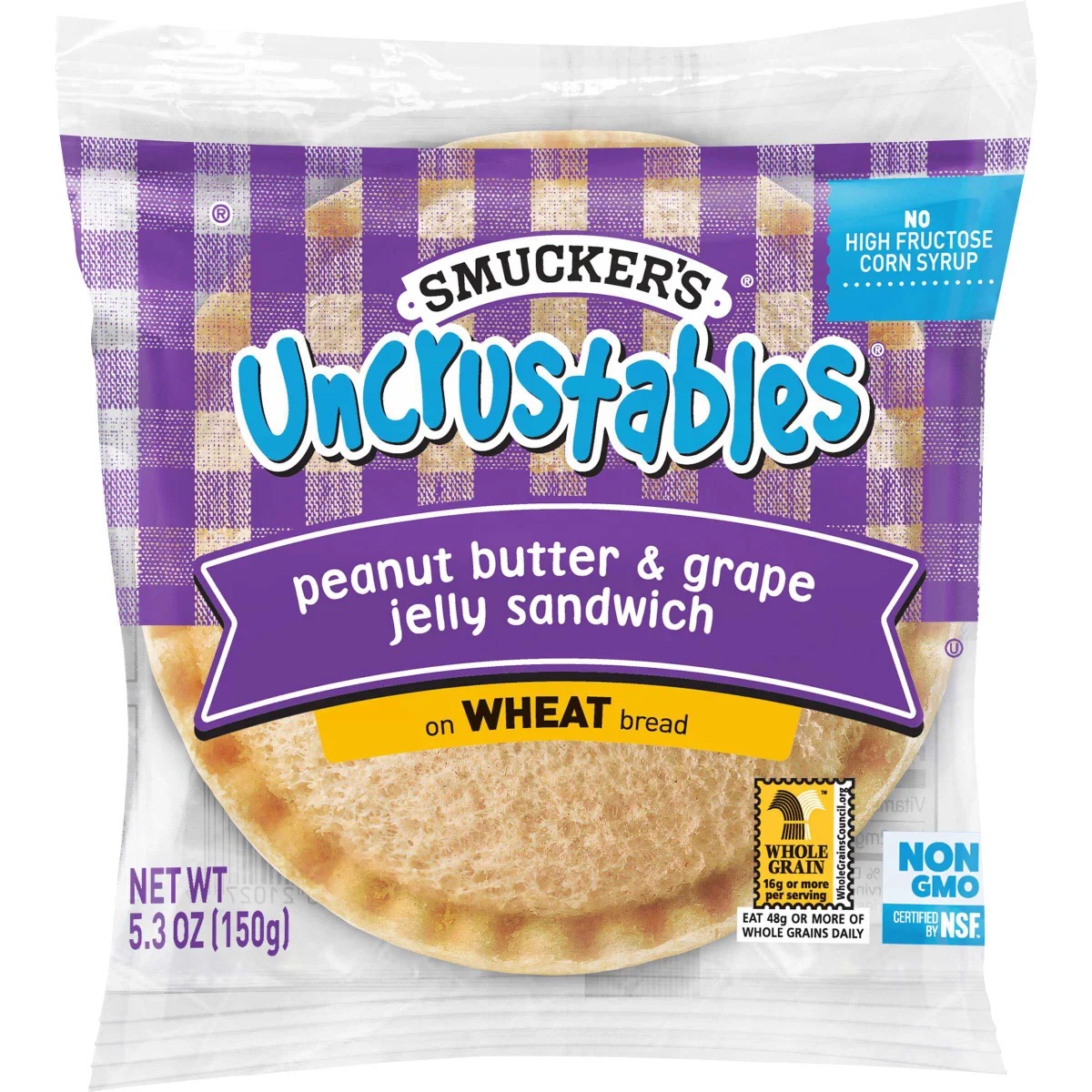
You can't discuss Smuckers peanut butter and jelly without mentioning the absolute juggernaut that is the Uncrustable. Originally patented by two guys in North Dakota (Len Kretchman and David Geske) who sold the idea to Smucker's in 1998, these crimped sandwiches have become a billion-dollar business.
Seriously. A billion.
Pro athletes swear by them. You’ll see NFL players and PGA golfers crushing Uncrustables on the sidelines because they provide a quick hit of simple carbs and protein that’s easy on the stomach. They’re frozen, they thaw by lunchtime, and there’s no crust. It’s the ultimate efficiency food.
There’s a hilarious debate online about whether an Uncrustable is technically a "ravioli" or a "calzone." Honestly? It doesn't matter. It’s a masterclass in food engineering. The way the bread stays soft despite being frozen and thawed is a closely guarded trade secret involving specific moisture-retention dough conditioners.
Sustainability and the Modern Pantry
Times have changed since 1897. Consumers aren't just looking at the taste anymore; they're looking at the jar. Smucker's has made some public commitments regarding their "Thriving Together" program. They’re aiming for 100% recyclable, reusable, or compostable packaging by 2030.
Currently, the glass jars are gold standard for recyclability. Glass can be recycled infinitely without losing quality. The plastic jars? Not so much. If you want to be a bit more eco-conscious, stick to the glass. Plus, those old Smucker’s jars make the best containers for storing nails, screws, or even leftover grease in the kitchen.
Common Misconceptions
People often think "fruit spread" and "jelly" are the same thing. They aren't.
- Jelly: Made from fruit juice. It’s clear and firm.
- Jam: Made from crushed fruit. It’s chunkier.
- Preserves: Contains large chunks of fruit or whole berries.
When you buy a Smuckers peanut butter and jelly combo, you’re usually getting jelly. It’s smoother and spreads easier across soft white bread without tearing it. If you’re a texture person, you might prefer buying a jar of their Strawberry Preserves and pairing it with the Creamy Peanut Butter separately. It feels a bit more "adult."
Making the Best PB&J: Pro Tips
If you want to elevate the experience, don't just slap it on bread.
First, toast the bread. Not until it’s a crouton, but just until it’s golden. This creates a thermal barrier. When you apply the peanut butter to warm toast, it melts slightly, seeping into the nooks and crannies.
Second, the "Wall Method." Spread the peanut butter on both slices of bread. Then, put the jelly in the middle. The oils in the peanut butter act as a waterproof seal, preventing the jelly from soaking into the bread and making it soggy. This is a game-changer if you’re packing a lunch for later in the day.
Third, salt. Just a tiny pinch of flaky sea salt on top of the peanut butter before you close the sandwich. It cuts through the sweetness of the Smucker's jelly and makes the whole thing taste like a gourmet dessert.
The Cultural Impact of a Simple Sandwich
It’s easy to dismiss a peanut butter and jelly sandwich as "boring." But in a world that is increasingly chaotic and expensive, there is immense value in a meal that costs about fifty cents to make and tastes exactly the same every single time.
The J.M. Smucker Company has stayed relevant because they haven't tried to be something they're not. They are the benchmark. Every other PB&J brand is measured against them. Whether it’s the classic red-checkered lid or the convenient Uncrustable, they’ve secured a spot in the American pantry that isn't going away anytime soon.
It’s nostalgic. It’s functional. It’s basically the perfect food.
Actionable Ways to Use Smucker's Today
- Upgrade your oatmeal: Swirl a tablespoon of Goober Grape into hot oatmeal for a PB&J flavor profile without the bread.
- Check the labels: If you want to avoid additives, specifically look for the Smucker's "Natural" line with the brown label.
- Repurpose the glass: After finishing a jar, soak it in warm soapy water to remove the label. These jars are the perfect size for "overnight oats" or DIY salad dressings.
- Try the "Seal" technique: When making sandwiches for kids, use the back of a fork to crimp the edges of the bread, creating your own "homemade" version of an Uncrustable to keep the jelly from leaking.
Whether you're a creamy or crunchy person, the reality is that Smucker's has built a legacy on the simplest of combinations. Sometimes, the old way really is the best way.
Next Steps for the Perfect Pantry
- Compare the "Natural" vs "Regular" labels on your next grocery trip to see which fits your dietary needs.
- Experiment with "The Wall Method" to see if it actually stops your lunch from getting soggy.
- Look into the Smucker’s "Moms Help Moms" programs if you’re interested in their corporate social responsibility initiatives.