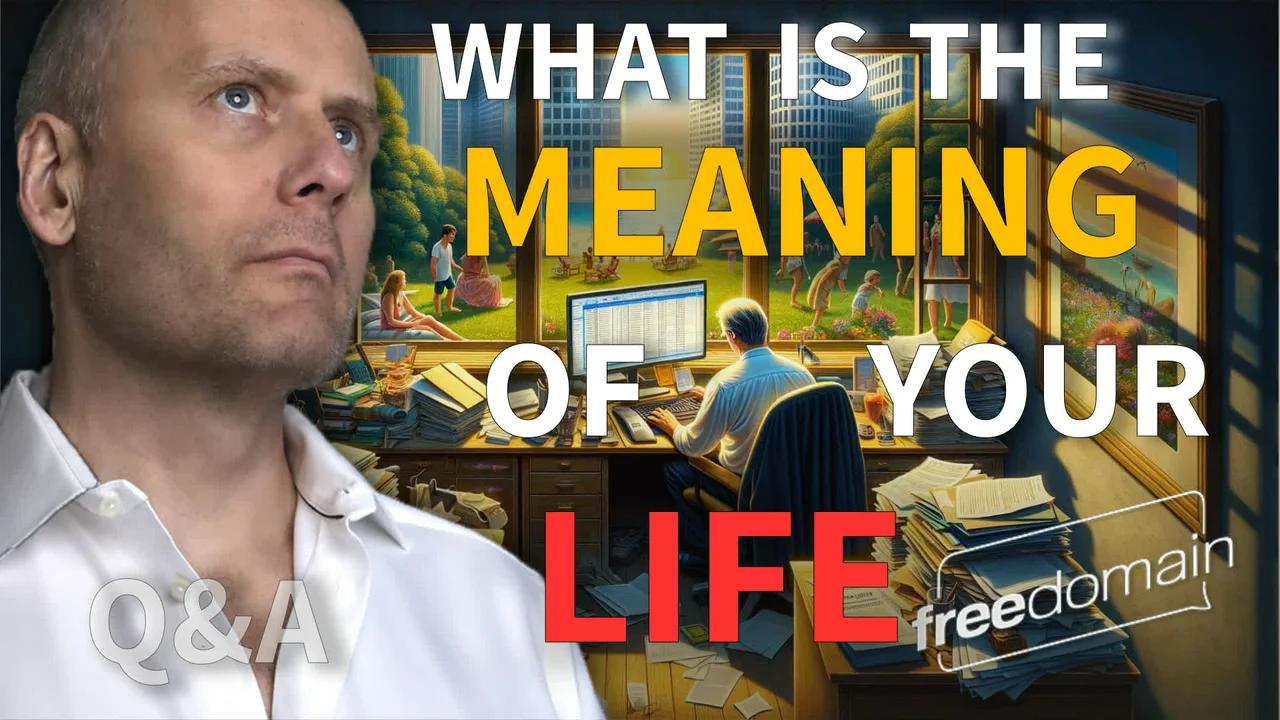
You’re sitting on a train. Maybe you’re stuck in traffic, staring at the taillights of the beat-up Honda Civic in front of you. You look at the driver—a woman adjusting her rearview mirror, maybe humming along to a song you’ll never hear. Suddenly, it hits you. She has a whole life. She has a favorite childhood memory involving a specific brand of cereal. She’s worried about her mortgage or a weird mole on her arm or whether she left the stove on. She is the protagonist of her own massive, messy story, and in your story, she’s just a background extra.
That’s sonder.
It’s a heavy word for a fleeting feeling. Most of us have felt it, but for a long time, we didn't really have a name for it. It’s that specific flash of realization that every single person you pass on the street is living a life as vivid and complex as your own. Honestly, it’s kind of exhausting if you think about it too long.
Where did the word sonder actually come from?
If you try to look up "sonder" in an old dusty copy of the Oxford English Dictionary, you won’t find it. Not in the way we use it now, anyway. The word was actually coined by John Koenig in 2012 for his project, The Dictionary of Obscure Sorrows.
Koenig’s goal was to fill the gaps in the English language. He wanted to name those hyper-specific emotions that we all feel but can’t quite articulate. He took the German word sonder (which means special) and the French sonder (to plumb or fathom depths) and mashed them together. It’s a neologism. It's a "fake" word that became real because so many people went, "Oh, wow, there’s finally a word for that."
It went viral on Tumblr and Pinterest years ago. Now, it’s basically part of the cultural lexicon. It’s been referenced in songs, used as the name of bands (like the R&B trio featuring Brent Faiyaz), and tattooed on a thousand forearms. It resonated because it touches on the fundamental human struggle of perceived isolation versus actual connection.
The psychology behind the "Sonder" moment
Psychologically, sonder is basically a massive, spontaneous leap in "Theory of Mind." This is the cognitive ability to understand that others have beliefs, desires, and intentions different from our own. Little kids don't have this. They think if they cover their eyes, you can’t see them. They think everyone knows what they know.
As adults, we’re better at it, but we’re still the center of our own universes. We have to be. It’s a survival mechanism. If you truly felt the weight of eight billion lives every second of the day, your brain would probably melt. Sonder is a brief breakdown of that ego-centric wall.
The empathy gap
We usually live in a state of "functional empathy." We care about our friends and family, but the guy at the gas station? He's just "The Gas Station Guy." He’s a NPC—a non-player character—in the video game of your life. When you experience sonder, that NPC status vanishes. You realize he might be mourning a dog or celebrating a promotion.
This realization can be deeply humbling. It’s also a bit terrifying. If everyone is a protagonist, then nobody is special. Or, more accurately, everyone is special, which makes the word "special" feel a bit redundant.
Why we’re feeling it more often in 2026
In a world that feels increasingly polarized and digital, sonder acts as a sort of emergency brake. We spend so much time looking at "users" or "avatars" or "profiles" that we forget there’s a person breathing on the other side of the glass.
Social media has a weird relationship with sonder. On one hand, it gives us a window into those "other" lives. We see the cereal brands and the messy rooms. On the other hand, it flattens people into caricatures. You don't see the complexity; you see the highlight reel or the rage bait.
True sonder usually happens in the "in-between" spaces. It happens in airports. It happens in grocery store lines. It happens when you see a single light on in a distant apartment building at 3:00 AM and wonder who is awake and why. Are they feeding a baby? Are they finishing a screenplay? Are they just sad?
The "Main Character" problem
You've probably heard the term "Main Character Energy." It’s been all over TikTok for years. It’s about romanticizing your own life—dressing well, enjoying your coffee, acting like you’re in a movie.
Sonder is the exact opposite of Main Character Energy.
It is "Side Character Awareness." It is the acknowledgement that in the grand movie of the universe, you are an extra in 99.999% of the scenes being filmed right now. That realization can either make you feel small and insignificant, or it can make you feel like you belong to something much bigger.
Is sonder actually a "sorrow"?
Koenig put it in his Dictionary of Obscure Sorrows, but is it actually sad?
It depends on your headspace. There is a certain melancholy to it. You realize you will never know these people. You will never know the ending to that woman’s story in the Honda Civic. You are passing ships in the night, forever. That’s a bit lonely.
But there’s also a massive sense of relief in sonder. It takes the pressure off. If everyone else is busy dealing with their own intricate webs of trauma, joy, and mundane bullshit, they probably aren't judging you as harshly as you think. They’re too busy being the lead in their own drama to worry about your awkward comment in the meeting earlier today.
Applying sonder to real life
So, what do you do with this feeling? Is it just a cool word for your Instagram caption, or can it actually change how you move through the world?
If you lean into it, sonder is a superpower for conflict resolution. It’s hard to stay furious at the guy who cut you off in traffic if you stop and consider that he might be rushing to the hospital, or maybe he just had the worst day of his life and his brain is fried. It’s not an excuse for bad behavior, but it provides a context that moves you away from "Me vs. Them" and toward "Us."
Actionable insights for a more "Sonder-filled" life
Don't just wait for the feeling to hit you. You can actually cultivate it.
- Practice Active Observation: Next time you’re in a public space, pick one stranger. Don't be creepy about it. Just look at them and try to imagine three specific, mundane details about their life. What’s the oldest thing in their fridge? What was their favorite subject in third grade? What’s a secret they’ve never told anyone?
- The "Everyone is a Teacher" Mindset: Approach every interaction with the assumption that this person knows something deeply important that you don't. Because they do. They have decades of unique experience.
- Narrative Reframing: When someone is being difficult—a grumpy waiter, a snarky colleague—remind yourself that you’re seeing page 400 of a book you haven't read. You don't know the plot twists that got them to this page.
- Digital De-layering: When you see a comment online that makes your blood boil, take three seconds to remember that a human with a childhood, a favorite sweater, and a fear of death typed those words. It makes the internet a lot less toxic (or at least more manageable).
Sonder isn't just a fleeting emotion; it’s a reminder of our shared humanity. It’s the antidote to the "us versus them" mentality that seems to be everywhere lately. When you realize that everyone is just trying to navigate their own complex story, the world feels a little bit smaller, a little bit kinder, and a whole lot more interesting.
The next time you’re standing in a crowd, take a breath. Look around. Every single person is a universe. And so are you. That’s the real meaning of sonder. It's the moment the background characters finally step into the light.