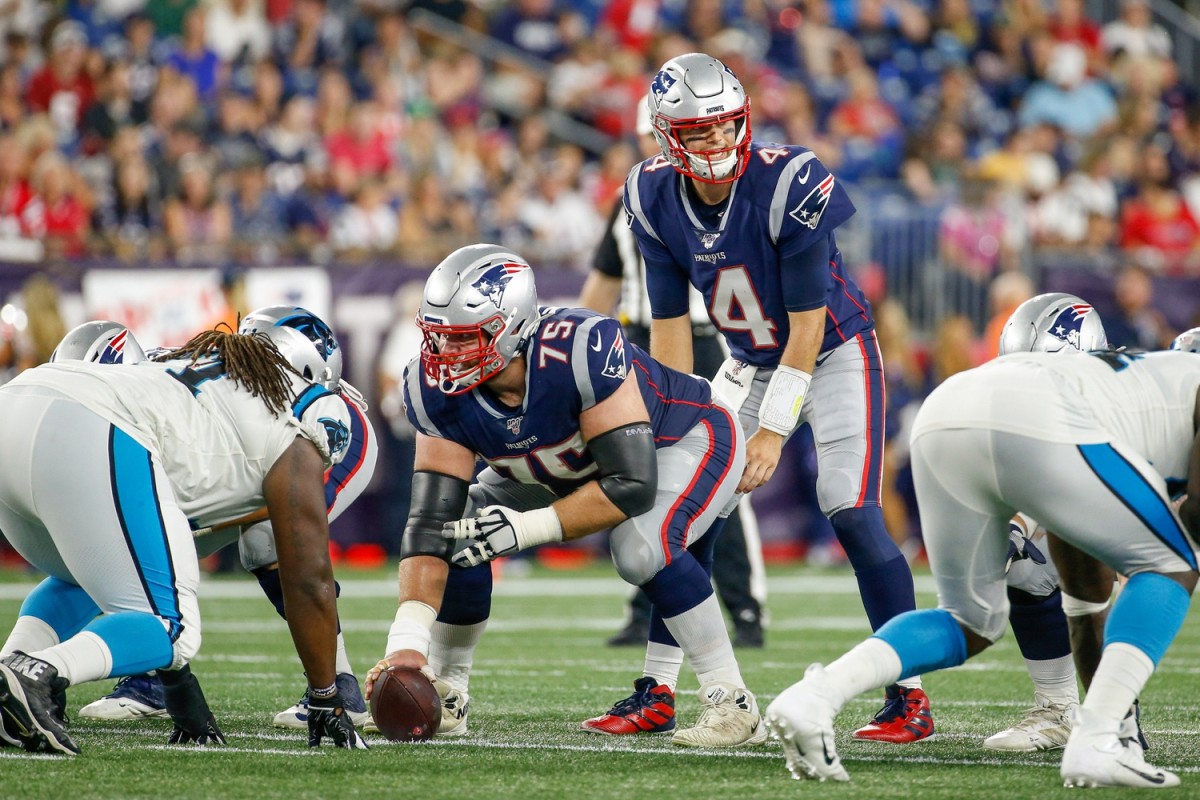
New England. It's a place where blue-collar players either become legends or get lost in the shuffle of the "Patriot Way." Ted Karras wasn't just a body on the depth chart. He was the glue. If you followed the New England Patriots during the late 2010s, you saw a guy who basically bled for the logo, yet he's spent half his career playing elsewhere. It's weird, honestly. Why does a team known for valuing "smart, tough, and versatile" players let a guy like Karras walk away not once, but two separate times?
Most fans think players leave solely for the bag. Money talks. That’s the NFL. But with Karras and the Patriots, the story is actually a lot more about timing, scheme fits, and the cold, hard reality of how Bill Belichick used to manage a salary cap.
The Bloodline and the Draft
Ted Karras didn't just stumble into football. The name carries weight. His great-uncle was Alex Karras—yes, the "Mongo" from Blazing Saddles and a Detroit Lions legend. His father played. His uncles played. When the Patriots took him in the sixth round of the 2016 NFL Draft out of Illinois, nobody expected him to be a cornerstone. He was a "swing" guy. A backup.
In Foxborough, being a backup interior lineman is a high-stress job. You have to know every call for the center, both guard spots, and occasionally jumbo tight end roles. Karras mastered it. He was the insurance policy for David Andrews and Shaq Mason. In 2016 and 2018, he earned Super Bowl rings. He wasn't the star, but he was the guy keeping Tom Brady upright when the starters went down. That’s the thing about those championship runs—everyone remembers the Julian Edelman catches, but nobody talks about the substitute guard who didn't give up a pressure on 3rd-and-long.
2019: The Year Everything Changed for Karras
Everything flipped when David Andrews was sidelined with blood clots in his lungs. Suddenly, the "backup" was the starting center for the New England Patriots.
He started 15 games. He was brilliant.
Honestly, he played so well that he priced himself out of town. That’s the cruel irony of the Belichick era. If you're a mid-round pick who develops into a top-tier starter, the Patriots usually won't pay you "top of the market" money because they believe they can just draft another one of you. In 2020, the Miami Dolphins offered him a one-year, $4 million deal to be their starter. The Patriots? They let him walk. They had Andrews coming back. They had younger, cheaper options. It felt like a business decision, but it hurt the locker room. Karras was a leader. He was the guy who stayed late. He was the guy who kept the vibe light during those grueling December practices.
The Brief, Emotional Homecoming
Miami didn't feel right. It never does for former Patriots. In 2021, Karras came back to New England on a one-year deal worth $3 million. It was like he never left. He started at left guard, beat out Mike Onwenu (who is a massive human being, by the way), and solidified a line that was trying to protect a rookie Mac Jones.
If you look at the 2021 tape, Karras was arguably their most consistent lineman. He allowed almost no sacks. He was PFF's darling. But then, history repeated itself.
The Cincinnati Bengals were coming off a Super Bowl loss where Joe Burrow got sacked about seventy times. They were desperate. They offered Karras a three-year, $18 million contract. You can't turn that down. At 29 years old, that’s the "life-changing" contract. New England stood pat. They didn't match. They chose to move forward with younger talent, eventually drafting Cole Strange in the first round—a move that still gets debated in Boston sports bars to this day.
What Most People Get Wrong About Karras and the Patriots
People think he wasn't "good enough" to keep. That’s a total lie.
The reality is that Karras was too good. He was a victim of his own competence. Because he could play three positions, the Patriots viewed him as the ultimate luxury, but they weren't willing to pay "starter" money to a guy they initially viewed as a depth piece. It’s a classic case of internal scouting bias. They saw the 6th-round pick from 2016; the rest of the league saw a top-10 pass-protecting center.
Also, we have to talk about the "Canti-Karras" factor. In Cincinnati, he became a captain immediately. He started the "Cincy Hat" charity which has raised massive amounts of money for adults with intellectual and developmental disabilities. The Patriots lost more than just a blocker; they lost a cultural pillar. When the New England offensive line struggled in 2022 and 2023, the absence of a veteran like Karras was glaring. You saw missed assignments. You saw poor communication. Those are the things Ted Karras fixed just by being on the field.
Breaking Down the Scheme Fit
Why did he work so well in the New England Patriots system?
- Mental Processing: The Patriots used a complex "identification" system for blitzes. Karras is incredibly smart. He rarely made a "mental" error.
- Hand Fighting: He’s not the most athletic guy. He’s not going to win a 40-yard dash against a defensive end. But his hands? Violent. Precise.
- Leverage: At 6'4", he's the ideal height for a center. He stays low. He wins the "under-arch" battle against 330-pound nose tackles.
If you're wondering why Mac Jones looked so much better in 2021 than he did later, look at the interior of the line. Karras was the one barking out the "Mike" linebacker calls. He was the one adjusting the protection when the defense showed a disguised look. When he left for the Bengals, that veteran brain went with him.
The Financial Fallout
Let's look at the numbers because they explain the "why" behind his departure.
- 2021 Patriots Salary: $3,000,000
- 2022 Bengals Salary: $6,000,000 (average per year)
In the NFL, a 100% raise is something you take every single time. The Patriots' philosophy under the old regime was rarely to pay for "past performance." They wanted to pay for "future value." They figured they could get 80% of Karras's production for 20% of the cost. They were wrong. They spent a first-round pick on Cole Strange to fill a void that Karras would have filled for a fraction of the draft capital.
Actionable Insights for Fans and Analysts
When evaluating the New England Patriots and their roster moves regarding interior linemen like Karras, there are a few things to keep in mind for future seasons:
- Watch the "Snap Count" to Value Ratio: If a player like Karras is playing 90%+ of the snaps on a cheap deal, expect them to leave in free agency. New England rarely pays "premium" for the interior unless you are a generational talent like Logan Mankins.
- The "Andrews" Effect: As long as David Andrews is the center, Karras was always going to be viewed as a guard in New England. In the rest of the league, he is a center. Centers get paid more and have more longevity. He had to leave to play his natural position.
- Cultural Voids Matter: When a team loses a guy who was a finalist for the Walter Payton Man of the Year award (which Karras was), the locker room suffers. Stats don't show leadership, but the win-loss column usually does.
- Draft Strategy: Look for the Patriots to target "high-IQ" linemen in the later rounds (rounds 4-6). They are trying to find the "next Ted Karras"—a guy who can sit for two years, learn the system, and then provide starter-level play for pennies on the dollar.
The saga of Ted Karras and the Patriots is basically a masterclass in NFL business. He was the perfect Patriot who the team simply couldn't—or wouldn't—afford once the rest of the world realized how good he actually was. He’s a two-time champion in Foxborough, but his legacy might actually be the "what if" regarding the stability of the post-Brady offensive line.
If you want to understand why the Patriots' offense stalled in the early 2020s, don't just look at the quarterbacks. Look at the guys they let walk out the front door. Karras was at the top of that list. His career proves that being a "system fit" is great, but being a "market value" player is what keeps you in the league for a decade.
Next time you see #75 or #64 (depending on the year) snapping the ball, remember that he’s the benchmark for what a developmental success story looks like in professional football. He wasn't supposed to be a star. He just worked until he was.
Immediate Next Steps for Evaluating Current Patriots Linemen:
Check the contract status of current interior players like Sidy Sow or Layden Robinson. If they follow the Karras trajectory—high snap counts, low penalties, and versatile starts—expect the team to face a similar "pay or play" dilemma within the next 24 months. Monitoring the "Performance-Based Pay" bonuses released by the NFL each spring is the best way to see which "cheap" linemen are actually providing the most value to the New England front office.