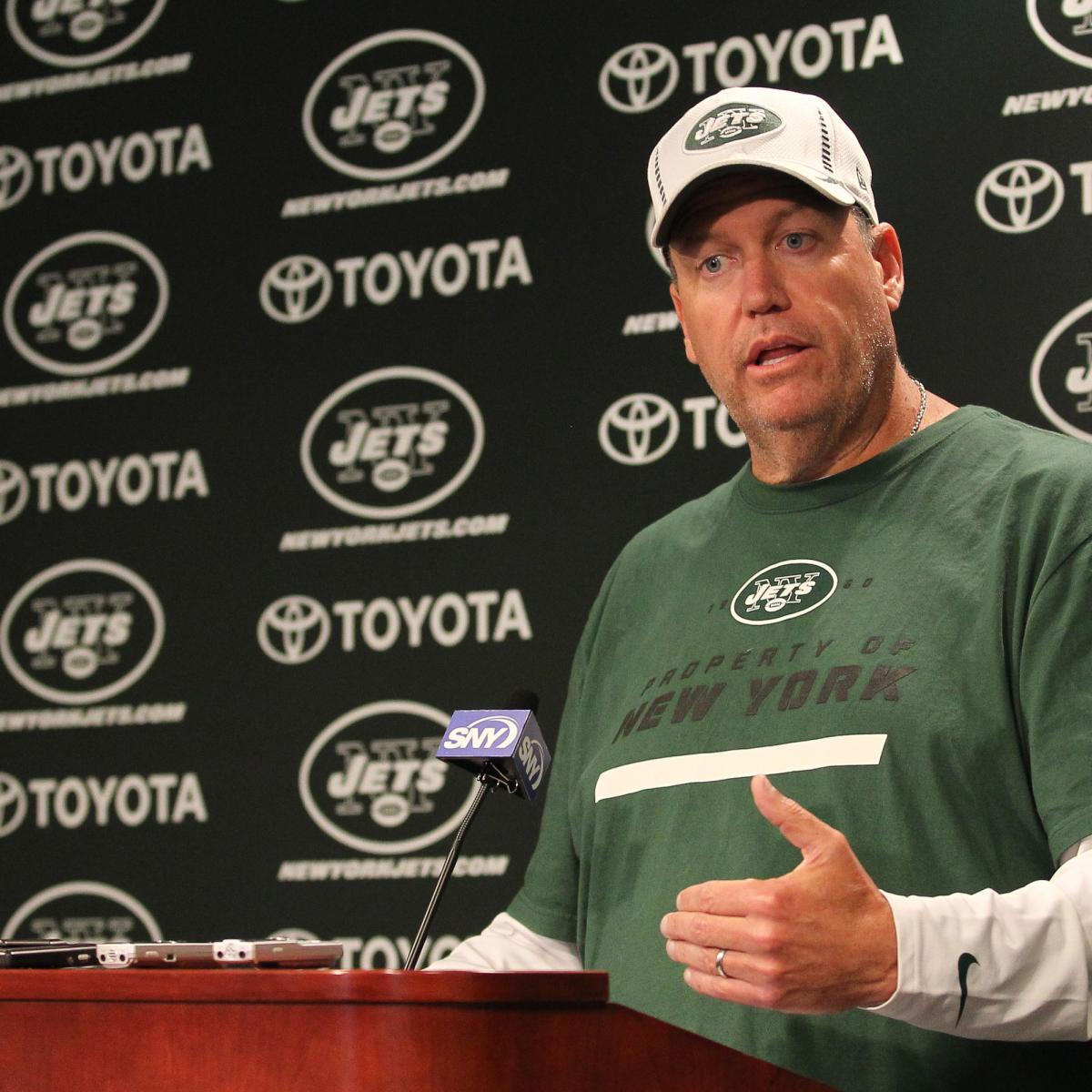
Rex Ryan used to say he wasn't there to kiss Bill Belichick’s rings. By the time the 2011 New York Jets season finally limped to a close on a cold afternoon in Miami, those rings felt further away than ever. It was a weird, bloated year. Coming off two straight AFC Championship appearances, the hype was basically at a fever pitch. Fans expected a Super Bowl. The media expected a circus.
They both got a little of what they wanted, but not in the way anyone hoped.
It's easy to look back now and say the 2011 season was the beginning of the end for the Rex Ryan era. It was. Honestly, the locker room tension that year became the stuff of legend. You had Mark Sanchez trying to find his footing as a "franchise" guy while Santonio Holmes and Plaxico Burress were constantly in his ear. The chemistry wasn't just off; it was toxic.
The Offseason That Changed Everything
The NFL lockout in 2011 did no favors for a team that relied so heavily on complex defensive schemes and veteran leadership. When the doors finally opened, Mike Tannenbaum went big. He always did. They let Braylon Edwards walk and brought in Plaxico Burress, fresh out of prison.
It seemed like a classic Jets move at the time. High risk, high reward.
But the real issue was the offensive line. Letting Alan Faneca go the year prior was one thing, but by 2011, the "Ground and Pound" identity was starting to show some serious cracks. Shonn Greene was a downhill runner who needed holes that weren't always there. Wayne Hunter was struggling at right tackle—struggling is a nice way to put it—and the fan base was starting to notice. Loudly.
Why the New York Jets 2011 Campaign Felt Different from the Start
Week 1 against Dallas was a miracle. People forget that. The Jets were down 24-10 in the fourth quarter. It looked like a disaster. Then, Joe McKnight blocked a punt, Isaiah Trufant returned it for a score, and Darrelle Revis did Darrelle Revis things. A late Nick Folk field goal won it.
That win masked a lot of problems.
The defense was still elite, mostly. Revis was in his absolute prime, shutting down half the field. But the offense? It was disjointed. Brian Schottenheimer’s system felt stale. He and Sanchez never seemed to be on the same page regarding the pace of the game.
Then came the three-game losing streak. Oakland, Baltimore, New England.
The Baltimore game was particularly ugly. Sanchez was sacked within an inch of his life. Haloti Ngata and Ray Lewis looked like they were playing a different sport. Three defensive touchdowns for the Ravens. You don’t win many games when your quarterback loses three fumbles. It was the first real sign that the New York Jets 2011 roster wasn't as deep as the previous two versions.
The Santonio Holmes Factor
We have to talk about Santonio.
He was the MVP of Super Bowl XLIII for a reason. The guy was a clutch playmaker. But in 2011, he became a lightning rod for criticism. His body language was terrible. He was caught on camera multiple times barking at Sanchez on the sidelines. It wasn't just "passion." It felt like a lack of respect.
The breaking point was the season finale in Miami. Holmes was benched during the game by offensive coordinator Brian Schottenheimer because he was reportedly moping in the huddle. Think about that. A season on the line, and your star receiver is essentially "quiet quitting" in the middle of a drive. Wayne Hunter actually had to be restrained from going after him.
It was a total collapse of culture.
Statistical Realities and the "Ground and Pound" Myth
The numbers from 2011 tell a story of a team that didn't know what it wanted to be. Rex Ryan wanted to run the ball. That was his DNA. Yet, the Jets finished 22nd in rushing yards.
- Mark Sanchez: 3,474 yards, 26 TDs, 18 INTs.
- Shonn Greene: 1,054 yards, 6 TDs, 4.2 YPC.
- Dustin Keller: 815 yards, 5 TDs (the most reliable target).
- Turnover Margin: -2 (28 giveaways).
Sanchez actually had his best statistical year in terms of touchdowns, but the 18 interceptions were killers. Most of them came at the worst possible moments. The red zone offense was actually okay for a while—Burress was a monster in the end zone, catching eight touchdowns—but the consistency between the 20s was non-existent.
The Defense Kept Them Alive (Until They Didn't)
You can't blame the defense for everything. Revis, Antonio Cromartie, and David Harris were playing their tails off. They finished 5th in total yards allowed. That’s an elite unit.
But they couldn't generate enough pass rush without blitzing. Rex had to manufacture pressure because the front four wasn't winning one-on-one battles. When you blitz that much, you leave your secondary on islands. Even "Revis Island" has its limits when the quarterback has five seconds to throw.
The loss to the Giants in Week 16 was the nail in the coffin. Victor Cruz's 99-yard touchdown reception changed the trajectory of both franchises. One team went on to win the Super Bowl. The other went home and started pointing fingers.
Rex Ryan’s "Big Brother" comments toward the Giants backfired spectacularly. It was the moment the bravado stopped being charming and started being a distraction.
Behind the Scenes: The Tebow Shadow
While Tim Tebow didn't arrive until 2012, the seeds of that disaster were sown in late 2011. Ownership was getting restless. Woody Johnson wanted headlines. The team was losing its "backpage" dominance to the Giants.
There was a feeling in the building that the Sanchez era was reaching a plateau. Despite the back-to-back AFC Title games, the front office wasn't convinced. This lack of faith trickled down. Players can sense when a coaching staff is on thin ice, and even though Rex had a long leash, the 8-8 finish in 2011 felt like a 4-12 season because of the expectations.
What Most People Get Wrong About 2011
People think the Jets were just "bad" that year. They weren't. They were 8-5 heading into the final three weeks. They had every chance to make the playoffs.
They lost to a mediocre Eagles team. Then the Giants game happened. Then the Miami meltdown.
It wasn't a lack of talent. It was a lack of cohesion. The 2009 and 2010 teams had a "us against the world" mentality. The New York Jets 2011 team had a "me against you" mentality. Veteran leaders like Damien Woody were gone. Kris Jenkins was gone. The voices in the locker room that used to keep the egos in check were replaced by silence or bickering.
Actionable Insights for Football Historians and Fans
If you're looking back at this era to understand why the Jets haven't been back to the playoffs since, start with the 2011 draft. It was a disaster.
- First Round: Muhammad Wilkerson (The only hit).
- Second Round: No pick.
- Third Round: Kenrick Ellis.
- Fourth Round: Bilal Powell (A solid pro, but not a game-changer).
The failure to build through the draft while spending heavily on aging free agents like Burress and Derrick Mason (who lasted about five minutes) is a masterclass in how to close a championship window.
To truly understand the New York Jets 2011 season, you have to watch the "Hard Knocks" from the year before and then watch the post-game press conferences from December 2011. The transition from joyful arrogance to bitter resentment is jarring.
Next Steps for Deep Dives:
- Analyze the 2011 salary cap: Look at how the extensions for Holmes and Sanchez hamstrung the team's ability to fix the right tackle position.
- Review the "99-yard Cruz TD" film: Watch the missed tackles and the defensive alignment; it perfectly encapsulates the breakdown in fundamentals that plagued the late-season stretch.
- Compare the 2010 vs. 2011 3rd down conversion rates: You'll see a massive drop-off in efficiency that put the defense in impossible situations.
The 2011 season wasn't just a mediocre year of football. It was the moment the Jets lost their identity. They went from being the team nobody wanted to play to the team that couldn't stop playing against itself.