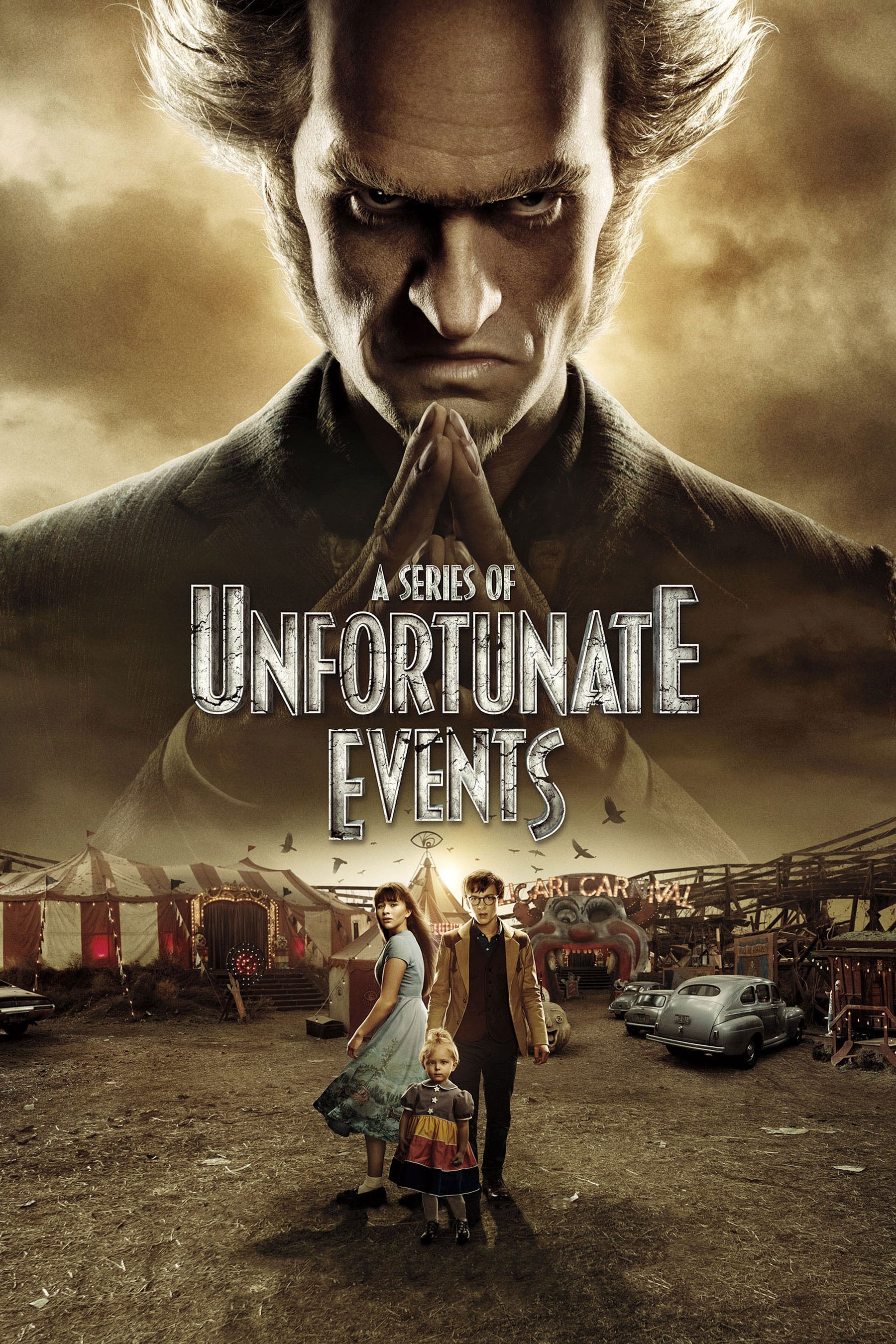
If you grew up in the early 2000s, you probably remember the distinct smell of those deckle-edged Lemony Snicket books. They were weird. They were grim. Most importantly, they didn't talk down to kids. When the 2004 movie came out with Jim Carrey, it felt like a fever dream that tried too hard to be Harry Potter meets The Grinch. It wasn't quite right. But then, years later, the A Series of Unfortunate Events show landed on Netflix, and it actually understood the assignment.
It's rare for a TV adaptation to capture the specific "vibe" of a narrator who spent thirteen books telling you to go read something else. Daniel Handler, the man behind the Snicket pen name, was heavily involved this time around. That’s probably why it worked. It didn't just adapt the plot; it adapted the irony.
The Baudelaire Problem and How the Show Solved It
The core of the story is simple but devastating. Violet, Klaus, and Sunny Baudelaire lose their parents in a fire. They are sent to live with Count Olaf, a failing actor who wants their fortune. He's a murderer. He's a terrible person.
In the film version, Olaf was a cartoon. In the A Series of Unfortunate Events show, Neil Patrick Harris plays him with a mixture of genuine menace and pathetic insecurity. It’s a hard line to walk. If Olaf is too funny, the stakes disappear. If he’s too scary, the whimsical nature of the world breaks. Harris managed to make Olaf feel like a guy who would actually set a house on fire, even while wearing a ridiculous wig and fake wooden leg.
Then you have the kids. Malina Weissman and Louis Hynes didn't just look the part; they captured that specific Baudelaire stoicism. These kids are smarter than every adult they meet. That’s the running gag that actually hurts. Whether it’s Mr. Poe coughing into a handkerchief while ignoring a clear kidnapping or Aunt Josephine being afraid of real estate agents, the adults are the real villains because of their incompetence. The show highlights this systemic failure. It’s basically a three-season-long metaphor for how the world ignores the plight of children.
Breaking the Fourth Wall Without Breaking the Story
The narrator is the secret sauce. Patrick Warburton as Lemony Snicket is inspired casting. He’s got that deadpan, baritone voice that makes every tragedy sound like a weather report.
Most shows use narration as a crutch to explain things they couldn't show. Here, the narration is the show. Snicket literally steps into the frame—standing in the middle of a frozen lake or a burning building—to explain a word like "adversity" or "dénouement." It honors the books' educational quirkiness. You actually learn things. I still think about his definition of "dramatic irony" every time I watch a horror movie. It's not just meta-commentary; it's the structural backbone of the entire series.
Why the Three-Season Structure Was a Genius Move
Pacing is where most book-to-TV adaptations die. They either rush through the ending or stretch a thin plot over ten years until everyone stops caring. The A Series of Unfortunate Events show avoided this by committing to a very specific expiration date.
Each book got two episodes. That’s it.
Season 1 covered the first four books. Season 2 handled the middle five. Season 3 finished the final four. It gave the story a literal ticking clock. You could feel the walls closing in on the Baudelaires as they moved from the gothic gloom of Count Olaf’s house to the nautical misery of Lake Lachrymose, and eventually into the moral ambiguity of the V.F.D.
This structure allowed the production designers to go absolutely wild. The show looks like a pop-up book come to life. It’s got this weird, timeless aesthetic. Is it the 1950s? The 1990s? There are telegrams and advanced fiber-optics. It exists in its own bubble, which makes the tragedy feel universal. Bo Welch, the production designer, deserves a lot of credit for this. He worked on Edward Scissorhands, and you can see that DNA here. It’s colorful but dying. It’s beautiful but rotting.
The V.F.D. Mystery: Answering the Unanswerable
One of the biggest risks the show took was expanding the lore of V.F.D. (Volunteer Fire Department). In the books, things stay pretty vague. You get bits and pieces of the schism—the great divide between the "noble" volunteers and the "wicked" villains—but many fans felt the book ending was a bit too open-ended.
The Netflix series leaned into the mythology. It introduced Jacques Snicket (played by Nathan Fillion) and Kit Snicket much more concretely. It gave us the "V.F.D. prequel" vibes while the main story was still happening. Some purists hated this. Honestly, though? It worked for TV. You need a hook to keep people bingeing. Seeing the sugar bowl mystery play out across multiple seasons provided a narrative glue that the episodic nature of the early books lacked.
The "Grim" Marketing That Actually Worked
Netflix did something weird with the marketing for the A Series of Unfortunate Events show. They told people not to watch it. "Look away," the theme song literally pleads.
This reverse psychology is straight out of the Daniel Handler playbook. By telling the audience that there is no happy ending, it makes the small victories feel more significant. When Violet invents a grappling hook, or Klaus remembers a specific law from a book he read at age seven, it feels like a genuine triumph against a world designed to crush them.
It’s also surprisingly funny. The humor is dry. Extremely dry. It’s the kind of humor that comes from realizing the person in charge of your safety is an idiot. There’s a scene in the "Reptile Room" episodes where the adults are debating the linguistics of a snake attack while a child is in actual danger. It's frustrating and hilarious at the same time. This tone is incredibly hard to hit, yet the show nails it in almost every episode.
Technical Mastery and Visual Language
If you look closely at the cinematography, the show uses color palettes to tell you exactly how much hope is left. The early episodes have these muted, sepia-toned grays and sickly greens. As the Baudelaires gain more agency and start uncovering the secrets of their parents' past, the colors get slightly more vibrant—though never "happy."
The costumes are another highlight. Count Olaf’s various disguises—Stefano, Captain Sham, Shirley the receptionist—are intentionally terrible. The joke is that everyone but the orphans falls for them. It’s a brilliant commentary on how adults often see what they want to see, rather than the truth staring them in the face with a unibrow and a tattoo of an eye on its ankle.
What This Show Teaches Us About Modern Adaptations
Most studios want a franchise that lasts forever. They want spin-offs, sequels, and cinematic universes. The A Series of Unfortunate Events show was different. It knew it was a tragedy, and it knew tragedies have to end.
By sticking to the thirteen books and refusing to add "filler" seasons, the creators protected the legacy of the story. It remains one of the most faithful adaptations ever put to screen, not just in terms of plot points, but in terms of soul. It respects the intelligence of its audience. It assumes you know what "ersatz" means, or at least that you’re willing to find out.
Actionable Takeaways for Fans and New Viewers
If you haven't watched it yet, or if you're planning a re-watch, here is how to get the most out of the experience:
- Watch for the Background Details: Many of the V.F.D. clues are hidden in the set design long before they are mentioned in the plot. Look at the book titles on the shelves and the logos on the buildings.
- Don't Skip the Intro: The "Look Away" theme song changes its lyrics for every single book (every two episodes). It explains the plot of the upcoming episodes in a way that is both helpful and incredibly depressing.
- Read the Prequels Afterward: If you finish the show and feel a void, read All the Wrong Questions. It’s a prequel series by Lemony Snicket that explains how he became an investigator. The show references it more than you’d think.
- Pay Attention to the Side Characters: The "Henchpeople" in Count Olaf’s troupe actually get character arcs in the show that weren't as prominent in the books. Their journey from villains to disillusioned laborers is one of the best parts of Season 3.
The A Series of Unfortunate Events show is a rare bird. It’s a high-budget, stylistically daring, intellectually honest piece of television that doesn't mind being "unpleasant." In a world of sanitized children's media, it stands out as a reminder that sometimes, things don't turn out okay—and there’s a weird kind of comfort in that.
Whether you're there for the mystery of the sugar bowl or just to see what ridiculous outfit Neil Patrick Harris wears next, the show delivers a cohesive, finished narrative that few other series can match. It’s a complete work of art. It’s miserable. It’s brilliant. You should probably look away, but you won't be able to.