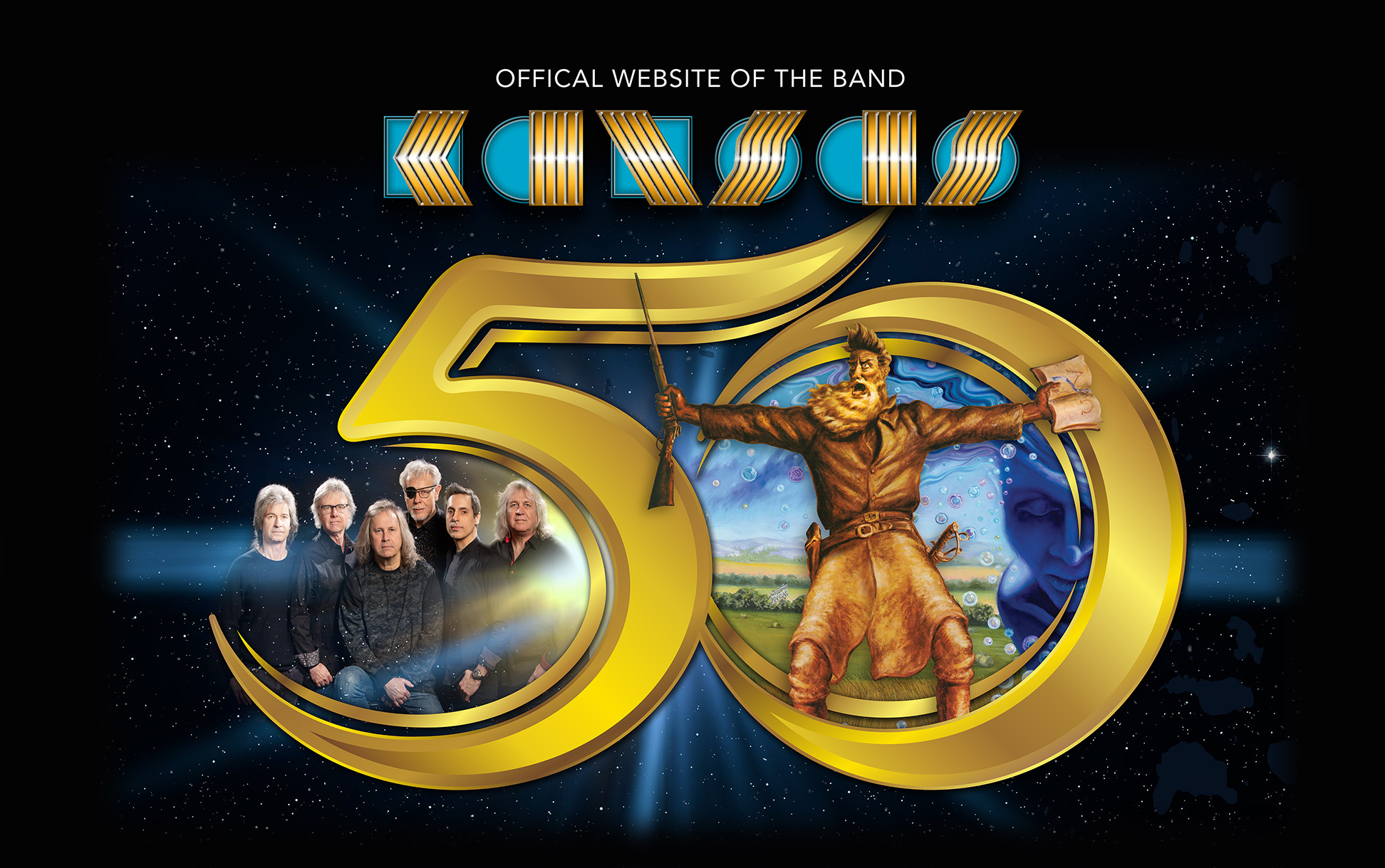
You know that feeling when the first few notes of "Carry On Wayward Son" hit? It’s iconic. It’s heavy. But honestly, most people couldn't name the guys behind the instruments if their life depended on it. They just know the wall of sound. The band members of Kansas aren't just a revolving door of musicians; they are a group of guys who basically invented "Midwestern Progressive Rock" in a garage in Topeka. It’s a wild story of high-school friends, massive ego clashes, religious conversions, and a violin player who somehow made a fiddle look as cool as a Gibson Les Paul.
If you look at the lineup today, it’s vastly different from the one that recorded Leftoverture in 1976. That’s just the nature of a band that’s been touring for over five decades. Bands evolve. They break up. They find new singers when the old ones lose their high notes or find God.
The Original Six: The Topeka Titans
Let's talk about the "classic" lineup. This is the group that most fans consider the "real" Kansas. From 1973 to 1981, it was Kerry Livgren, Steve Walsh, Robby Steinhardt, Phil Ehart, Rich Williams, and Dave Hope.
Kerry Livgren was the brain. He wrote the hits. He was the guy obsessing over spiritual philosophy and complex time signatures while the rest of the world was listening to disco. Then you had Steve Walsh. Man, Walsh in the 70s? Unstoppable. He had the grit, the range, and he could do a handstand on his keyboards while singing "Dust in the Wind." It was insane energy.
Robby Steinhardt was the secret weapon. You don’t usually see a guy with a massive beard playing a violin in a rock band, but Robby made it work. His baritone voice was the perfect contrast to Walsh’s soaring tenor. When they harmonized, it was magic. Dave Hope and Phil Ehart provided the backbone. Ehart is actually one of the few guys who has been there since day one without ever leaving. He’s the anchor. Rich Williams, the guitarist with the eyepatch, is the other "lifer." He’s been through every single iteration of the band.
Why the Lineup Kept Shifting
Success is hard. Touring is harder. By the early 80s, the band members of Kansas were pulling in different directions. Kerry Livgren and Dave Hope became born-again Christians. This changed the lyrical direction of the band, and Steve Walsh wasn't exactly feeling it. He wanted to rock; Kerry wanted to preach.
Walsh quit in 1981. He went off to form a band called Streets.
Kansas replaced him with John Elefante. Now, Elefante was a powerhouse singer, but he represented a shift toward a more "Contemporary Christian" sound and polished AOR. It worked for a bit—"Play the Game Tonight" was a hit—but the original chemistry was fading. By 1984, the band basically dissolved.
The 1986 Resurrection
They couldn't stay away. In 1986, Ehart, Williams, and Walsh got back together. But Kerry Livgren was gone, focusing on his solo project, AD. To fill the void, they brought in Steve Morse. Yes, that Steve Morse. The guitar legend from Dixie Dregs.
This era was weird but brilliant. Morse brought a technical proficiency that was off the charts. If you listen to the album Power, you can hear the shift. It’s less "symphonic prog" and more "hard rock with chops." Morse didn't stay long, though. He eventually headed off to join Deep Purple, leaving Kansas to figure out how to be Kansas without a second lead guitarist.
The Modern Era: Who is in the Band Now?
Fast forward to the 2020s. Steve Walsh retired in 2014. His voice had taken a beating over the years, and he decided to hang it up. Honestly, it was the end of an era. Many fans thought that was it. How do you replace Steve Walsh?
Enter Ronnie Platt.
Platt was a guy who used to drive a truck and sing in a Toto tribute band. It sounds like a movie script. But when he opens his mouth, he sounds more like 1977 Steve Walsh than anyone has a right to. He brought a fresh energy that the band desperately needed. Along with him, they added David Ragsdale back on violin (who had a stint in the 90s) and Tom Brislin on keyboards.
Today, the band members of Kansas are:
- Phil Ehart – Drums (The founding father)
- Rich Williams – Lead Guitar (The other founding father)
- Ronnie Platt – Lead Vocals/Keyboards
- Billy Greer – Bass/Vocals (He’s been there since 1985!)
- David Ragsdale – Violin/Guitar
- Tom Brislin – Keyboards
It’s a tight unit. They aren't just a "nostalgia act" playing the old hits; they’ve actually released new studio albums like The Absence of Presence (2020) that sound surprisingly like classic prog Kansas.
The Tragedy of Robby Steinhardt
We have to talk about Robby. In 2021, the Kansas family lost Robby Steinhardt due to complications from pancreatitis. It was a massive blow. Even though he hadn't been in the band for years, he was the soul of their live shows back in the day. He was the bridge between the audience and the complex music. He was the guy who made the violin "rock."
Misconceptions About the Songwriting
A lot of people think Kansas was a collaborative jam band. Not really. In the early days, it was the Kerry Livgren show. He wrote almost everything on Leftoverture and Point of Know Return. Steve Walsh wrote some of the more "rocking" tracks, but the epic, multi-part suites were Livgren’s babies.
When people search for band members of Kansas, they often look for who wrote "Dust in the Wind." That was Kerry. Legend has it he was just doing a finger-picking exercise on his acoustic guitar, and his wife told him it sounded like a hit. He almost didn't show it to the band because he didn't think it "fit" their style. Imagine Kansas without their biggest song just because the songwriter was being a perfectionist.
Navigating the Different Iterations
It gets confusing. There was a period where Kerry Livgren and Dave Hope were playing in a band called Proto-Kaw, which was basically the pre-Kansas version of Kansas. Then you had the 90s where guys were coming and going so fast it was hard to keep track.
But if you want to understand the DNA of the band, you look at Phil Ehart. He’s the manager. He’s the drummer. He’s the guy who kept the lights on when the labels didn't care anymore.
Actionable Insights for Fans and Collectors
If you're looking to dive deeper into the history of these musicians, don't just stick to the Greatest Hits. The nuances of the different lineups are found in the deep cuts.
- Listen to 'Song for America' (Title Track): This is the definitive "Original Six" track. It shows the interplay between Steinhardt’s violin and the dual guitars of Livgren and Williams.
- Check out the Steve Morse Era: The album Power is a masterclass in 80s production and elite guitar work. It’s a different flavor of Kansas, but it’s high-quality.
- Watch 'Miracles Out of Nowhere': This is the official documentary. It features the original members sitting around a table talking about the early days. It’s the best way to see the personalities behind the names.
- Follow the solo projects: Kerry Livgren’s Seeds of Change features vocals from Ronnie James Dio and Steve Walsh. It’s a prog-rock wet dream.
- See them live now: Don't be a "no original singer, no band" snob. Ronnie Platt is the real deal, and the current lineup plays the complex material with more precision than they did in the drug-fueled 70s.
The legacy of the band members of Kansas isn't just about the names on the back of an LP. It’s about a specific brand of American complexity. They took the "English" sound of Yes and Genesis and gave it a dusty, heartland grit. Whether it's the 1973 lineup or the 2026 touring group, that spirit remains.
To truly appreciate the band, you have to acknowledge that they are a living organism. They change skin, they grow, they lose parts, but the heart—that driving, rhythmic, symphonic heart—stays the same. Keep an eye on their official tour dates, as they still hit the road harder than bands half their age, proving that "Carry On" wasn't just a song title; it was a mission statement.