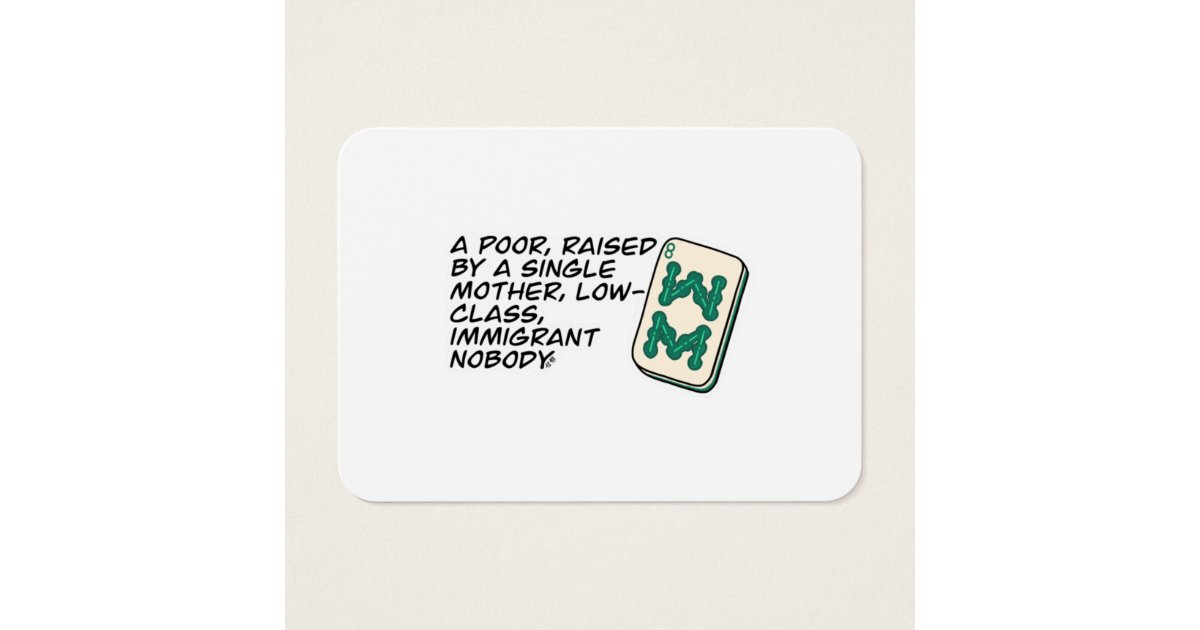
You know that feeling when you're watching a movie and you realize there is a whole second conversation happening right under the surface? That's the Crazy Rich Asians mahjong scene. Honestly, if you don't play the game, you probably saw two women clicking tiles and talking about a guy. But for those who grew up hearing that specific clack-clack sound at family gatherings, that scene was a masterclass in cinematic shade.
It’s basically the climax of the entire movie. No car chases. No explosions. Just two women sitting across from each other in a dimly lit parlor in Singapore.
On one side, you've got Eleanor Young. She’s the "East." She’s tradition, old money, and the gatekeeper of what it means to be "Chinese." Across from her is Rachel Chu. She’s the "West." She’s a New York economics professor, the daughter of a single mom, and—in Eleanor’s eyes—completely unworthy of her son, Nick.
Why the Seating Isn't Random
In mahjong, the positions at the table are named after the four compass directions. Eleanor sits in the East seat. That’s the dealer’s spot. It’s the position of power and authority. Rachel sits in the West.
See what they did there?
It’s a literal East-meets-West showdown. But there is a subtle detail most people miss: they are sitting directly opposite each other. In a typical game, the person to your right is the one you have the most control over because you choose what tiles to discard to them. By sitting opposite, the movie signals that they are equals. Rachel isn't beneath Eleanor; she's a peer who can look her straight in the eye.
The Tile That Changed Everything: The 8 of Bamboo
If you look closely at Rachel’s hand, she is holding a winning set. She draws the 8 of Bamboo. In Chinese culture, eight is the ultimate number for luck and prosperity.
But Rachel is a game theory expert. She knows exactly what Eleanor needs to win her own hand.
Eleanor is building a "Pong" hand—a set of identical triplets. This represents her worldview: a family made of people who are all exactly the same, "kaki lang" (our kind of people). Rachel, meanwhile, has a "Half-Color" hand. It’s a mix. It’s a beautiful, complex assembly of different suits that represents her identity as an Asian American.
Rachel does something unthinkable: she discards the 8 of Bamboo.
She gives Eleanor the win.
What Rachel Was Actually Saying
When Rachel tosses that tile, she isn't "losing." She’s winning a game Eleanor didn't even realize they were playing.
She tells Eleanor that Nick proposed. She tells her that Nick was willing to walk away from his family, his inheritance, and his mother just to be with her. But Rachel said no. Why? Because she didn't want Nick to lose his mother.
By discarding that 8 of Bamboo, Rachel is saying: "I am giving you your son back. You get to keep your 'winning hand' (Nick), but only because I chose to let you have him."
It’s a brutal move. Basically, Rachel ensures that every time Eleanor looks at Nick for the rest of her life, she’ll have to remember that a "poor, low-class immigrant nobody" was the one who was actually noble enough to put Nick’s happiness first.
The "Jook Sing" Discards
Next time you rewatch, look at the tiles already on the table. There are a bunch of discarded bamboo tiles scattered around. In Cantonese, there’s a slang term called "juk sing" (bamboo pole).
It’s a bit of a dig.
A bamboo pole is hollow. Water can get in, but it can't flow through the nodes. It’s used to describe Westernized Chinese people—yellow on the outside, but "hollow" or lacking Chinese culture on the inside. Eleanor sees Rachel as a "juk sing." By showing those discarded bamboo tiles on the table, the director, Jon M. Chu, is visually representing how Eleanor views Rachel: as something to be thrown away.
Why This Scene Wasn't in the Book
Interestingly, this entire sequence wasn't in Kevin Kwan’s original novel. It was added specifically for the film. Michelle Yeoh actually refused to play Eleanor as a one-dimensional "tiger mom" villain. She wanted the character to have depth and a reason for her coldness.
The mahjong scene gave her that. It showed that Eleanor isn't just being mean; she’s protecting a legacy she sacrificed her own life for.
How to Apply the "Mahjong Strategy" to Real Life
You don't have to be a "Crazy Rich Asian" to use the logic Rachel Chu used in that parlor. It’s about Game Theory.
- Don't play "not to lose": In the beginning of the movie, Rachel teaches her students that most people play to avoid losing. That makes them predictable.
- Identify the "Third Option": Everyone thought the choice was Nick stays with family OR Nick stays with Rachel. Rachel found a third way: she leaves, but she changes the power dynamic forever.
- Know your worth: Rachel didn't need the Young family's money to know she was the "winning hand."
If you want to dive deeper into the cultural nuances of the film, you should look into the history of Hokkien terms used in Singaporean "Singlish." Understanding the weight of a word like "kaki lang" makes Eleanor’s insults hit way harder. You might also want to look up the specific rules of Singaporean Mahjong, which differs slightly from the Hong Kong or American versions—especially regarding how "points" (or tai) are calculated for winning hands.