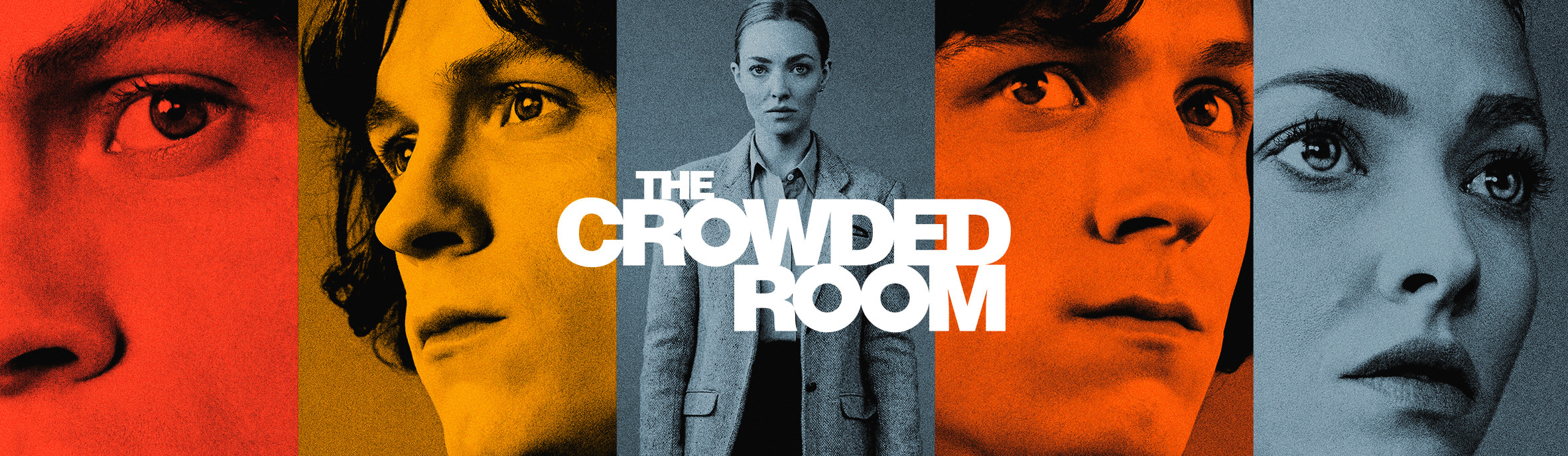
Let’s be real for a second. When The Crowded Room Apple TV series first dropped, the critics weren't exactly kind. They called it slow. They called it confusing. Some even said it was a bit of a slog. But if you actually sit down and watch the thing, you realize that the disconnect between the "pro" reviewers and the audience was massive. It’s one of those shows that rewards patience, which is a rare commodity in the era of TikTok-length attention spans.
Tom Holland isn’t just Spider-Man here. Honestly, he’s barely recognizable as the Peter Parker we know. He plays Danny Sullivan, a young man arrested after a shooting at Rockefeller Center in 1979. What follows isn't your standard "whodunit." It’s more of a "why-dunit" or even a "who-is-he-really-dunit."
The show is loosely based on the non-fiction novel The Minds of Billy Milligan by Daniel Keyes. If you know that name, you probably already know where the story is headed. But for everyone else, the show tries to play it like a mystery. That’s where things got a little hairy with the reception.
What Most People Get Wrong About the Plot
People went into this expecting a fast-paced thriller. It isn’t that. Not even close.
The story unfolds through a series of interviews between Danny and Rya Goodwin, played by Amanda Seyfried. She’s a clinical psychologist trying to figure out what makes him tick before he goes to trial. The show spends a lot of time in the past. We see Danny’s childhood, his awkward teenage years, and his weird group of friends living in a literal "crowded room" of an abandoned house.
The Big Twist That Everyone Already Knew
The central conflict for many viewers was the "twist." The Crowded Room Apple TV series hinges on the reveal that Danny has Dissociative Identity Disorder (DID).
Here is the thing: if you read the marketing, or the book it's based on, or even just Googled the title, you knew this by episode one. Yet, the show treats it like a massive spoiler for the first half of the season. This frustrated critics. They felt the show was "gaslighting" the audience by pretending we didn't know what was going on.
But if you look at it differently, the show isn't trying to trick you. It’s trying to show you Danny’s subjective reality. He doesn't know. So, we have to sit in that confusion with him. It’s a bold choice. It’s also a risky one that didn't pay off for everyone.
Tom Holland’s Performance is Actually Incredible
Forget the CGI and the quips. This is a career-best for Holland. He’s gone on record saying how much this role drained him emotionally. He even took a year-long break from acting after production wrapped because of it.
You can see why.
He has to play multiple facets of the same person without it feeling like a caricature. In the 1970s setting, he feels fragile. Vulnerable. You genuinely worry about Danny, even when he’s doing things that are objectively terrifying or illegal.
Why the 1970s Setting Matters
The 70s were a weird time for mental health. The DSM-II was the standard back then, and "Multiple Personality Disorder" (as it was called then) was incredibly controversial. The show captures that skepticism perfectly. You have the legal system, represented by the prosecutors, who think Danny is just a cold-blooded liar making up a story to get off easy. Then you have Rya, who sees the trauma underneath.
It’s a battle between the old way of thinking—punishment and prison—and a more modern understanding of psychological trauma.
The Reality of Billy Milligan vs. Danny Sullivan
While The Crowded Room Apple TV+ is inspired by Billy Milligan, it takes huge liberties. This is important. Billy Milligan was a real person, and his life was... dark. Much darker than the show portrays.
Milligan was the first person in U.S. history to be found not guilty of a violent crime due to Dissociative Identity Disorder. He was accused of several felonies, including armed robbery and three rapes on the Ohio State University campus.
The show softens this. Danny Sullivan isn't a serial rapist. He’s a kid caught up in a shooting. This change makes Danny more sympathetic, but it also sanitizes the grit of the original story. Some fans of true crime felt this was a cop-out.
"I wanted to tell a story about empathy," creator Akiva Goldsman told various outlets during the press tour.
Goldsman himself has experience with this kind of narrative; he wrote the screenplay for A Beautiful Mind. He’s interested in how the brain creates alternate realities to survive. If you want a 1:1 documentary of Billy Milligan, this isn't it. If you want a character study on survival, it's exactly that.
The Supporting Cast is the Secret Weapon
Amanda Seyfried is the anchor. While Holland is doing the high-wire act, she is the one keeping the show grounded in reality. Her character, Rya, has her own struggles—being a woman in academia in the 70s, raising a kid on her own. She isn't just a plot device to get Danny to talk.
Then there is Sasha Lane and Will Chase. Will Chase plays Danny's stepfather, Marlin, and he is genuinely loathsome. He represents the "silent" trauma that often triggers these kinds of psychological breaks. The scenes between him and Holland are some of the most uncomfortable television you'll watch, but they are necessary.
Breaking Down the Episodes
The series is ten episodes long.
- The first three are almost entirely setup.
- Episodes four through six are where the cracks start to show.
- The final three episodes are a courtroom drama.
This structure is why some people dropped off early. You have to get past the first three hours to understand what the show is actually doing. In 2026, where we want everything now, a three-hour "intro" is a tough sell. But for those who stayed, the payoff in the courtroom scenes—specifically the testimony—is heavy stuff.
Is It Worth Watching in 2026?
Yes. Especially if you’re interested in mental health representation.
The show handles DID with more grace than, say, Split or other horror-adjacent media. It doesn't treat Danny like a monster. It treats him like a broken person who had to shatter himself into pieces just to keep going.
There’s also the production value. Apple TV+ doesn't cheap out. The recreation of 1970s New York is grimy, golden-hued, and claustrophobic. You can almost smell the cigarette smoke and the stale subway air.
Critical Reception vs. Audience Score
On Rotten Tomatoes, the critic score was famously low—somewhere in the 30% range initially. But the audience score? It stayed high, often in the 80s and 90s.
This happens a lot lately. Critics look at the pacing and the structure. Audiences look at the emotion and the acting. If you care about "prestige" acting, you’ll love it. If you want a high-octane thriller like Slow Horses (another great Apple show), you might find yourself checking your phone.
Practical Insights for Viewers
If you're planning to dive into The Crowded Room Apple TV, here is how to actually enjoy it without getting frustrated:
- Don't Google the ending. Even if you think you know the Billy Milligan story, the show changes enough that the emotional beats might still surprise you.
- Binge the first three episodes. Do not watch them one by one. The "hook" doesn't fully sink in until you've seen the third hour.
- Pay attention to the background actors. Once you realize what is happening with Danny’s "friends," go back and watch how other people in the scenes react to them. Or, more accurately, how they don't react to them. It’s a brilliant bit of directing by Kornél Mundruczó and others.
- Watch for the color palette changes. The show uses specific colors to signify which "personality" or "vibe" is dominant in a scene. It’s subtle, but it’s there.
Why the Ending Still Matters
The final episode doesn't just wrap up the legal case. It deals with the aftermath of integration—the process of trying to bring those fractured parts of a personality back together. It’s not a "happily ever after." It’s a "now the hard work begins."
That’s a much more honest take on mental illness than we usually get in Hollywood. Most shows treat a diagnosis like the end of the story. In The Crowded Room, the diagnosis is just the beginning of the recovery.
To get the most out of your viewing experience:
- Watch it on a screen where you can appreciate the cinematography; the 70s grain is beautiful.
- Listen for the sound design—noises often bleed from one "room" to another in Danny's head before he even realizes it.
- Compare it to the actual history of Billy Milligan if you enjoy true crime, but keep the two separate in your head to avoid being annoyed by the creative changes.
The show stands as a testament to Tom Holland's range and Apple's willingness to fund weird, difficult, and expensive dramas that don't always fit into a neat little box. It's a heavy lift, but it's one that stays with you long after the credits roll on episode ten.