It was a beautiful Wednesday. People in New York and Connecticut were literally looking at the sky, seeing a weird mist, and thinking it was just a strange fog. They had no idea. In 1938, you didn't have an iPhone in your pocket screaming at you to seek shelter. You had the radio, maybe a morning newspaper, and the word of a Weather Bureau that—frankly—thought the storm was heading toward the Carolinas.
The Great New England Hurricane of 1938 wasn't just a storm. It was a complete institutional failure mixed with a geological nightmare.
Most people think of New England as this safe haven from "real" tropical weather, but this storm proved that when the Atlantic decides to play hardball, it doesn't care about latitude. It hit fast. It hit hard. It changed the coastline of the Northeast forever, and honestly, we’re still living with the scars it left on the landscape and the way we track weather today.
The Storm That Moved Too Fast to Track
Weather forecasting in the 1930s was basically a guessing game compared to what we have now. Charles Tannehill at the U.S. Weather Bureau was watching the storm, but the data was sparse. Ships at sea were the only real "sensors" back then. One ship, the Cunard Liner Carinthia, reported a massive drop in pressure, but by the time that info moved through the wires, the storm had already hooked north.
It was moving at 60 or 70 miles per hour. That’s not the wind speed—that’s the forward motion of the entire system.
Imagine a buzzsaw moving across the floor at a dead sprint. That’s why they called it the "Long Island Express." Usually, hurricanes slow down when they hit the colder waters of the North Atlantic. Not this one. It stayed a Category 3 monster because it was caught between two high-pressure systems that acted like a funnel, jetting it straight into the heart of New York and New England.
When it made landfall on Long Island around 2:10 PM, it wasn't a gradual buildup. It was a wall of water. People in Westhampton thought they were seeing a "thick fog" on the horizon until they realized the fog was actually a 50-foot wave. There was no time to run. If you were on the beach, you were basically gone.
Why the Blue Hill Observatory Data Matters
If you want to understand the raw power of this thing, you look at the records from the Blue Hill Observatory in Milton, Massachusetts. They recorded a sustained wind of 121 mph and a peak gust of 186 mph.
That is terrifying.
To put that in perspective, most modern homes are built to withstand 110 or 120 mph gusts. In 1938, houses were mostly timber and charm. They didn't stand a chance. In Providence, Rhode Island, the storm surge was so high—nearly 14 feet above the normal high tide—that it flooded the entire downtown district. People were literally swimming out of the second-story windows of department stores.
It’s wild to think about, but the surge was so powerful it actually registered on seismographs in Alaska. The earth literally shook because of the weight of the water hitting the New England coast.
The Human Cost and the "Missing" Warnings
We talk about the 682 deaths as a statistic, but the stories are gut-wrenching. There's a famous (and true) account of a man who had just received a brand-new barometer in the mail at his beach house. He saw the needle pointing to "Hurricane," thought the device was broken, and drove back to the post office to complain. By the time he got back, his house was gone.
The Weather Bureau actually took a massive hit to its reputation after this. A junior forecaster named Charlie Pierce had actually predicted the storm would hit New England, but his superiors overruled him. They thought it was "impossible" for a hurricane to maintain that much strength so far north. That kind of institutional arrogance is why so many people were caught completely off guard while eating lunch or working in the fields.
The Environmental Scars You Can Still See
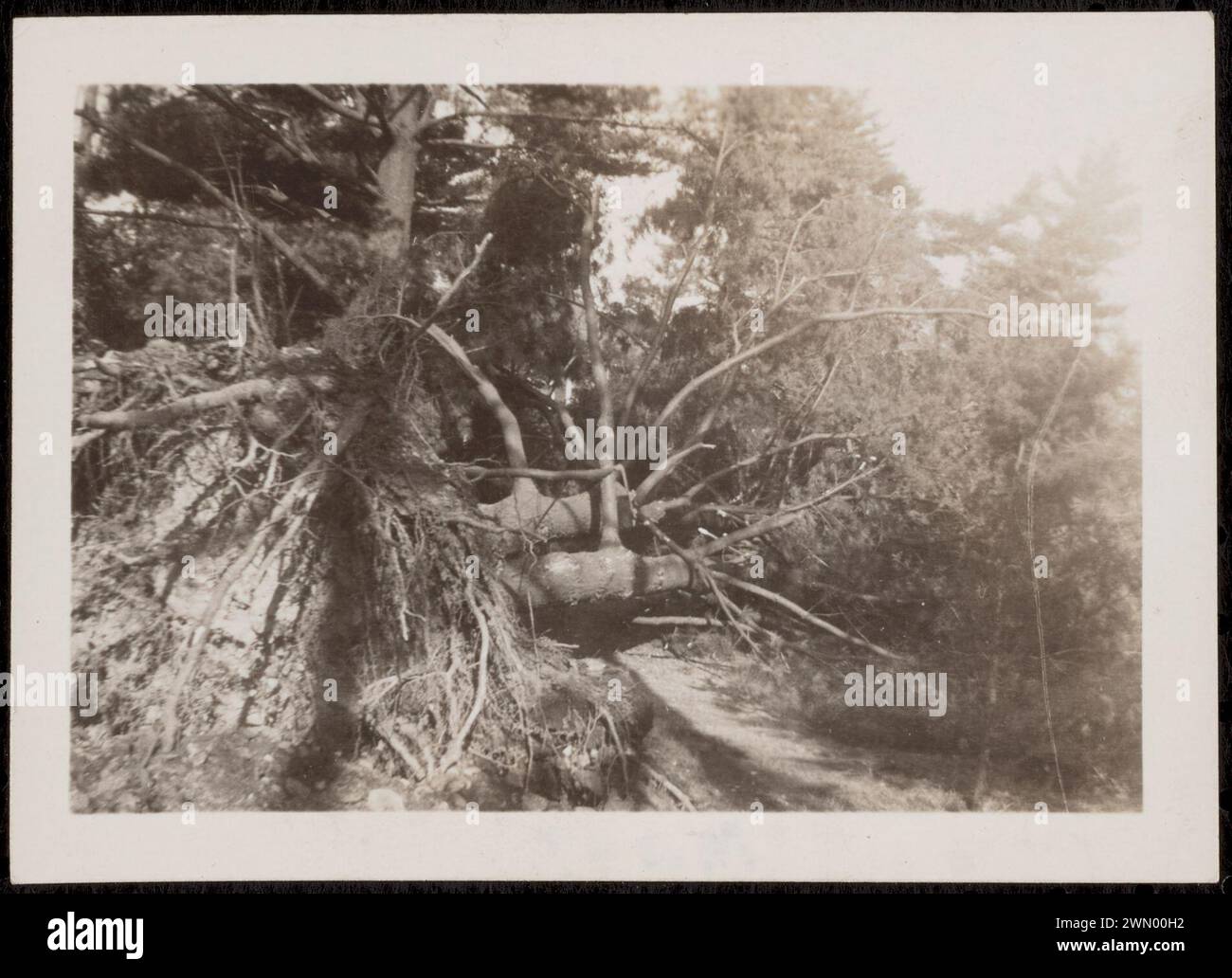
If you walk through the woods in parts of New Hampshire or Vermont today, you might notice "pillows and hollows" on the forest floor. These are mounds of dirt next to pits. They aren't natural hills. They are the root balls of millions of trees—literally two billion trees—that were knocked over in a single afternoon in 1938.
The timber industry in New England was devastated. So much wood was downed that the government had to create the Northeastern Timber Salvage Administration just to keep the fallen logs from becoming a massive fire hazard. Some of those logs were stored in ponds for years to prevent rot, and people were still milling "hurricane lumber" well into the 1940s.
It changed the ecology of the region. The old-growth white pines were mostly wiped out, replaced by faster-growing hardwoods. The very look of the New England forest changed in about six hours.
The Engineering Shift
After 1938, the way we built things in the North changed. The Fox Point Hurricane Barrier in Providence exists because the city got tired of drowning. It’s a massive gate system designed to keep the Narragansett Bay out of the city streets.
But here is the scary part: sea levels are higher now than they were in 1938.
If the same storm hit today, the damage wouldn't be in the millions; it would be in the hundreds of billions. We have more "stuff" on the coast now. More McMansions in the Hamptons, more high-rises in Stamford, more infrastructure in Boston. The 1938 storm showed us that the "unthinkable" is actually a recurring cycle.
How to Prepare for a Modern North Atlantic Monster
You can't just assume because you live in a cold climate that you're safe. The Great New England Hurricane of 1938 is the blueprint for the "worst-case scenario" for the Northeast. While we have satellites and Doppler radar now, the speed of these storms is still the biggest threat.
What you should actually do:
- Audit your "surge zone" status. Most people check for flood zones, but surge is different. If you are within two miles of the coast in RI, CT, or MA, you need to know the elevation of your first floor relative to the historical 1938 high-water mark.
- Don't trust the "weakening" narrative. Meteorologists often talk about storms losing steam as they move north. The 1938 storm proved that forward speed can compensate for a loss of internal wind speed, creating a devastating "ramming" effect.
- Tree maintenance is non-negotiable. The majority of inland damage in '38 came from falling timber. If you have old oaks or pines overhanging your roof, they are literal hammers waiting for a 100-mph gust.
- Secure your historical documents. One of the biggest losses in 1938 wasn't just buildings, but the records inside them. Digital backups are great, but physical heirlooms need to be in waterproof, fireproof safes located on the highest point of your property.
The 1938 hurricane wasn't a "once in a thousand years" event. It was a geological wake-up call. The atmosphere doesn't have a memory; it only has patterns. And sooner or later, the Long Island Express is going to run again. Knowing the history isn't just about trivia; it's about recognizing the warning signs when the sky turns that weird, bruised purple color again.
Actionable Insight: Download the historical surge maps for your specific township from the NOAA Office for Coastal Management. Compare your home’s elevation to the 1938 inundation levels to see if your current insurance coverage actually accounts for a Category 3 surge event. Do not rely on generic "Zone X" designations; look at the raw elevation data.