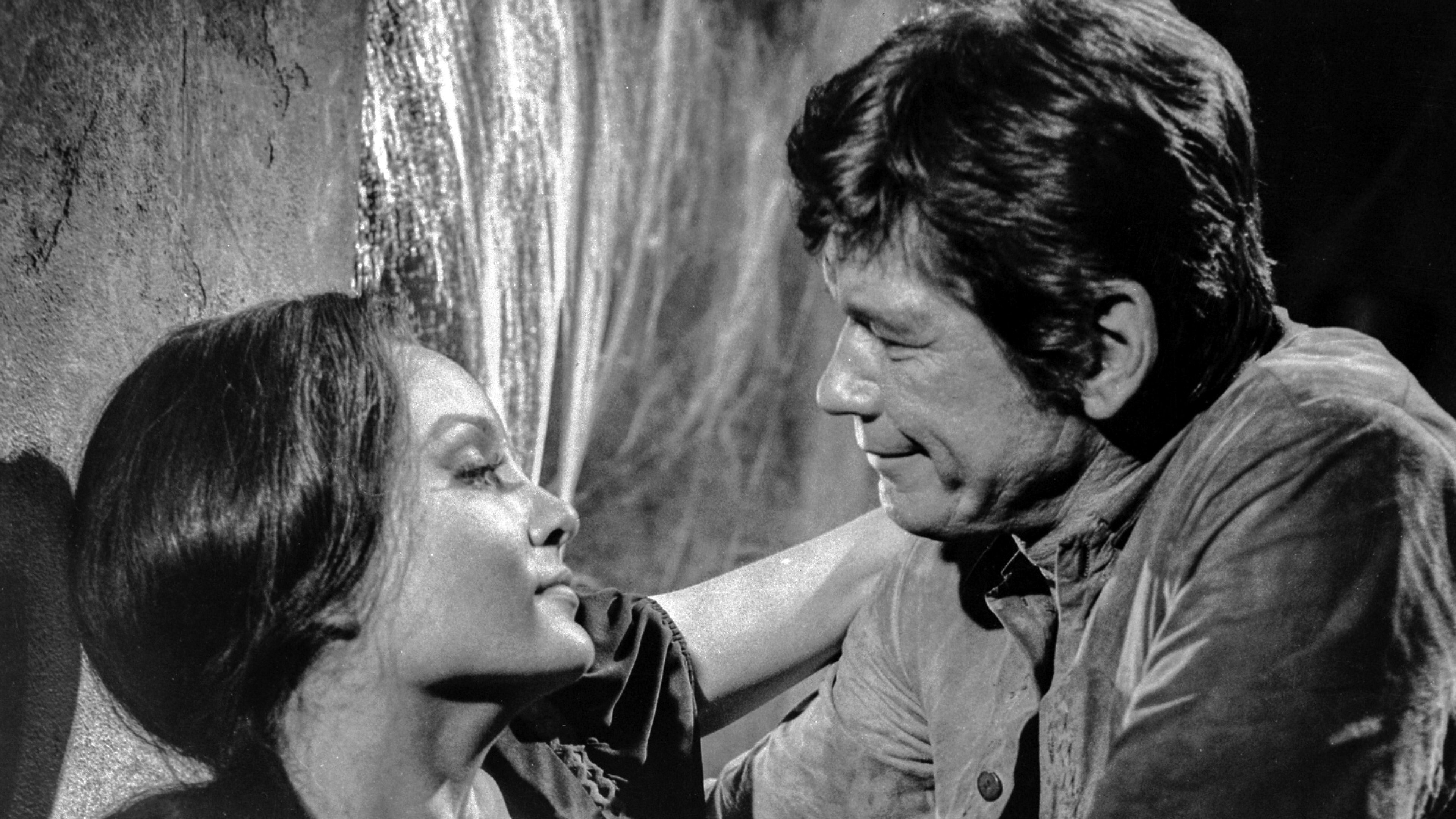
Charles Bronson wasn't always the "Death Wish" guy. Long before he was the face of 1970s urban vigilante cinema, he was grinding it out in the dusty trenches of the TV Western. That’s exactly where the Guns of Diablo movie comes from. It’s a strange beast. Honestly, it isn't even a "movie" in the traditional sense, which is why so many film buffs get confused when they stumble across it on streaming services or in those "20 Western Classics" DVD bargain bins.
It’s a patchwork.
Back in 1964, there was a show called The Travels of Jaimie McPheeters. It was an MGM production based on a Pulitzer Prize-winning novel by Robert Lewis Taylor. Bronson played Linc Murdock, the rugged wagonmaster. When the show got the axe after one season, the studio did what studios do: they looked for a way to squeeze out a few more bucks. They took the final episodes of the series, stitched them together with some new footage, expanded the color processing, and slapped a new title on it for the European theatrical market.
That’s how we got the Guns of Diablo movie.
The Weird Alchemy of a TV-to-Film Hybrid
If you watch it today, you can tell something is off. The pacing is frantic because it’s trying to condense hours of television narrative into a tight 79-minute runtime. Most Westerns of that era—think The Searchers or Rio Bravo—have a slow, methodical burn. Not this one. It hits the ground running because it was literally designed to fit between commercial breaks.
Kurt Russell is in this. Yes, that Kurt Russell. He was about 12 or 13 years old at the time, playing Jaimie McPheeters. It is wild to see a prepubescent Snake Plissken trading lines with a prime-era Bronson. Their chemistry is actually the best part of the film. While Bronson is doing his usual stoic, "I might kill you or I might eat a bean" routine, Russell brings a genuine, wide-eyed energy that balances the grit.
The plot revolves around a wagon train heading to California. They run into trouble in the form of an old flame of Murdock's (played by Susan Oliver) and her corrupt, megalomaniac husband, Rance Macklin. Jan Merlin plays Macklin, and he is chewing every piece of scenery he can find. He’s got that classic 60s TV villain vibe—lots of squinting and over-enunciated threats.
Why the Guns of Diablo Movie Matters to Film Historians
You won't find this film on many "Top 100 Westerns" lists. It’s often dismissed as a footnote. But for fans of Charles Bronson, it’s a vital piece of the puzzle. This was the moment MGM realized he could carry a film as a lead. In The Magnificent Seven (1960) and The Great Escape (1963), he was part of an ensemble. In the Guns of Diablo movie, he is the undisputed gravity of the story.
It’s also a bridge between the "Golden Age" of TV Westerns and the more violent, cynical Spaghetti Westerns that were about to explode out of Italy.
- The violence is a bit sharper than your average Bonanza episode.
- The moral ambiguity of the characters is starting to show.
- The production value, thanks to MGM’s backlot and location shooting in California, looks surprisingly expensive for what was essentially a recycled TV project.
The "Diablo" of the title refers to a specific pass or town, but let's be real: it was chosen because it sounded cool and dangerous. Marketing in 1965 wasn't about nuance; it was about getting people to buy a ticket because the poster looked like a gunfight.
The Technical Quirks
Since this was filmed in Metrocolor, the reds and blues pop in a way that feels almost psychedelic today. It has that saturated, 1960s Technicolor-lite glow. The cinematography was handled by Paul Vogel, a guy who won an Oscar for The Battleground and worked on High Society. Having an A-list cinematographer on a TV show was MGM's way of trying to make Jaimie McPheeters feel "cinematic," and that effort carries over into the movie version.
But the editing is where you see the seams. You’ll notice certain characters disappear or subplots that seem to lead nowhere. That’s the "Frankenstein" nature of the edit. They had to cut out the "filler" from the TV episodes to make a coherent movie plot, but they ended up losing some of the character development that made the original show decent.
Finding the Movie Today
Finding a high-quality version of the Guns of Diablo movie is a bit of a hunt. Because it’s a licensed property derived from a TV show, it has spent years in a sort of legal and distributional limbo. It pops up on YouTube in grainy 480p, or on "Grey Market" labels.
If you’re a Bronson completionist, you need to see it. It shows a version of him that is more athletic and vocal than the "mumbling statue" he became in his later years. He’s actually acting here, moving with a cat-like grace that explains why he became such a massive star in Europe before America finally caught on.
The film also features Douglas Fowley and Russ Conway, stalwarts of the era. You’ve seen their faces in a thousand things, even if you don't know their names. They provide that sturdy, professional backbone that made 60s Westerns feel authentic, even when the scripts were a little thin.
Practical Steps for Western Fans
If you want to actually enjoy this movie without getting frustrated by its "choppy" nature, here is how you should approach it.
Don't go in expecting Unforgiven.
Treat it like a long-lost pilot for a show that never was. If you view it as a standalone action piece, it’s actually pretty fun. The shootout at the end is well-staged, and the tension between Bronson and Merlin’s characters feels real enough to keep you engaged.
- Check the Credits: Look for the name Boris Sagal. He directed the movie segments and episodes. He was a prolific TV director (and father of Katey Sagal) who knew how to make a budget look like a million bucks.
- Watch for the Tone Shift: You can almost feel where one episode ends and the next begins based on the lighting changes.
- Focus on Russell and Bronson: Their dynamic is the only reason the movie survives in the public consciousness. It’s a rare "passing of the torch" moment captured on film decades before it actually happened in Hollywood.
The legacy of the Guns of Diablo movie is its status as a survivor. It represents a time when the film industry was terrified of television and decided the best way to fight back was to cannibalize it. It’s a weird, gritty, colorful piece of Western history that deserves a look, if only to see a young boy who would become a legend and a man who already was one.
To get the most out of it, try to find the remastered versions occasionally released by Warner Archive. They’ve done the best job of cleaning up the Metrocolor palette so you aren't watching a muddy mess. Once you've tracked down a clean copy, pay attention to the score by Leigh Harline. He’s the guy who wrote "When You Wish Upon a Star" for Pinocchio, but here he’s doing rugged, orchestral Americana. It’s a bizarre contrast that somehow works.
Digging into these mid-century genre pieces reveals a lot about how Hollywood used to recycle content long before "reboots" were a daily occurrence. The Guns of Diablo movie is the ultimate example of that hustle. It's not perfect cinema, but it’s a perfect time capsule of 1964 professional craftsmanship.
Start by searching for the "Warner Archive Collection" DVD or digital rental. It’s the only way to see the film in its original 1.85:1 aspect ratio rather than the cropped versions that used to air on late-night TV. That extra screen real estate makes the landscapes feel much more like a true Western and less like a soundstage. From there, you can trace Bronson's trajectory directly into The Dirty Dozen, which changed his career forever.