If you’ve ever stepped foot into Bill Snyder Family Stadium on a Saturday or squeezed into Bramlage Coliseum for a mid-week conference game, you’ve felt it. It starts with a specific, bright brass fanfare. Suddenly, thousands of people—from toddlers to 80-year-old boosters—start a synchronized, frantic swaying.
They lean forward. They lean back. They twist. They clap.
It looks like a purple ocean of rhythmic chaos. It’s the K-State Wabash Cannonball, and honestly, it’s one of the weirdest and most beautiful traditions in all of college sports. But here’s the thing: this isn't just some catchy tune someone picked off a Top 40 list. This song exists as a K-State staple because of a literal crime.
The Night Everything Burned
December 13, 1968. That’s the date every Wildcat should know.
At the time, the K-State music department lived in Nichols Hall. It was an old, castle-like building, but it was home. That night, an arsonist set fire to the place. It wasn't just a small kitchen fire; it was a total loss.
The flames gutted the building, and with it, almost every single piece of sheet music the band owned. Instruments were melted. History was gone. Imagine being the band director, Phil Hewett, and realizing your entire library is ash.
But there was a fluke. A literal "glitch in the matrix" moment.
Hewett had taken one single arrangement home with him that night to work on it: a jaunty little folk tune called the Wabash Cannonball.
Three Days and One Song
Three nights later, on December 16, the Wildcats had a home basketball game at Ahearn Fieldhouse. The band had to play. They didn’t have their standard repertoire. They didn’t have their fight songs.
They had one song.
They played the Wabash Cannonball. Then they played it again. And again. They basically played it the entire night because it was the only thing they had music for.
Instead of being annoyed, the crowd went wild. It became a symbol of survival. It was the song that wouldn’t burn. Since then, it’s been the unofficial second fight song of Kansas State University, a testament to the fact that you can burn the building, but you can't kill the spirit.
Why Do We Do That Weird Dance?
If you’re a visitor, the "Wabash" looks like a coordinated aerobics class. Fans in the student section are especially intense about it, often alternating rows so they don't smack heads with the person in front of them.
Interestingly, the dance didn't start the same night as the fire. For years, people just clapped or swayed. According to Dr. Frank Tracz, the longtime Director of Bands at K-State, the specific "bend and twist" movement actually started around 1995.
It began with the clarinet section.
The clarinets have a section of the song where they don't actually play. To keep themselves from just standing there like statues, they started doing this rhythmic, aggressive leaning and twisting. The students in the stands saw it, thought it looked cool (or at least fun), and started mimicking it.
Now, if you don't do it, you're the odd one out. It’s physically exhausting if the band plays the "fast" version for too long, but nobody stops.
The Folk Roots of a Legend
While it’s K-State’s song now, the Wabash Cannonball has a much longer history. It’s an American folk song about a fictional train. Some say it dates back to the late 1800s, credited to J.A. Roff.
The lyrics tell the story of a "mighty tall and handsome" train that glides through the hills and by the shore. It’s been covered by everyone:
- Roy Acuff (this is the version that made it famous in the Grand Ole Opry world)
- Johnny Cash
- The Nitty Gritty Dirt Band
- Boxcar Willie
But for a school in Manhattan, Kansas, it has nothing to do with the Great Rock Island Route or "Daddy Claxton." It’s about 1968. It’s about showing up when you’ve lost everything.
More Than Just a Game Day Anthem
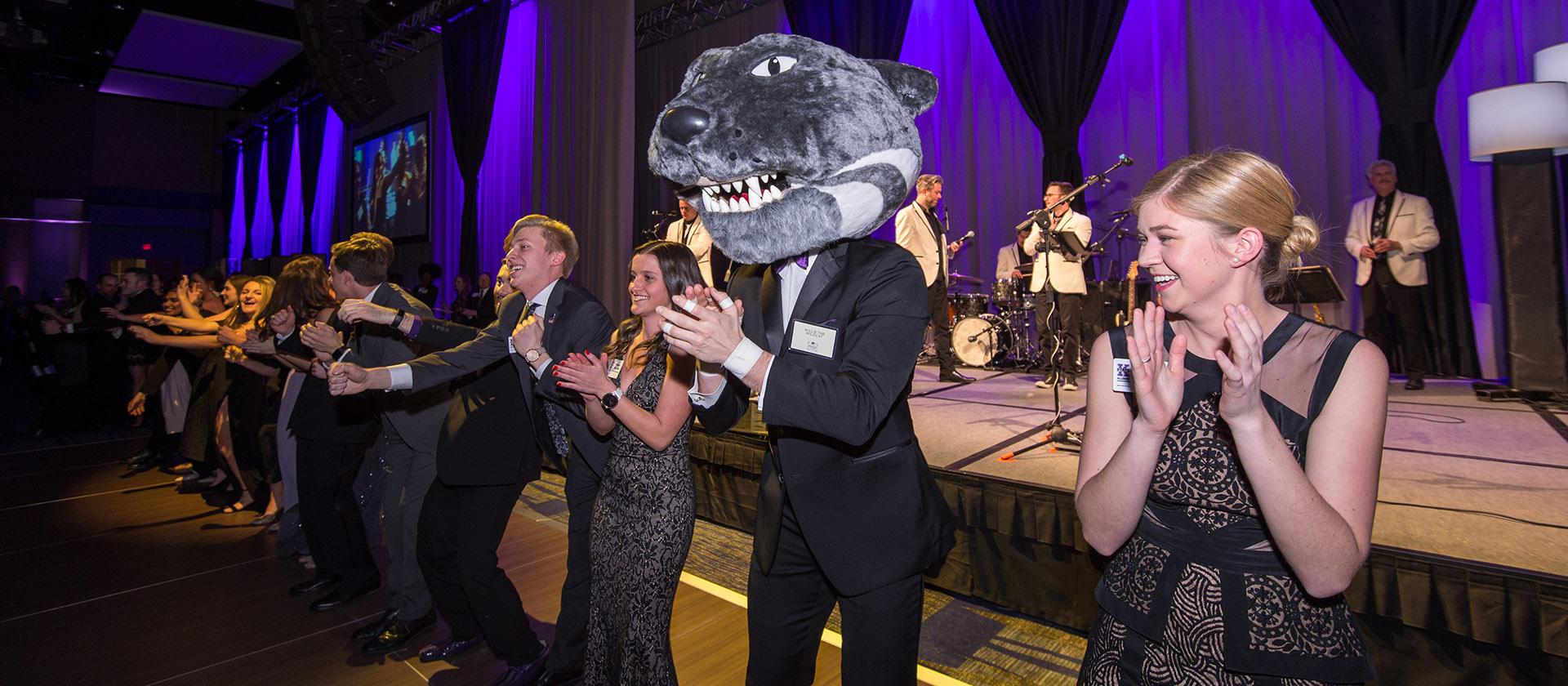
The name "Wabash" has transcended the four quarters of a football game. The K-State Alumni Association runs the Wabash CannonBall gala, which is a massive black-tie event.
As of early 2026, these galas in Kansas City and other cities have raised millions of dollars—over $6.8 million, to be more precise—for student scholarships. It’s pretty wild to think that a song saved from a fire is now the reason hundreds of kids can afford to go to college.
The 2026 Kansas City gala, for instance, is a sell-out event every year. It’s a "purple-out" in tuxedos.
Common Misconceptions
- Is it the official fight song? No. That’s "Wildcat Victory." But if you ask a fan which one they like better, they’ll probably hesitate.
- Do other schools use it? Yes. Schools like Texas Tech and Indiana State have used the tune, but nobody has the "fire survival" backstory or the specific "Wabash dance" like K-State.
- Does the band ever skip it? Almost never. It’s usually played at the end of the first quarter or during big momentum shifts.
How to Do the Wabash Like a Pro
If you’re heading to Manhattan for the first time, don't just stand there. You'll look like a Jayhawk.
- Listen for the brass. The opening notes are iconic. When the percussion kicks in, get ready.
- Watch your neighbors. If you’re in the student section, you usually lean forward while the row in front of you leans back. This prevents a mass casualty event of head-butting.
- The "Hey" is mandatory. During the pauses, the crowd yells "Hey! Hey! Hey! Let's Go State!"
- Embrace the burn. Your lower back and quads might hate you by the end of the second chorus. Keep going anyway.
The K-State Wabash Cannonball is more than just music; it’s a living piece of history that proves the Wildcats are at their best when their backs are against the wall.
Next Steps for the Wildcat Faithful
- Visit the New Nichols Hall: Go see the building that rose from the ashes. It was rebuilt in the 1980s and stands as a beautiful reminder of the university's resilience.
- Support the Pride of Wildcat Land: The K-State Marching Band (The Pride) is a self-funded entity in many ways. You can donate to their instrument and travel funds through the KSU Foundation.
- Attend a Gala: If you're an alum, check the K-State Alumni Association schedule for the next Wabash CannonBall gala in your area to help fund the next generation of students.