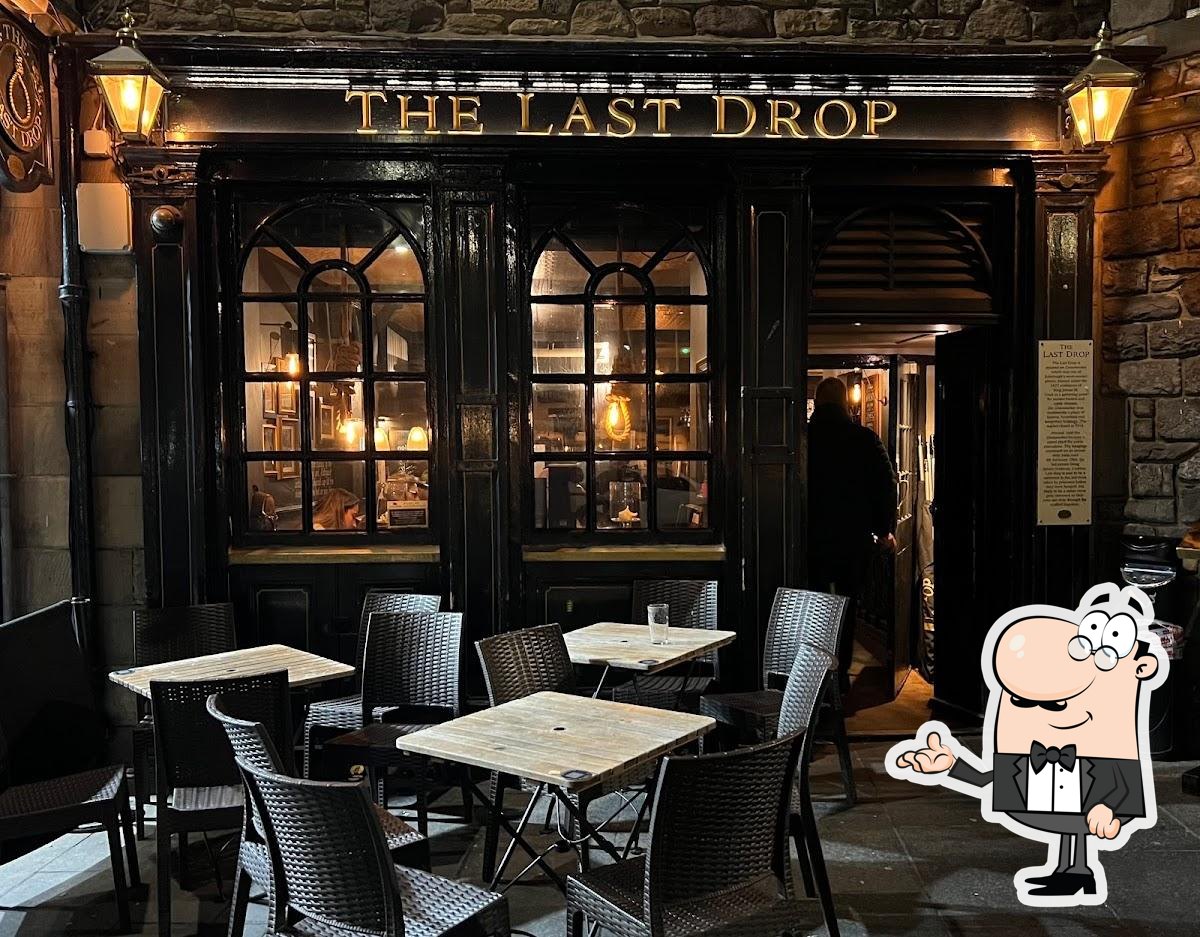
You’re standing in the Grassmarket. It’s raining—obviously, because this is Edinburgh—and the cobblestones are slick under the orange glow of the streetlamps. Your eyes wander to a pub with a deep red facade and gold lettering. The Last Drop Edinburgh. It looks like a classic Scottish boozer. Warm. Inviting. Smelling faintly of stale ale and woodsmoke. But the name isn't about finishing your pint of heavy. Not even close. It’s a literal reference to the last drop a person would take from a gallows rope.
History here isn't a dusty textbook. It’s under your boots.
The Grassmarket was Edinburgh's primary site for public executions for centuries. Between 1661 and 1688 alone, during the "Killing Time," around 100 Covenanters were put to death right outside where those patio tables sit today. People used to gather by the thousands. They brought snacks. They brought children. It was the premier entertainment of the day, and the pub stands as a grim monument to that era of judicial brutality.
The Grim Reality of the Last Drop Edinburgh
Honestly, the building itself is a bit of a trickster. While it feels ancient, the current structure mostly dates back to the 17th century when it was a tenement. It was converted into a pub much later, but the spirit of the place is inextricably linked to the 18th-century hangings. The "Last Drop" refers to the finality of the executioner's work. In those days, hanging wasn't always the "long drop" that snapped the neck instantly. Often, it was the "short drop," leading to a slow, agonizing strangulation.
Crowds would surge toward the scaffold. Some sought to grab the legs of the dying to end their misery faster; others wanted "the hangman’s touch," believed to cure skin diseases. It was macabre. It was filthy.
Inside the pub today, the decor leans hard into this. You'll see nooses hanging from the ceiling. It sounds tacky, right? Like a tourist trap? Surprisingly, it isn't. The dim lighting and the thick stone walls keep it grounded. It feels heavy. There’s a specific kind of Edinburgh atmosphere that mixes cozy hospitality with a lingering sense of dread, and this place nails it.
Ghosts, Poltergeists, and the Girl in the Velvet
Is it haunted? Depends on who you ask and how many whiskies they’ve had.
Staff and regulars have told stories for decades. The most common sighting is a young girl in medieval-style clothing. She doesn't scream or rattle chains. She just... exists. People see her in the cellar or darting between the shadows of the back bar. One former manager mentioned items moving on their own. Bottles sliding off shelves when nobody was nearby. A cold chill in the basement that has nothing to do with the refrigeration units.
Some skeptics argue it’s just the natural settling of a centuries-old building. Edinburgh is built on layers. Literally. The city is a hive of underground vaults, forgotten closes, and buried streets. When you sit in the back of The Last Drop, you’re sitting against the literal bedrock of the city's dark past. Whether you believe in ghosts or just "old building vibes," the sensation of being watched is a frequent comment on travel forums like TripAdvisor and Reddit’s r/Edinburgh.
What to Actually Drink and Eat
Don’t just go for the ghosts. Go for the pie.
The menu is standard pub fare, but in a city increasingly filled with "concept" bars and overpriced fusion restaurants, The Last Drop stays stubbornly traditional. They do a Haggis, Neeps, and Tatties that actually respects the ingredients. No deconstructed nonsense. Just a massive pile of savory pudding and root vegetables.
- The Whisky Selection: They keep a solid rotation of lowlands and peat-heavy Islay malts. If you're unsure, ask for something from the Nicholson’s seasonal cask list.
- The Pies: Specifically, the steak and ale pie. It’s thick. The pastry is usually buttery enough to clog an artery, which is exactly what you want on a Tuesday in January.
- The Beer: They often carry local brews from Stewart Brewing or Barney’s Beer (based over at Summerhall).
It’s a Nicholson’s pub now, which means it has corporate backing, but it hasn't lost that grime-and-glory feel. You’ll find a mix of tourists who just finished a "Ghost Bus" tour and crusty locals who have been sitting in the same corner since the 90s. That blend is rare.
The Grassmarket Context: More Than Just a Pub
To understand The Last Drop Edinburgh, you have to understand the square it lives in. The Grassmarket was a marketplace for horses and cattle starting in the 14th century. It was a place of commerce and carnage.
Just a few yards from the pub’s entrance is the Covenanters' Memorial. It marks the spot where the gallows stood. If you look at the pavement, you’ll see a circular pattern of stones. That’s the shadow of the scaffold. People used to pay for "the best view" from the surrounding tenements. The rich would rent out windows in the buildings that now house the Apex Hotel or the various hostels.
There’s also the story of Maggie Dickson, "Half-Hangit Maggie." In 1724, she was executed in the Grassmarket. She was pronounced dead, put in a coffin, and sent off for burial. On the way to the graveyard, she woke up and started banging on the lid. Because she had technically "suffered the punishment," the law couldn't hang her again. She lived for another 40 years. She probably grabbed a drink near the very spot The Last Drop stands.
Why it Beats the Royal Mile Pubs
The Royal Mile is a trap. It’s where you go to buy "authentic" tartan made in factories far away and drink overpriced lager. The Grassmarket, while still touristy, feels more visceral. The Last Drop is tucked away at the west end, far enough from the stag parties of Cowgate to maintain some dignity.
The architecture is the real star. The low ceilings and nooks create a sense of privacy. You can actually have a conversation here, provided there isn't a live folk band playing in the corner—which happens frequently.
Practical Tips for Visiting
- Timing: If you go at 8:00 PM on a Friday during the Fringe Festival, you will hate it. It’s packed. Go at 2:00 PM on a Wednesday. The light filters through the windows, the wood smells better, and you can actually hear the ghosts (or the fridge humming).
- Seating: Try to snag the "snug" areas. The small wooden booths offer the best perspective of the bar’s layout.
- Photography: Be respectful. It’s a dark bar. Using a massive flash ruins the mood for everyone and makes the interior look like a hospital basement. Use a long exposure or just put the phone away.
- The Basement: If you have to use the restroom, you’re heading downstairs. Pay attention. That’s where the "heavy" feeling is strongest.
Addressing the Skepticism
Look, some people call it a "tourist pub." And yeah, it’s on the map. But "tourist" doesn't mean "fake." The history of the Grassmarket hangings is documented fact. The execution of James Renwick, the last Covenanter martyr, happened right here in 1688. The pub doesn't need to invent stories because the reality of Edinburgh’s "Bloody Pan" (the nickname for the execution area) is plenty terrifying on its own.
The nuance lies in how the city embraces its trauma. Edinburgh is a city that builds bars on top of graveyards and names pubs after execution methods. It’s a bit sick, honestly. But it’s authentic. The Last Drop doesn't apologize for its name. It sits there, red-faced and stoic, reminding you that life is short and the rope is shorter.
How to Get the Most Out of Your Visit
Don’t just walk in, buy a Guinness, and leave.
Start at the Greyfriars Kirkyard, which is a five-minute walk away. Look at the Covenanters’ Prison. Feel the weight of the religious wars that tore Scotland apart. Then, walk down the Flodden Wall, descend the steps into the Grassmarket, and stand on the execution site. Only after you’ve felt that cold Scottish wind whip through the square should you enter the pub.
When you take that first sip of whisky, you aren't just drinking; you’re participating in a tradition of "the last drink" given to the condemned. Legend says the prisoners were allowed one final ale at a nearby pub before they met the "Maiden" (the Scottish version of the guillotine) or the rope. While the exact pub varies in historical accounts, the tradition is what gave birth to the spirit of this place.
Actionable Steps for Your Edinburgh Trip:
- Check the Cask: Always check the chalkboard for "Guest Ales." The Last Drop often features smaller Scottish breweries that don't get shelf space in the larger chains.
- Walk the Perimeter: Before entering, find the shadow of the gallows marked in the stones outside. It changes your perspective on the "cozy" interior.
- Read the Walls: There are historical clippings and information plaques inside that explain the local executions in more detail than a standard tour guide will provide.
- Avoid the "Ghost Tours": Most ghost tours end or stop here. Save your money. Read up on the history yourself, grab a seat, and just observe. You’ll see more in the quiet corners of the pub than you will following a guy in a top hat with a plastic lantern.
The Last Drop Edinburgh remains a staple because it bridges the gap between a dark, bloody history and the modern need for a decent pint. It’s a place where the shadows are part of the furniture. Whether you're there for the Macallan or the martyrs, you’re stepping into a very specific, very grim piece of Scottish soul.