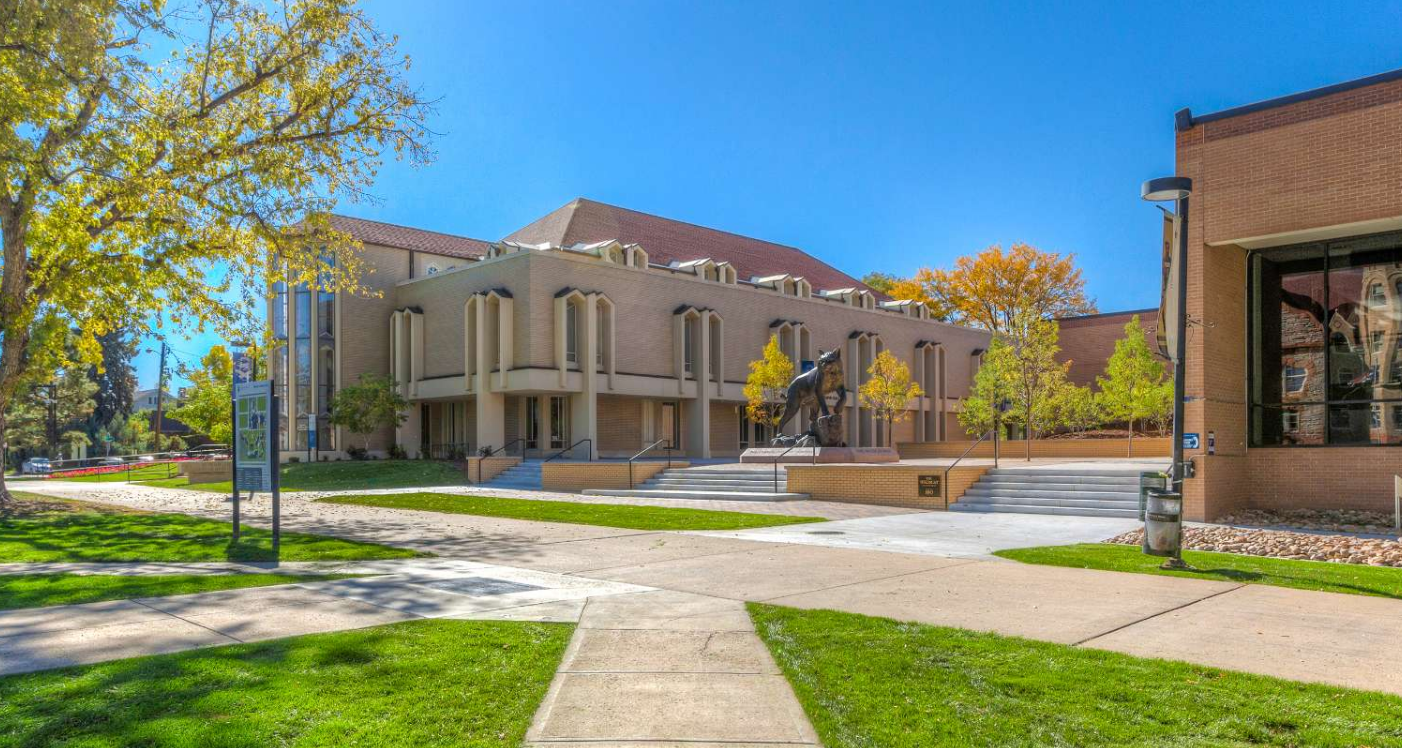
If you’ve driven down Montview Boulevard in Denver’s Park Hill neighborhood lately, you’ve probably noticed those stunning, collegiate gothic brick buildings. They look like something straight out of an Ivy League brochure. For nearly two decades, that was Johnson & Wales University Denver, a place known for churning out some of the best chefs and hospitality pros in the Mountain West. Then, seemingly overnight, the signs came down.
The closure of the Denver campus in 2021 wasn't just a local bummer; it was a massive shift in how we think about specialized vocational education. Honestly, it’s kinda heartbreaking for the alumni who spent years in those kitchens. But the story of what happened—and what’s happening to that land now—is actually pretty wild and says a lot about the state of higher education today.
Why Johnson & Wales University Denver Actually Shut Its Doors
People often assume a school closes because it ran out of money or the degrees weren't worth it. That’s rarely the whole truth. For Johnson & Wales University Denver, the decision was part of a "comprehensive strategic plan" from the main administration in Providence, Rhode Island. Basically, the university decided to consolidate. They shut down both the Denver, Colorado, and North Miami, Florida, campuses to focus all their energy on the flagship Rhode Island location and their online programs.
It was a cold, hard business move.
Enrollment numbers across the country have been tricky for years. Smaller, satellite campuses are expensive to run. You've got to maintain historic buildings, pay a full faculty, and compete with big state schools like CU Boulder or CSU. By the time the 2020 pandemic hit, the writing was on the wall. The university's Board of Trustees realized that having four physical campuses (they also had one in Charlotte) was no longer sustainable in a world where students were increasingly looking for digital flexibility or cheaper local options.
The Park Hill Legacy
Before it was JWU, that campus had a deep history. It was originally the Colorado Women’s College, founded way back in 1888. Later, it became the University of Denver’s Law School campus. When Johnson & Wales took over in 2000, they brought a specific kind of energy. They weren't just teaching history or math; they were teaching people how to run five-star resorts and cook at Michelin-level standards.
If you talk to any chef in Denver over the age of 30, there’s a massive chance they either went there or hired a dozen interns from there. The "culinary-centric" vibe defined that corner of the city.
The Massive Transformation of the 25-Acre Site
When a university leaves, it leaves a giant hole in the neighborhood. You can't just leave 25 acres of prime Denver real estate empty. That leads to squatters, decay, and a loss of property value for everyone nearby. Luckily, the transition for the Johnson & Wales University Denver site was remarkably fast, though it involved a lot of moving parts and different buyers.
Basically, the campus got chopped up. It wasn't bought by one single developer to be turned into luxury condos (which, honestly, is what everyone expected). Instead, a coalition of groups stepped in.
- The Denver Housing Authority (DHA) grabbed a significant portion. They saw an opportunity to create affordable housing in a neighborhood that has become incredibly expensive.
- Archway Communities, a non-profit, took over several of the former dormitory buildings. Their goal? Turning those old student rooms into nearly 150 affordable apartments for individuals and families.
- St. Elizabeth’s School, an Episcopal day school that was already nearby, purchased a chunk of the campus to expand their operations.
- Urban Land Conservancy (ULC) played a huge role in the land grab to ensure the space stayed "community-focused."
This "mosaic" approach is pretty rare. Usually, a developer just scrapes the lot and starts over. But because those buildings—like Centennial Hall—are so iconic, there was a huge push to save the architecture while changing the purpose.
What happened to the Culinary Arts program?
This is the part that still stings for some. When the Denver campus closed, the culinary program didn't just move down the street. It essentially vanished from the region. Students were given the option to transfer to the Providence campus, but for many who had lives, jobs, and families in Colorado, that wasn't realistic.
Some faculty moved over to local community colleges or started their own boutique cooking schools. But the specific "JWU Way"—that mix of business acumen and technical knife skills—lost its physical home in the West.
The Architecture: Why You Should Still Visit
Even though it’s no longer a functioning university, the campus is still worth a walk-through. It’s one of the best examples of collegiate gothic architecture in the Western US.
- Treat Hall: Built in 1909, this is the "castle" building you see from the street. It’s got that red sandstone look that defines old-school Colorado prestige.
- Centennial Hall: This was the hub of student life. It’s been renovated recently to preserve the exterior while completely gutting the interior for modern use.
- The Quads: The open green spaces were designed to feel like Oxford or Cambridge. Even though the "Wildcats" (the school mascot) are gone, the spaces are being preserved as public-access areas or school grounds.
The Impact on Denver’s Food Scene
We have to talk about the "JWU Effect." For twenty years, Johnson & Wales University Denver was a pipeline for the city's booming restaurant scene. When the school was at its peak, Denver was transitioning from a "steak and potatoes" town to a legitimate national food destination.
Think about it. You had hundreds of trained professionals entering the local workforce every single year. They weren't just line cooks. They were beverage managers, hotel directors, and pastry experts. When that pipeline gets cut off, the industry feels it. Nowadays, restaurants in RiNo and the Highlands have to work much harder to find staff who have that foundational training.
Some experts argue that the rise of "on-the-job" training has replaced the need for a $30,000-a-year culinary degree. Maybe. But there’s something about the rigor of a JWU kitchen that’s hard to replicate in a busy Friday night rush at a bistro.
Real Estate and the Park Hill Neighborhood
Park Hill is one of Denver's most historic and affluent areas. Residents were understandably nervous when the school announced it was leaving. Large-scale redevelopments can bring traffic, noise, and "density"—a word that makes long-time homeowners very twitchy.
However, the current plan seems to have found a middle ground. By splitting the campus between a school (St. Elizabeth's) and affordable housing, the neighborhood maintains its "quiet" character while addressing the city's desperate need for cheaper rent. It’s a win-win, mostly.
Archway Communities’ renovation of the dorms is particularly interesting. They didn't just paint the walls; they had to navigate the complexities of converting small dorm rooms (often with shared bathrooms) into functional apartments. It’s an expensive, frustrating process, but it’s better than seeing those buildings sit boarded up.
Is there anything left of the university there?
Technically, no. The signage is gone. The administrative offices are empty or repurposed. If you look closely at some of the older brickwork or the interior of certain halls, you might find a stray "JWU" logo or a plaque dedicated to a donor from 2005.
The university officially stopped all operations at the Denver site in the summer of 2021. If you’re an alum looking for transcripts or records, you have to go through the Providence campus portal. The Denver chapter is, for all intents and purposes, a closed book.
Actionable Insights for Alumni and Neighbors
If you're connected to the old campus or just live nearby, here is what you need to know about the current state of affairs:
- For Alumni: Your degree is still fully accredited through the main Johnson & Wales University system. For transcript requests or career services, visit the JWU Student Portal. Don't reach out to anyone in Denver; those offices are long gone.
- For Residents: The campus is no longer a private, gated-off entity in the way it once was. With the St. Elizabeth’s School and the new housing projects, the area is becoming more integrated into the neighborhood. Be aware of new parking regulations as the Archway units fill up.
- For History Buffs: Keep an eye on the Denver Landmarks website. Several buildings on the former campus have historical protections, ensuring that even as the interiors change, the iconic skyline of Park Hill remains intact.
- For Job Seekers in Hospitality: Since the JWU pipeline is closed, look toward Metropolitan State University of Denver (MSU). They have stepped up their hospitality program significantly to fill the void left by Johnson & Wales.
The transition of the Johnson & Wales University Denver campus is a case study in urban evolution. It’s a bit sad to see a school go, but seeing the buildings used for housing and local education is probably the best "second act" anyone could have hoped for. The kitchens might be quieter now, but the halls are still full of life.