You remember the beginning of Pixar's Up. Honestly, if you don't cry during those first ten minutes, you might be a robot. It’s that iconic small, colorful house sandwiched between cold, grey skyscrapers that really sticks with you. Most people think it’s just a clever bit of animation or maybe a metaphor for resisting "the man."
But the real Up house actually exists. It’s sitting in a suburban cul-de-sac in Herriman, Utah.
It wasn't built by a grumpy widower with thousands of balloons. It was built by Bangerter Homes, a custom builder that decided to see if they could recreate the magic of Carl and Ellie’s home down to the very last floorboard. They didn't just slap some paint on a standard rambler. They got permission from Disney. They studied the film frame-by-frame. They obsessed over the details.
The Weird History of the Real Up House Construction
Building a cartoon is harder than it looks.
When Bangerter Homes started the project back in 2011, they realized that animation physics don't exactly translate to Salt Lake County building codes. In the movie, the proportions are exaggerated. The chimney is massive. The windows are specific shapes that aren't exactly "off the shelf" at your local Home Depot.
They had to scale everything.
The real Up house ended up being roughly 2,800 square feet. To get the colors right, the builders reportedly spent weeks matching paint swatches to digital stills from the movie. We’re talking about a very specific shade of yellow, that exact teal trim, and the iconic pinkish-purple accents. Even the weather vane on top is a custom piece.
It was originally built as a show home for the Salt Lake Parade of Homes. People lost their minds. Thousands of fans lined up just to walk through it. It wasn't just a gimmick; it was a technical marvel of literal "fan service."
It’s Not Just a Facade
Most "themed" houses are a total letdown once you step inside. You expect the movie set, and you get a beige kitchen with a granite island. Not here.
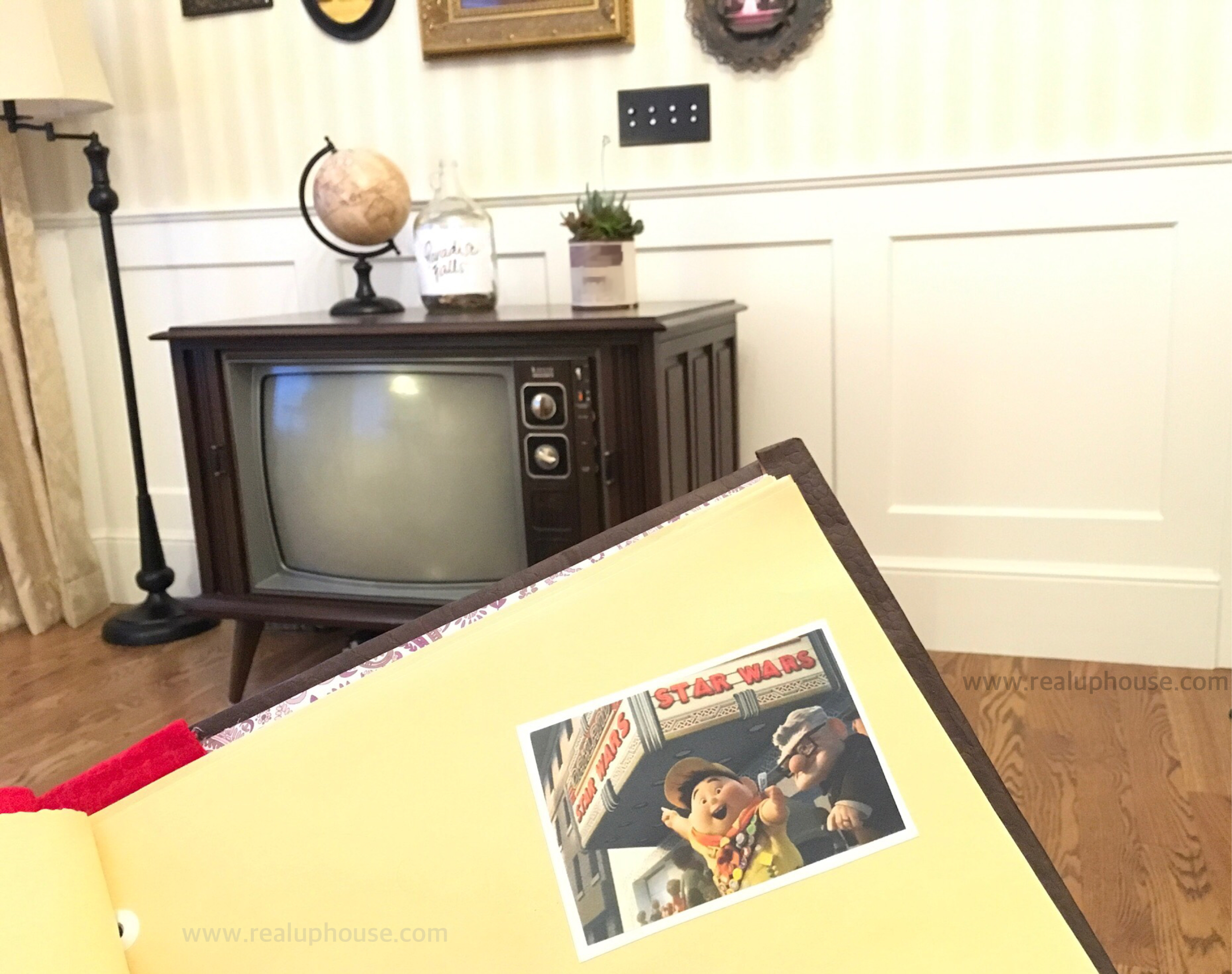
The interior of the real Up house is where things get truly obsessive. They recreated the nursery. They recreated the "My Adventure Book" sitting on the end table. They even found the exact vintage-style appliances and floral wallpaper that Carl and Ellie had in the film.
There are two armchairs. One for Carl, one for Ellie. They are positioned exactly where they should be in the living room.
The attention to detail extends to the things you wouldn't even notice at first glance. The light fixtures. The flooring transitions. The banister on the stairs. It feels lived-in, which is a weird thing to say about a house based on a 3D model, but the builders managed to give it a soul.
The Family That Actually Lives There
You might wonder who lives in a place like this. Is it a museum? Nope. It’s a private residence.
Lynette and Clinton Hamblin bought the house for about $400,000 back in late 2011. They were huge Disney fans—obviously—and they had been looking for a home that felt special. When they heard about the real Up house, they didn't just want to see it; they wanted to own it.
Living in a landmark has its quirks.
Imagine trying to mow your lawn while tourists are snapping selfies on your sidewalk. It happens constantly. The Hamblins have been remarkably gracious about it over the years, though they do appreciate people respecting their privacy. They’ve even been known to dress up as Carl and Ellie for Halloween or special events, which is just about the most wholesome thing imaginable.
Why It Isn't in Seattle (The Edith Macefield Story)
There is a common misconception that the real Up house is that tiny house in Seattle surrounded by a concrete shopping mall.
That house belonged to Edith Macefield.
She was a real-life hero who refused a million-dollar offer to sell her home to developers. While her story almost certainly inspired the thematic elements of the movie—the "holdout" house—it isn't the house from the movie. The Utah house is the only one officially recognized and designed to be a literal replica of the Pixar design.
Edith's house is a symbol of stubbornness and integrity. The Utah house is a symbol of cinematic wonder. Both are important, but they serve different purposes in our cultural imagination.
Technical Specs and Paradoxes
Let's get into the nitty-gritty of the architecture.
- Foundation: Standard concrete, unlike Carl’s house which was basically held together by memories and balloons.
- The Porch: A perfect recreation of the "waiting for the mail" spot.
- The Fireplace: It works. And it looks exactly like the one in the film’s montage.
One of the biggest challenges was the "steepness" of the roof. To keep the cartoonish silhouette, the builders had to use specific framing techniques that aren't typical for 21st-century suburban Utah. It’s a high-maintenance structure. Bright colors fade in the harsh Utah sun. The Hamblins have to be diligent about repainting to keep that "technicolor" dream alive.
How to Visit (Responsibly)
If you're planning a trip to see the real Up house, you need to keep a few things in mind. This isn't a theme park. It’s a neighborhood.
- Address: It's located in the Rosecrest community in Herriman, UT.
- Etiquette: Stay on the sidewalk. Don't knock on the door asking for a tour. Don't bring 500 helium balloons and tie them to their mailbox.
- Photos: Take them from the street. The house is incredibly photogenic, and the neighbors are used to it, but don't be "that person" who ruins the vibe.
The best time to visit is during the "golden hour" just before sunset. The way the light hits the colored siding makes the whole place glow, making it look even more like a frame pulled straight from the movie.
Beyond the Paint: Why We Care
Why did a construction company spend so much money on a house like this? Why do people still drive hours out of their way to see it?
It's about the narrative. Up is a story about the baggage we carry and the dreams we defer. The house isn't just wood and nails; it’s a character. Seeing the real Up house in a "normal" neighborhood serves as a reminder that whimsy is allowed to exist in the mundane.
It breaks the monotony of the "gray-beige" aesthetic that has taken over modern home design. In a world of cookie-cutter developments, the Up house is a loud, colorful protest.
What You Can Learn from the Up House
If you're a homeowner or someone looking to build, there are actual takeaways here.
First, color is your friend. You don't have to paint your whole house purple, but the real Up house proves that specific, bold palettes can create a sense of place that neutral tones never will.
Second, the "small house" movement has a lot to learn from this layout. It’s not a mansion, but every square inch is utilized. The floor plan is functional despite being "themed."
Finally, it’s a lesson in branding. Bangerter Homes got more press from this one project than they probably did from every other house they built that decade. Authenticity—even when recreating a fictional object—matters. They didn't half-heartedly do it. They went all in.
Moving Toward Your Own Adventure
If you're inspired by the real Up house, don't just look at photos. Use it as a catalyst for your own space.
Start by identifying one "nostalgic" element you’ve always wanted in your home. Maybe it’s a specific reading nook or a color scheme from a place you loved as a kid. You don't need a Disney license to make your home feel like a story.
Check out the Herriman area if you’re ever in Utah. It’s a beautiful part of the Salt Lake Valley, and seeing the house in person really puts the scale into perspective. It's smaller than you think, but it feels much bigger because of what it represents.
Go take the photo. Just stay off the grass.
Actionable Next Steps
- Visit the location: Set your GPS to Herriman, Utah, but check local weather first; snow can obscure the colors in winter.
- Research the builders: Look into Bangerter Homes' portfolio to see how they translated movie magic into structural integrity.
- Color match: If you’re repainting, look for "Sherwin Williams" or "Behr" palettes that mimic the 1950s "storybook" aesthetic used in the house.
- Study the Macefield house: Contrast the Utah house with the Seattle "holdout" house to understand the difference between architectural recreation and historical inspiration.