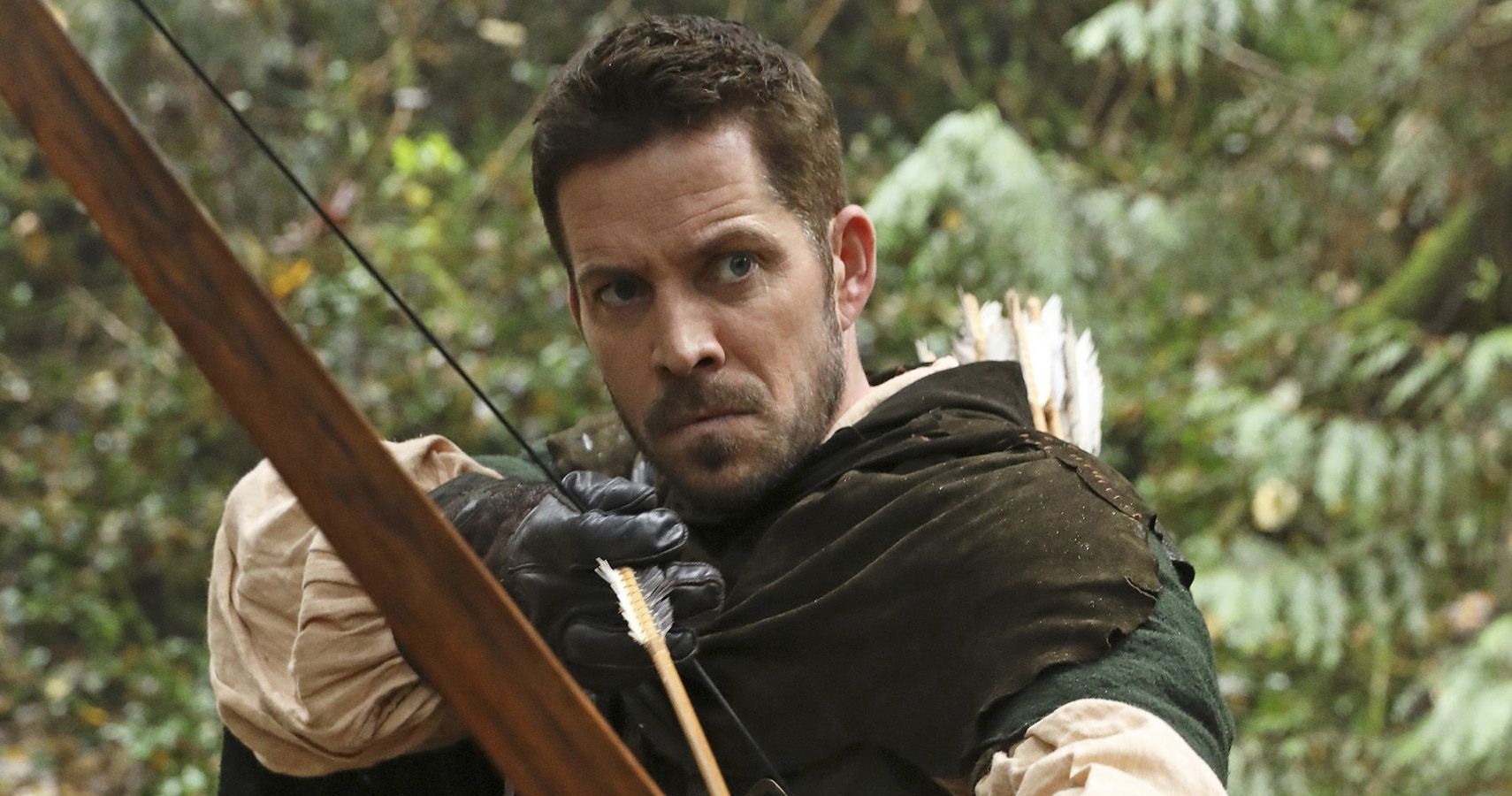
Let’s be real for a second. If you were a fan of Once Upon a Time during its peak years on ABC, you probably have some very strong feelings about a certain thief in green. Robin Hood on Once Upon a Time wasn't just a side character; he was supposed to be Regina Mills’ "Happy Ending." He was the soulmate the Magic Mirror promised. But the way his story actually shook out? Well, that’s a whole different conversation. It was messy, it was controversial, and honestly, a lot of fans are still pretty bitter about it.
Sean Maguire stepped into the boots of the Prince of Thieves in Season 3, taking over for Tom Ellis, who couldn’t come back due to scheduling conflicts. Maguire brought this rugged, empathetic energy that clicked immediately with Lana Parrilla’s Regina. It worked. People shipped "Outlaw Queen" hard. But looking back at the trajectory of the character, from the "Page 23" prophecy to that devastating Olympian Crystal moment in Season 5, it’s clear the writers struggled with what to do with a hero who was fundamentally defined by someone else's redemption arc.
The Recasting That Changed Everything
Most people forget that we first saw Robin Hood in Season 2, but it wasn't the Robin we came to know. Tom Ellis (who later became a massive star in Lucifer) played him in the episode "Lacey." When the showrunners decided to bring Robin back as a recurring love interest for Regina, Ellis wasn't available. Enter Sean Maguire.
Maguire didn't just play a thief; he played a widower and a father. This was a Robin who had lost his Maid Marian and was raising his son, Roland, in the woods. This baggage was essential. It made him a mirror to Regina, who was also a parent trying to be better for her son, Henry. The chemistry was undeniable. When they first met in the Enchanted Forest—Regina spotting the lion tattoo on his arm—it felt like the show was finally delivering on a promise made years prior.
But here’s the thing about Once Upon a Time: happiness is usually a trap.
That Marian Twist and the Problem with Zelena
If you want to talk about where things started to go sideways for Robin Hood on Once Upon a Time, you have to talk about the Season 3 finale. Emma and Hook travel back in time, accidentally save a "nameless" prisoner, and bring her back to the present. Surprise! It’s Maid Marian.
This effectively nuked Regina’s happiness right as it was starting. It also forced Robin into a "noble" position that made him a bit of a drag to watch. He chose to stay with his wife because it was the "right thing to do," even though he loved Regina. It was classic soap opera drama, but it felt cheap.
Then came the Season 4 reveal that blew everyone’s minds and, frankly, disgusted a huge chunk of the audience. The "Marian" Robin had been sleeping with and eventually got pregnant wasn't Marian at all. It was Regina’s sister, Zelena, the Wicked Witch, in a magical disguise.
Let’s be honest: that’s a dark storyline for a Disney-owned show. Robin was essentially coerced into a situation he didn't consent to. The show handled it as a "shocking twist," but for Robin’s character development, it sidelined him. He became a plot device in the ongoing war between the two sisters. He was no longer the legendary archer; he was the guy caught in the middle of the most toxic family reunion in television history.
Why the Underworld Arc Was the End of the Road
By the time Season 5 rolled around, the show was leaning heavily into the "Dark Swan" and Underworld plots. Robin Hood accompanied the heroes to Hades’ realm to save Hook. It’s here that the writers made a decision that many still view as the show’s biggest mistake.
In the episode "Last Rites," Hades tries to use the Olympian Crystal to "obliterate" Regina. The stakes weren't just death—it was the total erasure of the soul. No afterlife. No peace. Just... nothing. Robin stepped in front of the blast.
He died a hero. He saved the woman he loved. But the finality of it felt cruel.
The fan reaction was explosive. Why bring in a character specifically to be a soulmate only to vaporize his soul? It felt like a punch in the gut to anyone invested in the idea that even the "villains" like Regina could have a lasting, stable relationship. Sean Maguire himself expressed surprise at the exit, noting in several interviews that he felt Robin’s story had more meat on the bone.
The "Wish Realm" Version: A Consolation Prize?
The writers tried to fix the "Robin problem" in Season 6. They introduced a Wish Realm version of Robin Hood. He looked like Robin, he talked like Robin, but he wasn't our Robin. He was a version of the character who never became a hero, who stayed a bit of a scoundrel, and who didn't have that deep connection with Regina.
It was a bold move. It explored the "nature vs. nurture" argument. Can you love a version of a person if they don't share your history? Ultimately, the Wish Realm Robin ended up with the Wish Realm version of Zelena (it's a long story), which felt like a weird way to tie up loose ends.
The Real Legacy of Robin Hood on Once Upon a Time
What does Robin Hood actually represent in the context of the show?
He represents the "Outlaw." Not just in the literal sense of stealing from the rich, but in the sense of existing outside the "perfect" hero mold of Snow White and Prince Charming. Robin was a man of the people. He was the moral compass for Regina when she was wavering between her old Evil Queen habits and her new life as a hero.
He also highlighted the show’s struggle with its own themes. Once Upon a Time preached that "villains don't get happy endings," and then spent seven seasons trying to prove that wrong. By killing Robin, they momentarily proved the trope true, which is why it hurt the fans so much.
Key Takeaways for Fans Re-watching the Series:
- Pay attention to the lion tattoo: It’s the visual shorthand for "destiny" throughout the series. It first appears in Season 2 and remains the tether between Robin and Regina.
- The Contrast with Hook: While Hook (the other reformed villain) got a full redemption and a marriage to the protagonist, Robin was often treated as expendable. Comparing their arcs shows a lot about how the writers prioritized certain "ships."
- Sean Maguire’s Performance: Despite the writing hurdles, Maguire grounded the show. His scenes with Roland (played by Raphael Alejandro) provided some of the most genuine emotional moments in the later seasons.
Moving Forward: How to Engage with the Lore
If you're looking to dive deeper into the world of Robin Hood on Once Upon a Time, don't just stop at the TV show. There are several ways to expand your understanding of this specific iteration of the legend.
First, check out the Once Upon a Time: Out of the Past graphic novel. It provides some much-needed backstory on how Robin became the leader of the Merry Men and his early relationship with Marian. It fills in the gaps that the show's 42-minute episodes often skipped over.
Second, look into the fan-run archives like the Once Upon a Wiki. The community has spent years documenting every minor appearance and deleted scene involving Robin, including some of the "lost" moments from the Underworld that didn't make the final cut.
Finally, if you’re a fan of Sean Maguire, follow his work in other genre shows like The Magicians. Seeing him in different roles really highlights how much charisma he brought to a character that, on paper, was often underwritten. Robin Hood deserved better, but the impact he left on Storybrooke—and on Regina—is undeniable. He remains the ultimate symbol of the "might have been" in a show that was all about "once upon a time."
For anyone still grieving the Olympian Crystal incident, the best way to process it is to look at the Season 7 finale. While Robin isn't physically there, his influence on Regina’s growth is what allows her to finally become "The Good Queen." In the end, his sacrifice wasn't for nothing; it was the final catalyst for the villain's complete transformation into a hero.