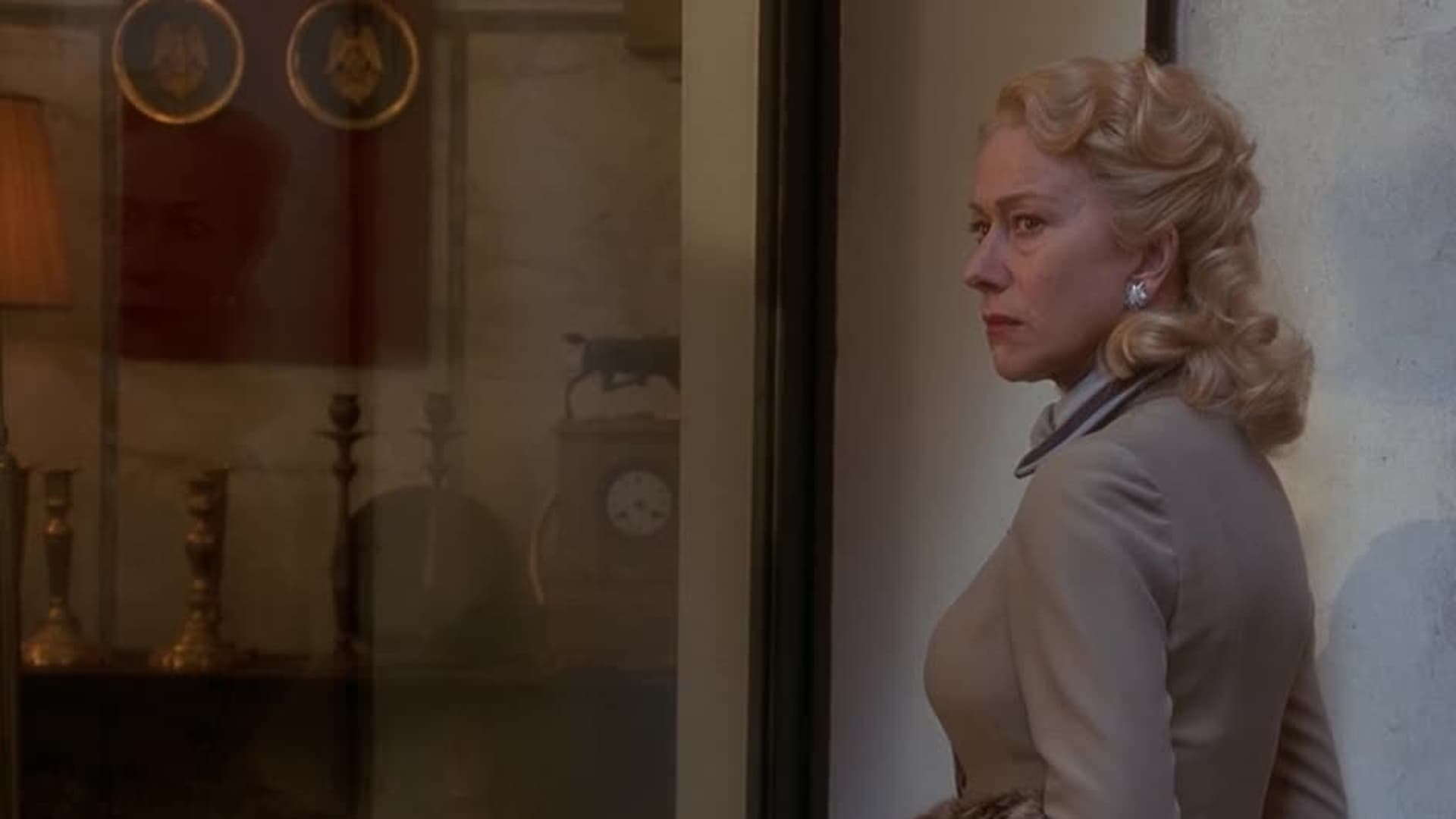
Tennessee Williams had a thing for fading beauty. It’s all over his work. But The Roman Spring of Mrs. Stone hits a bit differently because it’s so claustrophobic and, honestly, kind of cruel. When people go looking for the Roman Spring of Mrs. Stone cast, they usually stumble into a bit of a temporal rift because we’ve got two very distinct versions of this story. One is a high-glamour 1961 classic led by Vivien Leigh, and the other is a more visceral, perhaps more "Williams-esque" 2003 television movie starring Helen Mirren.
Both casts had to deal with a pretty uncomfortable premise: a wealthy, aging American actress retires to Rome after her husband dies, only to fall into a parasitic relationship with a young Italian gigolo. It’s about vanity. It’s about the terror of becoming irrelevant.
The 1961 Cast: Old Hollywood Royalty
The 1961 film is the one most cinephiles point to first. It’s got that lush, technicolor-drenched look that makes Rome look both beautiful and rotting at the same time. The casting here was a massive deal.
Vivien Leigh as Karen Stone
By 1961, Vivien Leigh wasn't the Scarlett O’Hara the world remembered from 1939. She was 47, struggling with her own health, and actually going through many of the anxieties her character faced. This makes her performance feel incredibly raw. When you watch her as Karen Stone, you aren’t just seeing an actress play a part; you’re seeing someone confront the end of her own "reign" in real-time. It’s haunting.
Warren Beatty as Paolo di Leo
This was Beatty’s first big film role. Just 24 years old. He played Paolo, the slick, manipulative gigolo. To be honest, his Italian accent is... a choice. It’s a bit thick and hasn't aged perfectly, but his screen presence is undeniable. He had to play someone who was essentially a predator wrapped in a silk suit. The chemistry between Leigh and Beatty is intentionally off-kilter. It’s supposed to make you feel a little greasy.
Lotte Lenya as the Contessa Magda Terribili-Gonzales
If there is a standout in the the Roman Spring of Mrs. Stone cast from the 61' era, it’s Lotte Lenya. She plays the "pimp" essentially—the woman who connects Karen with Paolo. She’s terrifying. She looks like a bird of prey. Lenya actually snagged an Academy Award nomination for Best Supporting Actress for this, and she deserved it. She represents the cold, transactional nature of Rome that eventually swallows Mrs. Stone whole.
Other notable mentions in this version include:
- Jill St. John as Barbara, the younger starlet who represents everything Karen is losing.
- Jeremy Spenser as the Young Man, a silent, menacing figure who follows Karen throughout the film.
- Coral Browne as Meg, Karen's friend who tries (and fails) to be the voice of reason.
The 2003 Cast: A Modern Grit
Fast forward forty-odd years. Showtime decides to remake it. This version, directed by Robert Allan Ackerman, feels much closer to the source material’s bleakness. It’s less "Hollywood" and more "human."
Helen Mirren as Karen Stone
Mirren is a powerhouse. Period. In 2003, she brought a different kind of strength to Karen. While Leigh’s Karen felt fragile, Mirren’s Karen feels more like a woman who is making a conscious, albeit tragic, choice to self-destruct. She’s elegant, but there’s a bitterness there that Leigh didn't lean into as much.
Olivier Martinez as Paolo
If you want to talk about casting that fits the "gigolo" description perfectly, Martinez is it. Coming off the back of Unfaithful, he was the "it" guy for playing the dangerous lover. Unlike Beatty, Martinez didn't have to fight an accent, and his portrayal felt more contemporary. He wasn't just a caricature; he was a shark.
Anne Bancroft as the Contessa
This was actually Anne Bancroft's final film role before she passed away in 2005. It’s a legendary performance. She took what Lotte Lenya did and added a layer of weary, aristocratic decay. Watching Bancroft and Mirren go toe-to-toe is worth the price of admission alone. It’s a masterclass in acting.
Brian Dennehy as Tom Stone
We actually see more of the husband in this version. Dennehy brings that grounded, American solidity that makes Karen’s later drift into the Roman underworld feel even more dramatic.
Why the Casting Matters So Much in This Story
The whole point of Tennessee Williams' novella—and these films—is the contrast between the "Old World" (Rome) and the "New World" (America), as well as the "Old" (Karen) and the "Young" (Paolo).
If the cast doesn't have that specific friction, the story falls apart. You need an actress who isn't afraid to look "done." You need a male lead who can look at her with a mix of boredom and hunger.
In the 1961 version, the supporting cast like Ernest Thesiger (in his final role) added to the sense of an ancient, crumbling society. In the 2003 version, the casting focused more on the psychological intimacy.
Comparing the Two "Paolos"
People always argue about who did it better: Beatty or Martinez?
Beatty’s Paolo is a product of 1960s cinema. He’s theatrical. He’s charming in a way that feels like he’s performing for a theater in the back row. It works because the 1961 film is a "Picture" with a capital P.
Martinez is different. He’s quieter. His Paolo feels like someone you might actually meet in a high-end bar in Rome today. He’s more realistic, which arguably makes his treatment of Mrs. Stone feel much more cruel.
The Creative Force Behind the Scenes
You can't talk about the cast without the directors. José Quintero directed the 1961 version. He was a legendary stage director, and you can see that in how he blocks the actors. He treats the Roman streets like a stage.
The 2003 version had the benefit of a script by Martin Sherman, who understood the queer undertones of Williams' work better than the 1961 censors would ever allow. This changed how the actors interacted. The 2003 cast was allowed to be more explicit about the "transaction" happening.
What Most People Get Wrong About Mrs. Stone
A lot of viewers think this is just a "cougar" story before that word existed. It’s not.
If you look closely at the performances of both Leigh and Mirren, it’s a story about a woman who has lost her identity. Her husband is gone. Her career is over. She is a "Stone" that is finally starting to erode.
The the Roman Spring of Mrs. Stone cast in both iterations had the difficult task of making a deeply unsympathetic situation feel tragic. Karen Stone is wealthy, entitled, and often rude. Yet, because of the caliber of these actors, you end up feeling a weird sense of pity as she throws her keys down to the mysterious young man at the end.
How to Approach Watching These Today
If you’re a fan of classic cinema, start with the 1961 version. It’s a visual feast. Vivien Leigh is a ghost of herself, and it’s beautiful to watch.
But if you want the grit? If you want to see the version that Tennessee Williams might have actually recognized as his own dark, twisted reality? Go with the 2003 Mirren/Bancroft version.
To truly understand the depth of these performances, keep these steps in mind:
- Watch for the hands. In both films, the way the actors use their hands—Leigh’s trembling, Mirren’s clutching—tells you more about their internal state than the dialogue does.
- Focus on the Contessa. The Contessa is the "dealer." In both films, she is the one who controls the pace. Compare Lotte Lenya’s bird-like movements to Anne Bancroft’s heavy, regal presence.
- Pay attention to the "Young Man" on the street. He’s a silent character in the cast, but he’s the clock ticking. He represents the inevitable end.
Ultimately, the casting of these two films serves as a bridge between two different eras of storytelling. One relies on the myth of the movie star; the other relies on the raw nerves of the actor. Both are essential viewing for anyone interested in how we portray the intersection of aging and desire on screen.