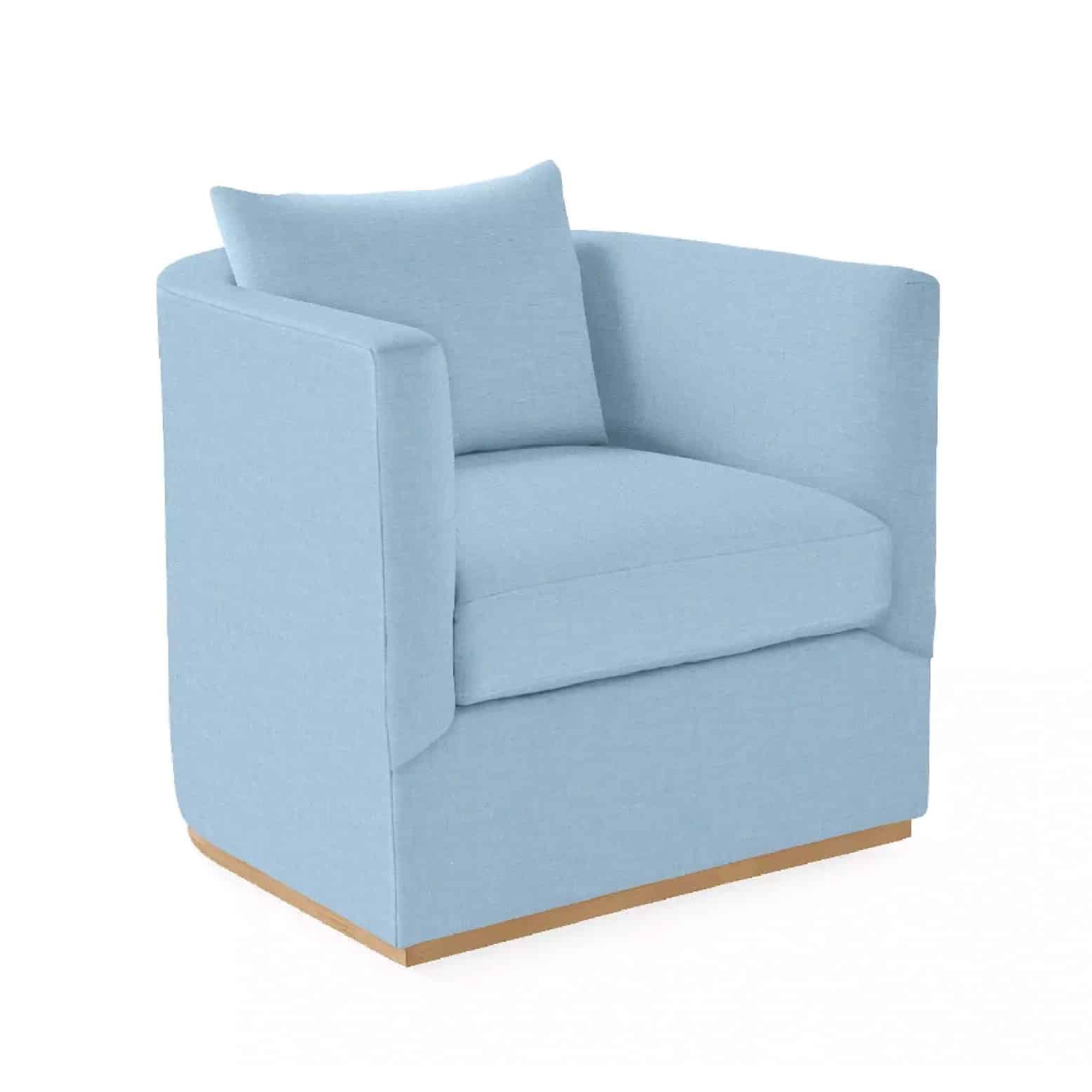
You’ve seen them. Even if you don’t think you have, you definitely have. They are the ubiquitous, woven, blue-and-white silhouettes that dominate every coastal-themed kitchen on Instagram. A Serena and Lily chair has become a sort of shorthand for "I’ve made it, and I probably own a beach house in the Hamptons (or I want you to think I do)." But here is the thing about these chairs. They are expensive. Seriously expensive. We are talking about spending $400 on a stool that doesn't even have a back, or $1,200 on a lounge chair that’s basically made of glorified grass.
People love to hate on the price tag, yet the brand’s popularity hasn't dipped. Why?
It's because the "California Cool" aesthetic they pioneered—a mix of breezy casualness and high-end texture—is hard to replicate without looking cheap. Most of the knockoffs you find at big-box retailers look fine from ten feet away, but the second you sit down, you feel the difference. The real Serena and Lily chair usually involves hand-wrapped rattan, kiln-dried hardwoods, and performance fabrics that can actually survive a spilled glass of rosé.
The Bistro Obsession: Why the Riviera Rules the Kitchen
If there is one piece of furniture that defines the modern American kitchen, it’s the Riviera Counter Stool. It is the quintessential Serena and Lily chair. Inspired by the classic Parisian bistro chair, this piece is everywhere. Honestly, it’s a bit of a cliché at this point.
But clichés exist for a reason.
The Riviera is built from a man-made rattan frame and a woven plastic seat. This sounds like it should be cheap, but it’s actually a brilliant engineering choice. Natural rattan is fickle; it cracks, it splinters, and it hates moisture. By using a synthetic weave (often called "Rilsan"), the brand created a chair that wipes clean with a damp cloth. If you have kids who eat peanut butter with their hands, this is a game-changer.
Think about the weight, too. Most high-end furniture is heavy and cumbersome. The Riviera is light. You can pull it out with one finger. Yet, because the frame is handcrafted, it doesn't wobble. That's the nuance most people miss when they buy the $99 version from a discount site. The cheap ones use staples. The real ones use intricate wraps that hold the joints together under tension. It’s the difference between a suit off the rack and one that’s been tailored to your shoulders.
The Problem With Rattan
Let's be real for a second. Rattan is a vine. It’s organic. No matter how much you pay, a natural Serena and Lily chair—like the Venice Rattan Chair or the Shore Dining Chair—will eventually show some wear. You might see some "fuzzing" of the fibers. You might hear a little creak when a larger guest sits down.
This is where the brand divides people.
Some customers see this as "patina" and "soul." They love that it looks like it belongs in a sun-drenched porch in 1974. Others feel like if they spend four figures on a chair, it should be as silent as a tomb and as smooth as glass. If you fall into the latter camp, you should probably skip the natural materials and stick to their upholstered lines.
Performance Fabrics and the "White Chair" Myth
The biggest fear anyone has when buying a high-end Serena and Lily chair is the color white. The brand’s palette is basically fifty shades of sand, sea salt, and mist. It’s a nightmare for anyone with a dog or a pulse.
However, they were early adopters of Perennials and Sunbrella fabrics.
These aren't just sprayed with a protector. The fibers themselves are solution-dyed. This means the color goes all the way through the thread, like a carrot, rather than just being on the outside like a radish. You can literally clean some of these fabrics with a diluted bleach solution. I’ve seen people spill red wine on a custom upholstered Miramar chair and walk away without a panic attack.
But here is the catch.
Not every fabric they offer is a performance fabric. If you choose a 100% linen or a cotton velvet for your Serena and Lily chair, you are signing a pact with the devil. Linen wrinkles. It stains. It sags over time. It looks beautiful for a photo shoot, but for a living room that actually gets used? It’s a bold, perhaps questionable, choice. Always check the rub count and the cleaning code before you pull the trigger on a custom order.
Where the Quality Meets the Hype
Let’s talk about the Hanging Rattan Chair. It is a design icon, inspired by Scandinavian designs from the 60s. It’s also a total pain to install.
You can’t just hook this into a piece of drywall and hope for the best. You need a structural beam. You might need a contractor. And yet, it remains one of their bestsellers. It captures a specific feeling—nostalgia, playfulness, and luxury all rolled into one. When you sit in a Serena and Lily chair like this, you aren't just sitting; you’re experiencing a vibe.
That vibe is what you are paying for.
Is the wood better than what you’d find at a high-end boutique in North Carolina? Maybe not always. But the design language is cohesive. Everything from the Avignon Chair to the director's-style Mattituck fits together. You don’t have to wonder if the blues will match; they will. The brand has curated a world where you don't have to be an interior designer to make a room look "finished."
The Used Market Reality
If you want to know if a brand is actually good, look at the resale value. Go on Facebook Marketplace or AptDeco. Search for a Serena and Lily chair. You will find that even used, beat-up Riviera stools sell for 60% of their retail price.
That is wild.
Most furniture loses 80% of its value the moment it enters your house. The fact that these chairs hold their value suggests that the market recognizes the brand name and the underlying build quality. It’s a weirdly safe investment for something that’s essentially made of sticks and plastic.
Making the Right Choice for Your Space
Buying a Serena and Lily chair isn't just about clicking "add to cart." You have to consider the scale. Their furniture tends to be "airy." It has legs. It has gaps in the weave. This is great for small rooms because it allows you to see the floor, which makes the space feel larger.
If you have a massive, cavernous living room with 20-foot ceilings, a delicate rattan chair might look like dollhouse furniture. You need something with more visual "weight," like the Claremont or the Harrison.
Practical Buying Strategy
- Wait for the Sales: Serena and Lily has "Tent Sales" and "Design Crew" events frequently. Never pay full price. Seriously. Just wait a month, and there will be a 20% or 25% off code.
- Swatches are Free-ish: They used to be free; now they usually charge a small fee, but it’s worth it. Lighting in your house is different than the studio lighting in their catalog. That "Pacific Blue" might look like navy in your dark dining room.
- Check the Seat Height: This is a common mistake. They offer "Counter" height and "Bar" height. Most modern kitchen islands need counter height (24-26 inches). If you buy bar height (30 inches), your knees will be hitting the granite every morning.
- The Outlet Factor: If you live near Vacaville, CA, or Vero Beach, FL, or any of their outlet locations, go there. You can find "last season" chairs or pieces with a tiny scratch for half off.
The Verdict on the Serena and Lily Chair
Is it worth it?
If you are looking for a "forever" heirloom that will be passed down for four generations, natural rattan might not be the answer. Wood moves. Fibers dry out. But if you want a home that feels light, sophisticated, and incredibly comfortable for the next decade, then yes.
A Serena and Lily chair bridges the gap between the stuffy formal furniture of our parents' generation and the disposable "fast furniture" of the current era. It’s a middle ground that prioritizes how a room feels over how impressive the mahogany is.
Just remember to keep the bleach away from the natural rattan and the wine away from the non-performance linen. Use a coaster. Breathe. It’s just a chair, even if it does make your kitchen look like a million bucks.
Actionable Next Steps
- Measure your counter height twice before ordering any stool. Standard counters are 36 inches high, requiring a 24-26 inch seat.
- Request fabric swatches for any upholstered items to test them against your home's actual lighting conditions.
- Sign up for the mailing list to track the "Tent Sale" cycles, which typically offer the deepest discounts of the year.
- Assess your flooring. If you are putting rattan chairs on hardwood, buy high-quality felt pads immediately, as the natural fibers can be abrasive over time.