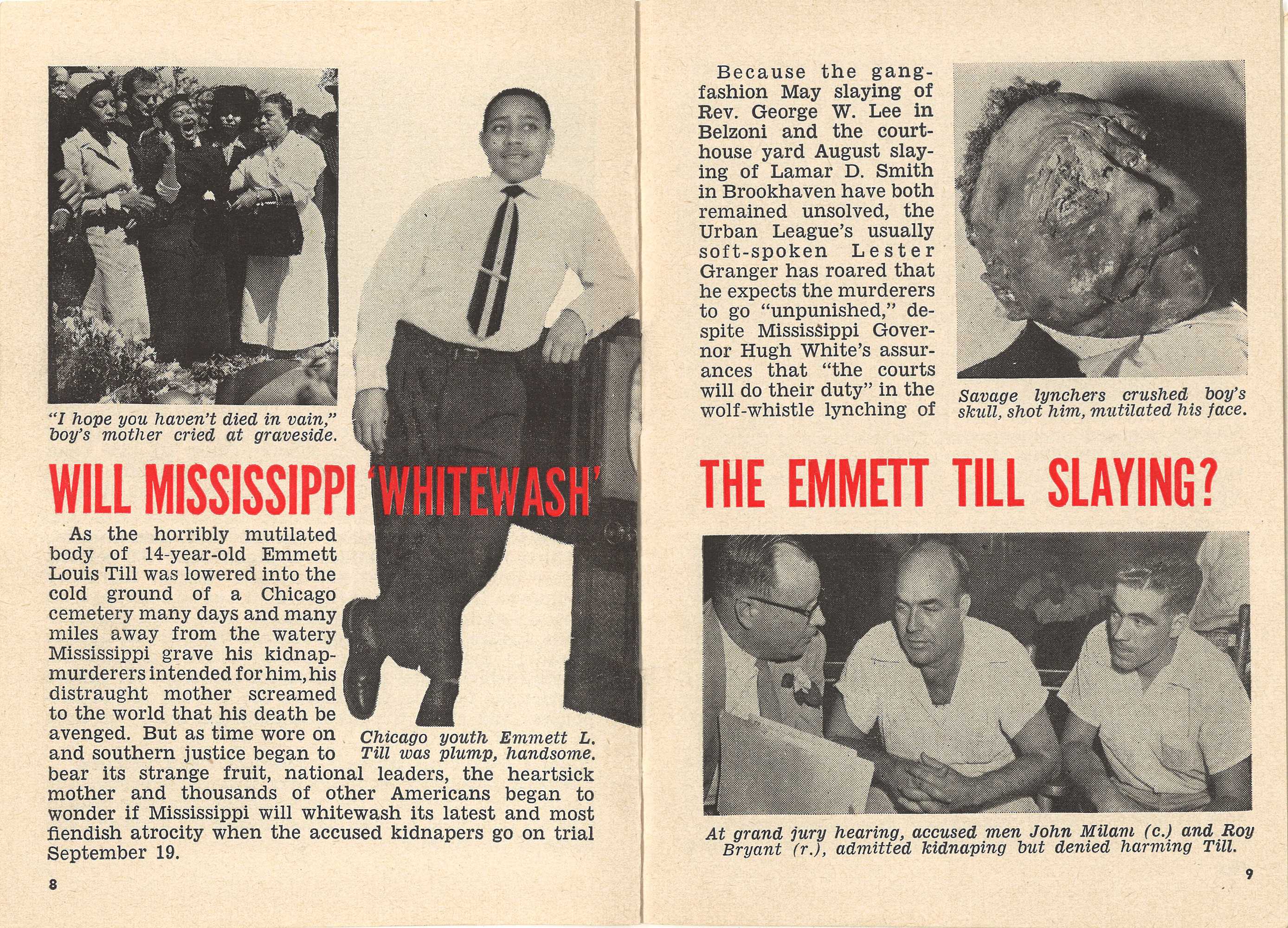
Honestly, if you think you know the story of Emmett Till, you probably only know the "textbook" version.
Most of us were taught a very sanitized, two-sentence summary in middle school. Boy whistles. Boy is murdered. Civil rights movement starts. But that version—the one that fits neatly into a history quiz—actually skips over the most chilling parts and the most important lessons we’re still grappling with in 2026.
Basically, what happened in Money, Mississippi, in August 1955 wasn't just a "tragedy." It was a calculated, community-supported execution of a 14-year-old child. And the people who did it? They didn't just get away with it; they got paid for it.
The Chicago Kid in the Delta
Emmett was just a kid from Chicago. To him, the world was widening. He had a lisp from a childhood bout with polio, and his mother, Mamie Till-Mobley, had specifically warned him that Mississippi was different. "Don't even look at a white person," she told him.
He didn't listen. Or maybe he just didn't understand how high the stakes were.
On August 24, 1955, Emmett went into Bryant’s Grocery & Meat Market to buy some bubble gum. What happened next has been debated for seventy years. Carolyn Bryant, the 21-year-old white shopkeeper, claimed he grabbed her and made "unprintable" advances.
His cousins, who were there, said he just whistled. Some think it was a "wolf whistle" on a dare; others believe it was a way to manage his lisp while he was nervous. Either way, in the Jim Crow South, it was a death sentence.
The Night That Changed Everything
Four days later, at about 2:30 a.m., Roy Bryant and his half-brother, J.W. Milam, showed up at the home of Emmett’s great-uncle, Mose Wright. They had flashlights and a pistol. They demanded "the boy who did the talking."
They didn't just kill him. They tortured him.
They took him to a tool house, beat him until he was unrecognizable, and shot him in the head. Then, they tied a 75-pound cotton gin fan to his neck with barbed wire and threw him into the Tallahatchie River.
When his body was found three days later, it was so bloated and mutilated that the only way he could be identified was by a ring he was wearing—his father’s silver signet ring with the initials "L.T."
The Choice Mamie Made
This is where the story usually pivots to the funeral. But you’ve gotta realize how radical Mamie’s choice was.
The authorities in Mississippi wanted to bury the body immediately. They wanted it gone. They wanted the evidence to rot in the mud. Mamie refused. She fought to get that casket back to Chicago. And when it arrived, she didn't hide the horror.
"Let the people see what I've seen," she said.
She held an open-casket funeral. For four days, tens of thousands of people filed past that casket at Roberts Temple Church of God in Christ. They saw a 14-year-old boy with a crushed skull and a missing eye. Jet magazine published the photos, and suddenly, the North couldn't pretend that "Southern traditions" were just some harmless cultural quirk.
It was a wake-up call that sounded like a scream.
The Trial That Was a Total Farce
The trial in Sumner, Mississippi, was basically a theater production. The jury was all white and all male. Black spectators were segregated. The defense's argument? They actually claimed the body pulled from the river wasn't even Emmett. They said the NAACP had planted a different body to stir up trouble.
It took the jury 67 minutes to acquit Bryant and Milam. One juror actually said it would have been faster, but they stopped to drink soda so it wouldn't look too obvious.
The most disgusting part? Just months later, protected by double jeopardy, the killers sold their confession to Look magazine for $4,000. They bragged about it. They showed no remorse.
Why We’re Still Talking About This in 2026
You might think this is ancient history, but it’s remarkably fresh.
For decades, the story rested on Carolyn Bryant’s testimony. Then, in 2017, historian Timothy Tyson revealed in his book The Blood of Emmett Till that Carolyn had admitted to him that she lied about the physical advances. She said, "Nothing that boy did could ever justify what happened to him."
She died in 2023 at the age of 88, having never faced a day in court for her role in the kidnapping.
But there has been progress. In March 2022, President Biden finally signed the Emmett Till Antilynching Act, making lynching a federal hate crime. It took over a century and 200 failed attempts to get that law on the books.
What You Can Actually Do
The story of Emmett Till isn't just about a murder; it's about the power of witnessing. Mamie Till-Mobley turned her private grief into a public catalyst.
If you want to move beyond just "knowing" the story, here’s how you can engage with it:
- Visit the Sites: The Tallahatchie County Courthouse has been restored, and the Emmett Till Interpretive Center in Sumner works to tell the story truthfully.
- Support the Legislation: Familiarize yourself with the Emmett Till Antilynching Act and how it’s being applied to modern hate crime cases.
- Read the Source Material: Skip the summaries. Read Death of Innocence by Mamie Till-Mobley. It’s her voice, her pain, and her perspective.
- Check the Markers: There are historical markers across the Mississippi Delta that mark where these events happened. Many are frequently vandalized or shot at, even today. Organizations like the Emmett Till Memorial Commission work to maintain them.
The truth is, justice wasn't served in 1955. It wasn't served in 2023 when the last witness died. But by refusing to let the story be sanitized, we at least ensure that the truth isn't buried along with the boy.