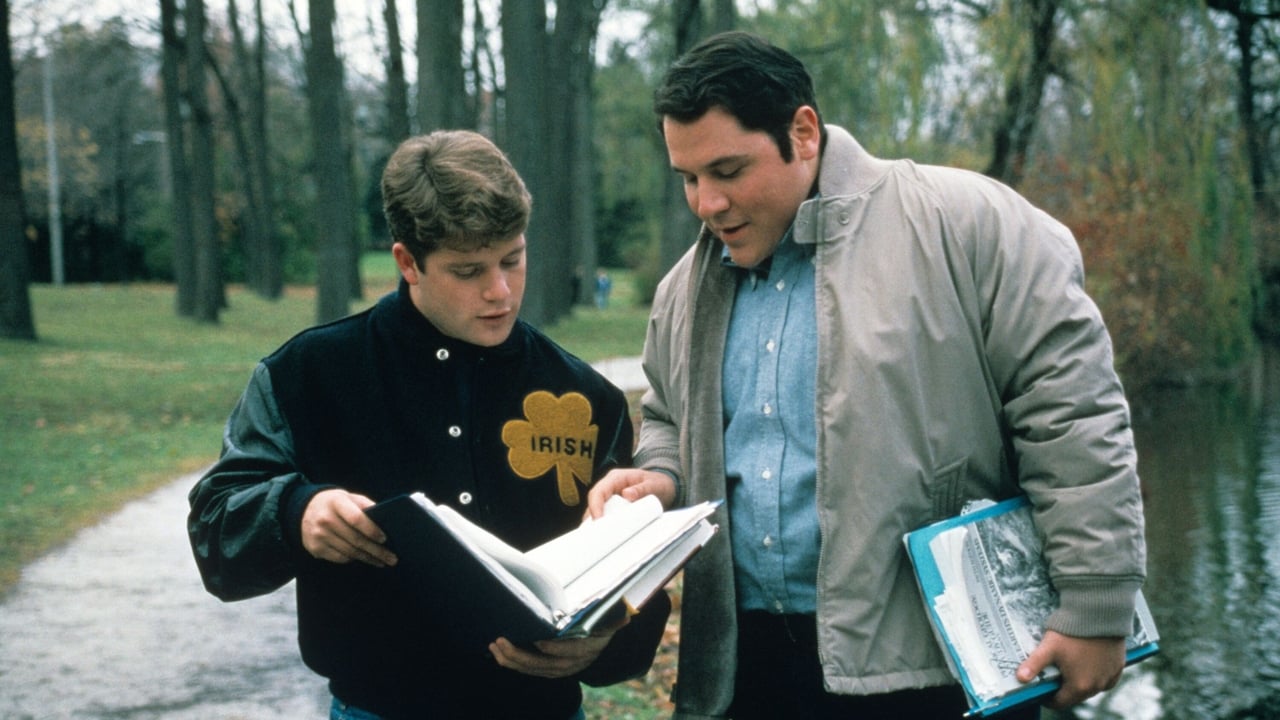
Everyone knows the scene. The slow-building chant. The jersey-stacking on the coach's desk. The pint-sized underdog finally getting his moment in the sun, carried off the field on the shoulders of his teammates while the Notre Dame crowd goes wild. It’s the ultimate "never give up" movie. But if you’re looking for the true story of Rudy, you have to peel back some of those glossy Hollywood layers.
Hollywood loves a caricature. In the 1993 film, Daniel "Rudy" Ruettiger is portrayed as a sort of holy fool for football—a guy who literally had nothing else in his life. The real Rudy? He was a bit more complex. He was a Navy veteran. He was a guy who worked at a power plant. He was a dreamer, sure, but he was also a relentless self-promoter who understood the power of a good story long before TriStar Pictures ever sent a camera crew to South Bend.
Honestly, the reality is arguably more impressive than the movie because it didn't involve magic or destiny. It involved a level of annoying, persistent grit that would drive most normal people crazy.
The Joliet Kid and the Power Plant Life
Rudy wasn't just some kid who liked football. He was one of 14 children born into a working-class family in Joliet, Illinois. If you grew up in a house with 13 siblings, you learned two things very quickly: how to fight for your share of dinner and how to stand out. His dad worked at the local power plant, and for a long time, that was Rudy’s projected path too.
He struggled in school. Big time. Back then, they didn't really have the same grasp on learning disabilities that we do now. It wasn't until he got to Holy Cross Junior College that he was actually diagnosed with dyslexia. Imagine going through your entire childhood thinking you’re just "not smart" because you can't process text the same way as the kid next to you. That kind of chip on your shoulder stays with you. It defines you.
After high school, Rudy didn't head straight for the Golden Dome. He joined the Navy. He spent two years as a yeoman on a communications ship. This is a part of the true story of Rudy that the movie glosses over, likely because it makes him seem too "adult" or "capable" for the underdog trope. In the Navy, he learned discipline. He learned that he could survive away from Joliet. When he came home, he went back to the power plant, but the death of his best friend, Pete, in an industrial accident changed everything.
That wasn't just a plot point. It was a catalyst. Pete was the one guy who told him he should follow his dream of playing for Notre Dame. When Pete died, the "safe" life at the plant didn't feel safe anymore. It felt like a slow death.
Getting Into Notre Dame (The Real Grind)
The movie makes it look like he just walked onto campus and started begging. In reality, the academic hurdle was way higher than the physical one.
Rudy had to enroll at Holy Cross College, which is right across the street from Notre Dame. He spent two years there, grinding out the grades he needed to transfer. He applied to Notre Dame four times. Three rejections. Most people quit after the second "no." A few might try a third. But a fourth? That’s where the "Rudy" legend actually lives. It’s in the paperwork, not the pads.
He finally got in as a junior in 1974. He was already older than most of the players. He was 5'6" and maybe 165 pounds if he was soaking wet and carrying a brick. To the coaches, he wasn't a "prospect." He was a human tackling dummy.
The Ara Parseghian vs. Dan Devine Debate
If there is one thing that makes the real-life players from that era roll their eyes, it's how Dan Devine was portrayed. In the movie, Devine is basically the villain—the cold-hearted coach who refuses to let Rudy dress for the game.
The players will tell you that's total nonsense.
Dan Devine actually supported Rudy. In fact, it was Devine’s idea to let Rudy suit up and play. Joe Montana, who was a backup quarterback at the time (yeah, that Joe Montana), has been famously vocal about this. Montana has said in multiple interviews that the whole "jersey on the desk" scene never happened. Nobody protested. Nobody threatened to quit. They all liked Rudy, but the dramatic tension of the movie required a bad guy, and Devine got the short end of the stick.
Ara Parseghian, the coach who preceded Devine, was the one who actually gave Rudy the chance to be on the scrub team. Rudy's job was simple: get hit. He was part of the "scout team," the guys who run the opposing team's plays so the varsity starters can practice. Rudy treated every practice like it was the Super Bowl. He would go 100% on every play, which actually annoyed some of the starters. They were trying to stay healthy for Saturday; Rudy was trying to prove he existed.
November 8, 1975: The Twenty-Seven Seconds
This is the climax of the true story of Rudy. It was the final home game of the season against Georgia Tech.
Notre Dame was winning comfortably. The crowd actually did start chanting his name—that part is real. Devine put him in for the final kickoff, then kept him in for the final defensive plays. On the very last play of the game, Rudy broke through and sacked the Georgia Tech quarterback, Rudy Allen.
He played for a total of 27 seconds in his entire college career.
He is one of only two players in Notre Dame history to be carried off the field. The other was a guy named Marc Edwards in 1995, but Rudy was the first. It wasn't a choreographed Hollywood moment; it was a group of teammates who genuinely respected a guy who had spent two years getting his head kicked in just for the chance to wear the jersey once.
The Aftermath: Rudy as a Brand
After the game, Rudy didn't just disappear into the sunset. He realized he had something better than a football career: he had a story.
It took him ten years to get the movie made. Ten years of cold-calling producers, sleeping on couches, and refusing to take "no" for an answer. He eventually cornered screenwriter Angelo Pizzo (the guy who wrote Hoosiers) and convinced him to listen.
Today, Rudy Ruettiger is a motivational speaker. He’s built an entire career out of those 27 seconds. Some people find it cynical; others find it inspiring. But you can't deny the guy’s hustle. He didn't just wait for fame to find him. He hunted it down and tackled it.
Common Misconceptions About Rudy
- The Jersey Scene: As mentioned, it’s fake. Dan Devine was actually a nice guy who wanted Rudy to play.
- The Talent: Rudy wasn't "bad" at football; he was just small. He was an All-Conference player in high school. He had technique; he just lacked the frame.
- The Sappington Character: "Fortune," the stadium groundskeeper played by Charles S. Dutton, is a fictional composite. There wasn't one single mentor who gave him a "life is tough" speech in the middle of the night.
Why We Still Talk About Him
The true story of Rudy resonates because it’s not about being the best. It’s about being the most persistent. In a world of "natural talent" and "overnight success," there is something deeply human about a guy who just refuses to go away.
Whether you love the movie or think it’s sappy, the facts remain: a 5'6" kid from a Joliet power plant family actually got into Notre Dame, actually made the team, and actually recorded a sack. You can't take that away from him.
Actionable Takeaways from the Rudy Story
- Focus on the Entry Point: Rudy didn't get into Notre Dame on his first try. He found a "side door" through Holy Cross. If your primary goal is blocked, look for the adjacent path that leads to the same destination.
- The Value of the Scout Team: Not everyone gets to be the star quarterback. There is immense value in being the person who pushes the "star" to be better. Mastery of a supporting role often leads to a moment in the spotlight.
- Narrative Ownership: Rudy understood that his experience had value beyond the box score. Don't just do the work; understand the story the work is telling.
- Persistence Over Ego: Getting carried off the field was only possible because Rudy was willing to be a "human punching bag" for two years. Success often requires a total lack of vanity.
The real Rudy Ruettiger didn't need a movie to be a success, but the movie exists because the real man never learned how to stop asking for what he wanted. That’s the most "human" part of the whole story. It wasn't destiny; it was just a guy who was too stubborn to realize he was outmatched.
Next Steps for Research:
If you want to verify the accounts of the 1975 team, look for interviews with Joe Montana regarding the filming of Rudy. Additionally, the Notre Dame archives maintain the official box scores from the November 8, 1975, game against Georgia Tech, which confirms Ruettiger's defensive statistics. For those interested in the academic side, Holy Cross College (Indiana) maintains records of their historical partnership with Notre Dame's transfer program.