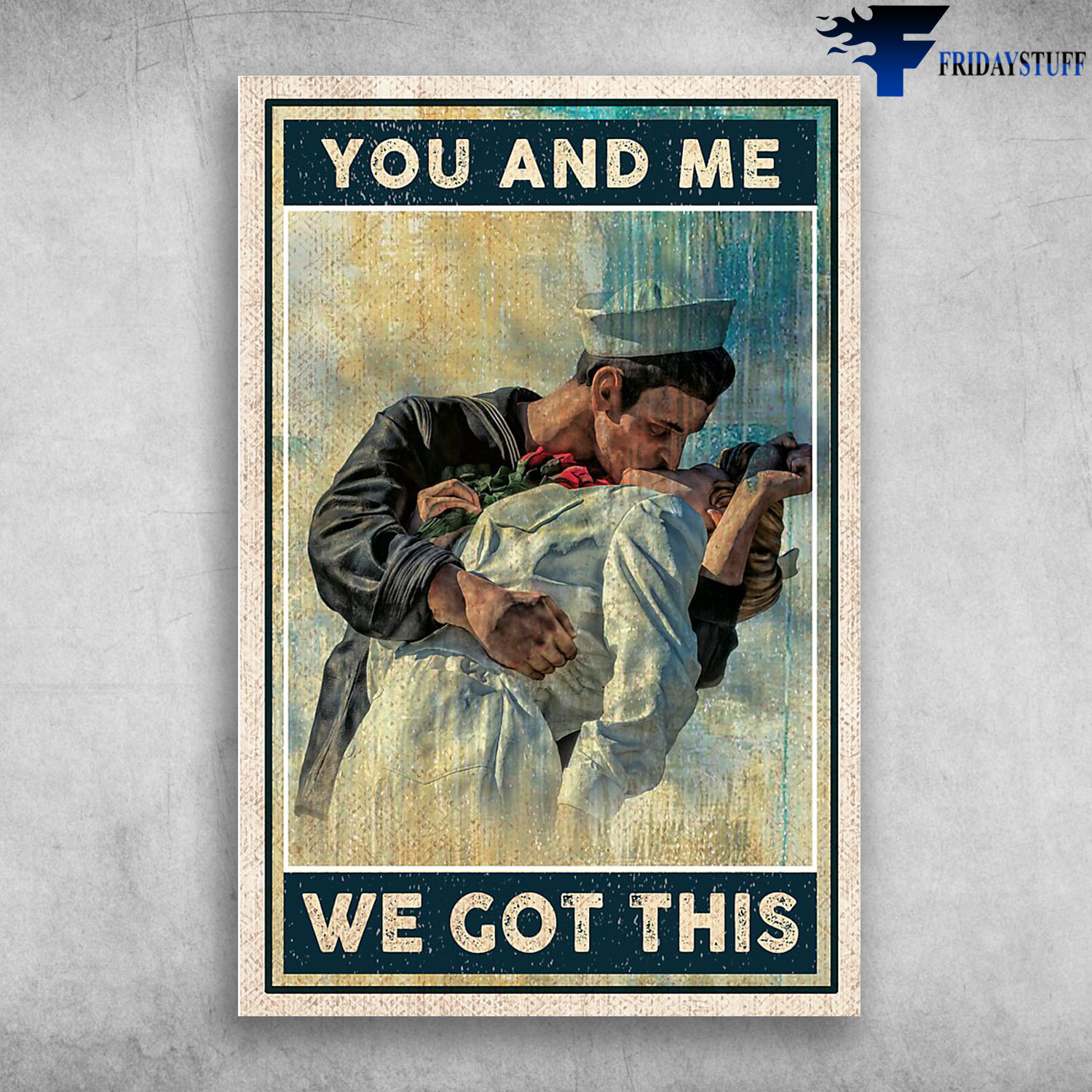
August 14, 1945. It was loud. Imagine the collective roar of a city that had been holding its breath for years suddenly exhaling all at once. That's the backdrop for the most famous photograph in American history. You've seen it a thousand times—the kissing sailor and nurse locked in a back-bending embrace in the middle of Times Square. It’s on posters, postcards, and even statues. But honestly, the story we’ve been told about romance and "true love" doesn't really hold up when you look at the messy, unscripted reality of that afternoon.
The image, captured by Alfred Eisenstaedt for Life magazine, became the shorthand for the end of World War II. It’s basically the visual definition of "peace." But for decades, nobody actually knew who the people in the photo were. It was just a nameless sailor and a nameless nurse. That anonymity allowed the public to project whatever they wanted onto the image. We wanted it to be a movie ending. We wanted them to be a couple. They weren't.
The Mystery of the Kissing Sailor and Nurse Decoded
For years, dozens of men and women claimed to be the iconic duo. It became a bit of a historical "I’m Spartacus" moment. Everyone wanted a piece of that legacy. It wasn't until much later, using forensic hair analysis and facial recognition, that the identities were narrowed down to George Mendonsa and Greta Zimmer Friedman.
George wasn't even supposed to be there. He was on leave from the Pacific, watching a movie at Radio City Music Hall with his future wife—yes, his actual date was in the background of the photo—when the news broke that Japan had surrendered. They ran into the street. George, fueled by a mix of celebration and probably a few drinks, started kissing every woman he saw. Greta, a dental assistant (not actually a nurse, though her uniform looked the part), was just heading back to work.
Why the "Nurse" Wasn't Actually a Nurse
Greta Zimmer Friedman was 21 years old. She was a refugee from Austria who had fled the Nazis. On that day, she was wearing a white dental assistant's uniform, which everyone at the time—and since—mistook for a nurse's outfit. This is one of those small details that history kinda smoothed over because "The Sailor and the Nurse" sounds way more poetic than "The Sailor and the Dental Assistant."
She didn't see the sailor coming. It wasn't a romantic moment for her. In her own words during an interview with the Veterans History Project, she noted that it wasn't a choice she made. "The guy just came over and grabbed," she said. It was more of a jubilant, chaotic reflex than a spark of passion. George was just happy he didn't have to go back to the war. Greta was just a person in the wrong place at the right time for a legendary photographer.
The Darker Side of the Iconic Image
We have to talk about the shift in how we view this photo today. In 1945, the world was in a frenzy. The war was over. Normal rules felt like they didn't apply for a few hours. But if you look at the photo through a 2026 lens, the power dynamic is uncomfortable. George is physically overpowering her. Greta’s body is stiff. Her hand is clenched.
Lawrence Verria and George Galdorisi, who wrote The Kissing Sailor, did a deep dive into the physics of the pose. It’s an aggressive lean. This has led to a lot of modern debate. Is it a beautiful moment of national relief, or is it a documented instance of non-consensual contact? Both things can be true at once. History is rarely as clean as a black-and-white photograph makes it look.
The Other Photographer: Victor Jorgensen
Most people don't realize there’s a second photo of this exact moment. While Eisenstaedt was shooting for Life, a Navy photojournalist named Victor Jorgensen caught the same scene from a different angle. His version, titled Kissing the War Farewell, is much tighter. It doesn't show the street or the crowds. It’s just the two of them.
Because Jorgensen was a government employee, his photo is in the public domain. Eisenstaedt’s is copyrighted. This is why you see the "less famous" version used in some textbooks and lower-budget documentaries. It lacks the "epic" feel of the Life shot, but it proves the moment wasn't staged. It was a raw, split-second occurrence.
What This Photo Teaches Us About Memory
Collective memory is a funny thing. We remember the kissing sailor and nurse as a symbol of American triumph, but we forget the trauma that preceded it. George Mendonsa had seen horrific things as a quartermaster on the USS The Sullivans. He had watched men die in the water during the Battle of Okinawa. That kiss wasn't about romance; it was a desperate, physical reaction to the realization that he was going to live.
Greta, too, carried heavy baggage. She didn't even know at the time that her parents had died in the Holocaust. She found out later. This "happy" photo is actually a collision of two people carrying immense amounts of stress and grief, colliding in a moment of pure, unfiltered relief.
Debunking the Myths
- They were a couple. Nope. They never met again until decades later.
- It was a long kiss. It lasted about three seconds. Eisenstaedt just happened to be fast enough to get the perfect frame.
- The girl in the background is a stranger. The woman seen smiling just over George’s shoulder is actually Rita Petry, the woman George was dating and eventually married. She didn't seem to mind the kiss at the time, given the circumstances.
- It was staged. For years, skeptics thought the lighting was too perfect. But the existence of the Jorgensen photo and the testimony of bystanders confirms it was a spontaneous act.
Navigating the Legacy of the Kiss
If you visit Sarasota, Florida, you'll see a massive 26-foot statue called Unconditional Surrender based on the photo. It’s a lightning rod for controversy. Some people leave flowers; others have spray-painted "Me Too" on it. It shows how much our cultural values have shifted in eighty years.
Understanding the kissing sailor and nurse requires us to hold two conflicting ideas. We can appreciate the historical significance and the relief of a generation that survived the deadliest conflict in human history, while also acknowledging that the "nurse" didn't have a say in the matter. It’s a complicated piece of art.
How to Research Historical Photos Yourself
If you’re interested in the truth behind iconic images, don't just rely on the captions.
- Check the National Archives. Most official war photos are stored there with their original metadata.
- Look for oral histories. The Library of Congress has a massive collection of interviews with veterans and civilians who lived through these moments.
- Analyze the background. Often, the people in the shadows of a photo tell more about the reality than the subjects in the center.
When looking at the V-J Day kiss, start by examining the full frame of Eisenstaedt’s photo. Look at the people in the background. Their faces are a mix of shock, amusement, and exhaustion. That is the real story of 1945. It wasn't just a kiss; it was a release valve for a world that had been under too much pressure for too long.
To truly understand the era, look into the specific history of the USS The Sullivans to see what George Mendonsa had survived just months before he landed in Times Square. Comparing his military record with the lightness of the photo adds a layer of depth that a simple "romance" narrative completely misses.
Actionable Next Steps
- Visit the Library of Congress Online: Search for the "Veterans History Project" to listen to Greta Zimmer Friedman’s actual 2005 interview. Hearing her voice changes how you see the image.
- Compare the Photos: Find Victor Jorgensen's Kissing the War Farewell and place it side-by-side with Eisenstaedt's version. Note how the composition changes your emotional response to the scene.
- Read "The Kissing Sailor": If you want the technical breakdown of how historians proved the identities of the pair, this book by Verria and Galdorisi is the definitive resource.
- Explore Local V-J Day Archives: Many local newspapers from 1945 have been digitized. Search for your own town's headlines from August 14th to see how the end of the war was celebrated outside of New York City.