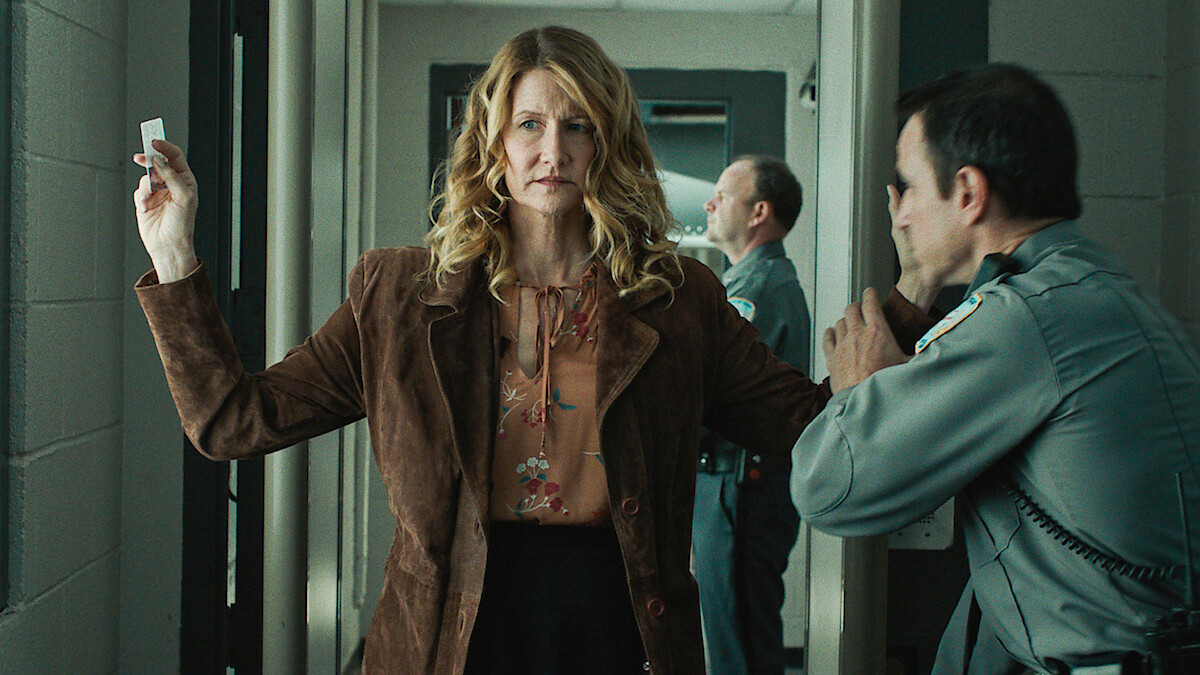
Texas in 2004 wasn't exactly known for its progressive stance on the death penalty, but the execution of Cameron Todd Willingham changed something. It felt different. It felt wrong to a lot of people who actually looked at the files. If you've seen the 2018 movie Trial by Fire, you know the gist: a man is accused of killing his three daughters in a house fire, he’s portrayed as a "white trash" monster by the prosecution, and he eventually dies by lethal injection despite a world-class scientist screaming that the evidence was total junk.
It’s a tough watch. Jack O’Connell plays Willingham with this raw, frantic energy that makes you uncomfortable, while Laura Dern plays Elizabeth Gilbert, the playwright who basically became his last hope. But here’s the thing about "based on a true story" Hollywood flicks—they usually polish the edges. With Trial by Fire, the reality was actually grittier, more bureaucratic, and arguably more depressing than what made it onto the screen.
The movie tries to capture that suffocating feeling of a legal system that’s already decided you’re guilty before the first witness even speaks. Most people who search for this movie want to know one thing: Did he actually do it? While the film leans heavily toward "no," the real-life expert consensus shifted so dramatically after the trial that it became a landmark case for the Innocence Project.
The Junk Science That Built a Death Row Case
When the fire happened on December 23, 1991, in Corsicana, investigators didn’t have the sophisticated tools we have today. They relied on "old school" fire Marshall intuition. In Trial by Fire, we see the investigators pointing at "pour patterns" and "crazed glass." They claimed these were definitive signs of an accelerant like lighter fluid.
Honestly, they were just guessing.
The fire marshals, Manuel Vasquez and Douglas Fogg, looked at the charred remains of the Willingham home and saw a pentagram. No, seriously. They used "indicators" that have since been thoroughly debunked by modern fire science. They thought the way the glass broke meant it was an ultra-hot fire started by a liquid. They thought the "V-shape" marks on the walls proved there were multiple points of origin.
Then came Gerald Hurst. He’s the scientist played by Bill Camp in the movie. Hurst was a legend in the chemistry world, and he basically looked at the original fire report and realized it was complete nonsense. He proved that "crazed glass" just happens when hot glass gets hit by cold water from a fire hose. He showed that "pour patterns" can happen naturally in a flashover—a phenomenon where a room gets so hot that everything in it spontaneously ignites.
Hurst’s report reached the Texas Board of Pardons and Paroles and Governor Rick Perry’s office just days before the execution. They ignored it. That is the part that still keeps legal experts up at night. It wasn't just a mistake; it was a refusal to look at new data.
Why the Trial by Fire Narrative Matters Today
We talk a lot about "wrongful convictions," but this movie forces you to look at how poverty and reputation bake themselves into the jury’s mind. Willingham wasn't a "perfect victim." He had a criminal record. He had a Led Zeppelin poster that the prosecution tried to claim was "satanic." He was, by many accounts, a loud, sometimes violent man who struggled with domestic issues.
The film doesn't shy away from his flaws. It shows that the legal system isn't just about facts; it's about who the jury likes.
The "jailhouse snitch" is another huge factor. In the movie, we see Johnny Webb—played by Joey Brooks—testifying that Willingham confessed to him. In real life, Webb eventually recanted. There were even notes found years later suggesting Webb was promised a lighter sentence in exchange for his testimony, something the prosecution denied at the time. This is a classic pattern in death penalty cases that the Trial by Fire movie highlights perfectly. It’s a transaction. The state gets a conviction, and the snitch gets a deal.
The Elizabeth Gilbert Connection
Elizabeth Gilbert wasn't some high-powered lawyer. She was a teacher and a playwright from Houston who started writing to Willingham as a pen pal. The movie portrays their relationship as this platonic, soul-saving bond.
It’s actually pretty accurate.
Gilbert spent years visiting him, digging through his files, and eventually hiring Hurst to look at the arson evidence. She saw the man behind the "monster" label. What the movie captures so well is the exhaustion. You see it in Laura Dern’s performance—the realization that even when you have the truth, the machine just keeps grinding forward.
There’s a scene where they realize the appeal has been denied despite the new evidence. It’s quiet. It’s devastating. It reflects the reality of the Texas legal climate in the early 2000s, where "tough on crime" wasn't just a slogan; it was a political requirement.
What the Movie Got Right (and What It Skipped)
Hollywood loves a climax, but the real Willingham story is a series of slow-motion car crashes.
- The Science: The film is remarkably accurate about the arson science. They used actual technical terms and didn't dumb down why the original investigation was flawed.
- The Character: Willingham was definitely not a saint. The movie includes his history of domestic abuse, which is vital. If he were a "perfect" person, the tragedy would be easier to digest. The fact that he was "unlikeable" is exactly why he ended up on death row.
- The Aftermath: The movie ends with the execution, but the real-world fight continued. In 2009, the Texas Forensic Science Commission was set to hear a report that would have likely exonerated Willingham's name, but Governor Rick Perry replaced several members of the commission just two days before the hearing.
People are still fighting over this. The Innocence Project has basically used the Willingham case as the "Exhibit A" for why arson-based convictions across the country need to be re-examined. There are likely hundreds of people in prison right now based on the same "junk science" that killed Todd Willingham.
How to Approach the Case Now
If you’re watching Trial by Fire for the first time, don't treat it as a closed book. It’s a starting point. The 2009 New Yorker article by David Grann, titled "Trial by Fire," is the gold standard for this story. It’s where most of the film’s research came from, and it’s even more chilling than the movie because it lays out the timeline with cold, hard precision.
You should also look into the National Fire Protection Association (NFPA) 921. This is the manual that basically changed how fires are investigated. It was published shortly before Willingham’s trial, but the investigators in Corsicana simply didn’t use it. They were stuck in the past, and that lag time proved fatal.
Actionable Steps for Those Interested in Justice Reform
Watching a movie and feeling sad is one thing. Doing something is another. If this case bothered you, there are specific ways to engage with the issues it raises.
- Support Forensic Oversight: Look into the work of the Innocence Project. They focus specifically on cases where DNA or new science (like the arson science in this case) can prove innocence. They are the ones who pushed the Willingham case into the national spotlight.
- Audit Arson Cases: Several states have started "Arson Reviews" to look at old cases where people were convicted using pre-1992 methods. Check if your state has a forensic science commission and see what their standards are for "expert" testimony.
- Learn About "Jailhouse Snitch" Laws: Some states have passed laws requiring more transparency when a prisoner testifies against another in exchange for a deal. Support legislation that requires these "deals" to be disclosed to the jury.
- Read the David Grann Report: Go find the original New Yorker piece. It provides the granular detail that a 2-hour movie simply can't fit, including the haunting letters Willingham wrote during his final days.
The story of Trial by Fire isn't just about one man in Texas. It's about what happens when the legal system prioritizes finality over accuracy. It’s a reminder that "science" isn't always static, and the experts we trust in the courtroom are sometimes just people with badges making educated guesses. Until we acknowledge that the system can—and does—make terminal mistakes, the ghost of Todd Willingham will continue to haunt the American justice system.