Honestly, Luc Besson is a madman. I mean that in the best possible way. Back in 2017, he released Valerian and the City of a Thousand Planets, a movie so visually dense it makes the average Marvel flick look like a PowerPoint presentation. People didn't really know what to do with it. Critics were confused, the box office was... well, it wasn't great. But if you look at the DNA of modern sci-fi, this weird, sprawling epic is actually more important than we give it credit for.
It cost nearly $200 million. That's a lot of money for an independent French production.
The movie is based on the French comic series Valérian and Laureline, which started in the late 60s. If you’ve ever looked at Star Wars and thought some of the designs looked familiar—like the Millennium Falcon or Han Solo’s carbonite slab—you can thank these comics. George Lucas never officially credited them, but the visual overlap is kind of undeniable. Besson grew up on these stories. He spent decades waiting for technology to catch up to his imagination. By the time he got to make Valerian and the City of a Thousand Planets, he didn't hold anything back.
The Absolute Chaos of Alpha
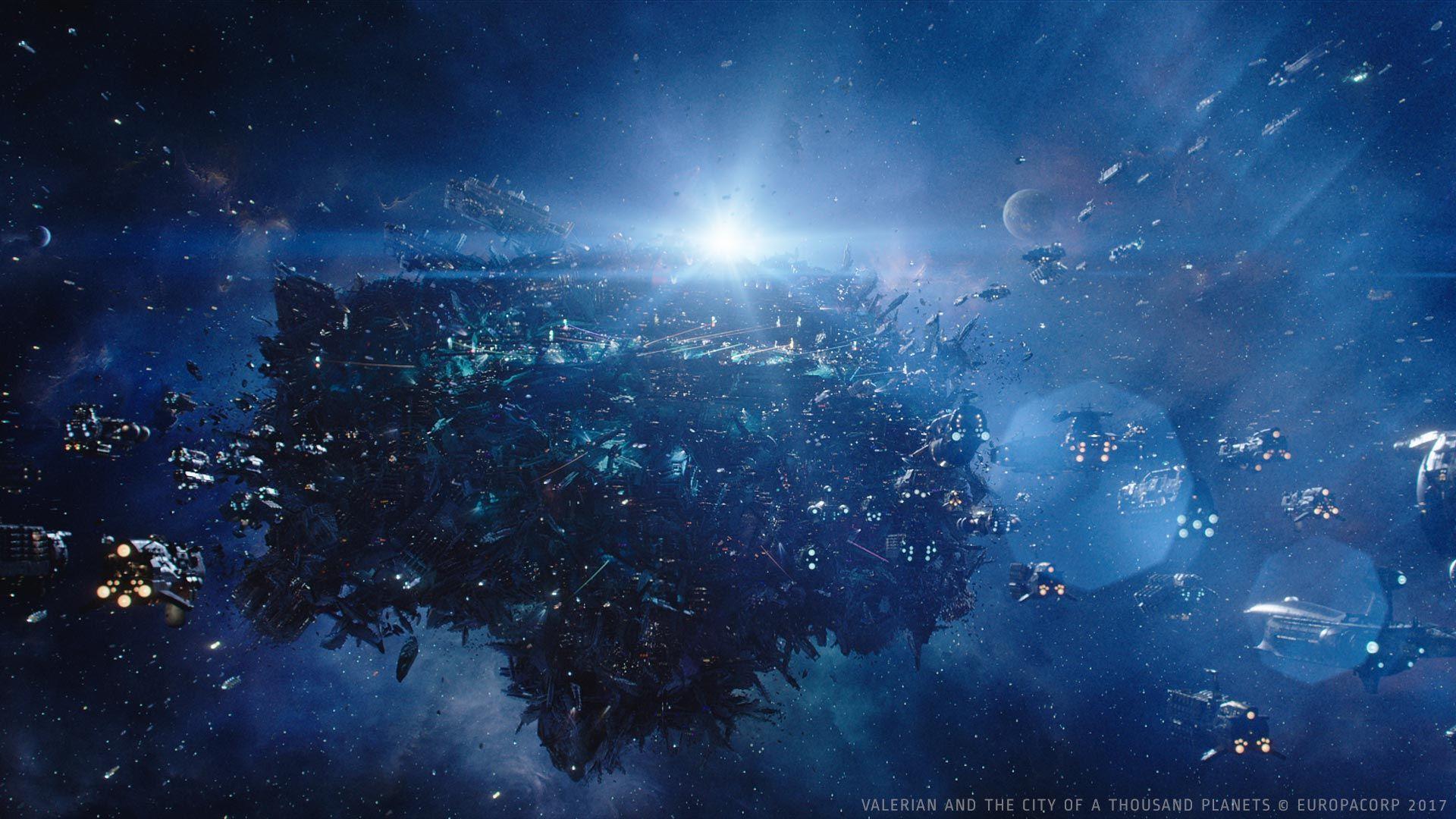
Alpha is the heart of the story. It’s this massive, ever-evolving space station where thousands of species live together. It started as the International Space Station in our near future. Over centuries, more modules were added, more aliens arrived, and it eventually grew too heavy for Earth's orbit. So, they pushed it out into deep space.
It’s a miracle of world-building.
You have the Gas Precinct, where methane-breathers live in murky clouds. There’s a Liquid Sector for aquatic species. The sheer variety is staggering. Most movies give you maybe three or four alien types. Besson gives you hundreds. He hired concept artists from all over the world, many of whom never even talked to each other, just to ensure the designs didn't feel "uniform."
The Big Market Sequence is a Masterclass
There’s a scene early on where Valerian (Dane DeHaan) and Laureline (Cara Delevingne) visit a place called "Big Market." It’s a bazaar located in another dimension. To see it, you have to wear special glasses. To touch anything, you need a specialized glove.
It is a nightmare to explain but a joy to watch. Valerian is literally running through two dimensions at once. One hand is in the desert, the other is in a high-tech mall. This is the kind of high-concept stuff that usually stays in books because it's too hard to film. Besson just went for it. It’s messy, fast-paced, and wildly creative.
Why the Casting Divided Everyone
Let’s talk about the elephant in the room: Dane DeHaan and Cara Delevingne.
A lot of people hated the chemistry. Or the lack of it. In the comics, Valerian is a bit more of a square-jawed hero, while Laureline is the brains. In the movie, they feel like two bored teenagers at a rave. DeHaan plays Valerian with this weird, Keanu-esque "Whoa" energy, and Delevingne is mostly there to roll her eyes at him.
Is it perfect? No. But it’s different.
In an era where every lead actor is named Chris and has the exact same workout routine, seeing two "alt" leads in a $200 million blockbuster was a choice. A big one. It makes the movie feel less like a product and more like a strange, European fever dream. You've got Rihanna playing a shape-shifting alien named Bubble and Ethan Hawke as a space pimp named Jolly. It's gloriously bizarre.
The Technical Achievement (The Part No One Disputes)
Even if you hate the plot, you can't deny the visuals. Weta Digital, Industrial Light & Magic (ILM), and Rodeo FX all worked on this. That is basically the "Avengers" of visual effects houses.
- Total VFX Shots: 2,734
- The Mül Scene: The opening sequence featuring the Pearl people is some of the most beautiful CGI ever put to film. The skin textures, the way light interacts with their translucent bodies—it's breathtaking.
- Sound Design: Created at Skywalker Sound, the layering of environments makes Alpha feel like a living, breathing place.
Most movies use CGI to save money or hide flaws. Valerian and the City of a Thousand Planets uses it to build a museum. Every frame is packed with detail. You could pause the movie at any second and find a background alien with a fully realized costume and backstory that only appears for three frames.
The Commercial Reality of "Independent" Sci-Fi
The movie flopped in the US, making only about $41 million. Overseas was a different story, particularly in China, but it wasn't enough to trigger the sequels Besson already had written.
This is the tragedy of original sci-fi.
We complain about sequels and reboots. Then, when a director takes a massive swing on a weird, colorful, non-IP (at least in America) story, we stay home. It’s a tough pill to swallow. The film’s failure basically signaled to studios that if it doesn't have a cape or a lightsaber, don't spend more than $50 million on it.
What Most People Get Wrong About the Story
The biggest complaint is usually that the plot is "thin."
Well, yeah. It’s a procedural.
The original comics were episodic. They were about two agents going on a mission, solving it, and moving on. The movie tries to bridge that with a larger conspiracy involving the genocide of the Pearl people, but at its heart, it’s a travelogue. It’s about the experience of being in the city of a thousand planets. If you go in expecting The Godfather in space, you're going to be disappointed. If you go in expecting a psychedelic tour of a possible future, you'll love it.
Acknowledging the Flaws
I'm an expert, not a fanboy. The dialogue is clunky. Some of the jokes land with a thud. The pacing in the middle—especially the whole "finding the jelly" subplot—drags. It’s not a perfect movie. But a flawed masterpiece is almost always more interesting than a polished, boring corporate product.
Actionable Insights for Sci-Fi Fans
If you haven't seen it, or if you saw it once and dismissed it, here is how to actually appreciate what Besson was doing.
Watch it on the biggest screen possible.
This is not a "phone movie." If you have a 4K TV and a good soundbar, use them. The color palette alone—heavy on the teals, pinks, and oranges—is a feast for the eyes.
Pay attention to the background.
Forget Valerian's flirting for a second. Look at the alien designs. Look at the architecture of the different sectors. The level of detail in the world-building is actually superior to most Star Wars sequels.
Read the comics.
If the movie piques your interest, go back to the source. Valérian and Laureline by Pierre Christin and Jean-Claude Mézières is foundational to modern science fiction. You’ll start seeing its influence everywhere.
Support "Risk" Cinema.
Whether it's Valerian, Jupiter Ascending, or Dune, original (or at least non-mainstream) sci-fi needs viewers. If we want more than just superhero movies, we have to show up for the weird stuff.
Valerian and the City of a Thousand Planets is a relic. It represents a moment where a single creator was given a massive check and told to make his dream come true. It’s indulgent, gorgeous, and deeply strange. It’s a reminder that movies can still surprise us, even if they stumble along the way. Next time you're scrolling through a streaming service and see that colorful thumbnail, give it a chance. Just turn your brain off a little, turn your eyes up all the way, and get lost in Alpha.
Next Steps:
- Compare Visual Styles: Watch the opening "Space Oddity" montage of Valerian and compare it to the world-building in The Fifth Element. You'll see Besson's evolution in how he handles "lived-in" futures.
- Dive into Concept Art: Look up the work of Sylvain Despretz or Marc Simonetti on this film. Seeing the static designs helps you appreciate how much work went into the 3D rendering.
- Check Out the Soundtrack: Alexandre Desplat’s score is underrated. It avoids the typical "epic" tropes for something more whimsical and adventurous.