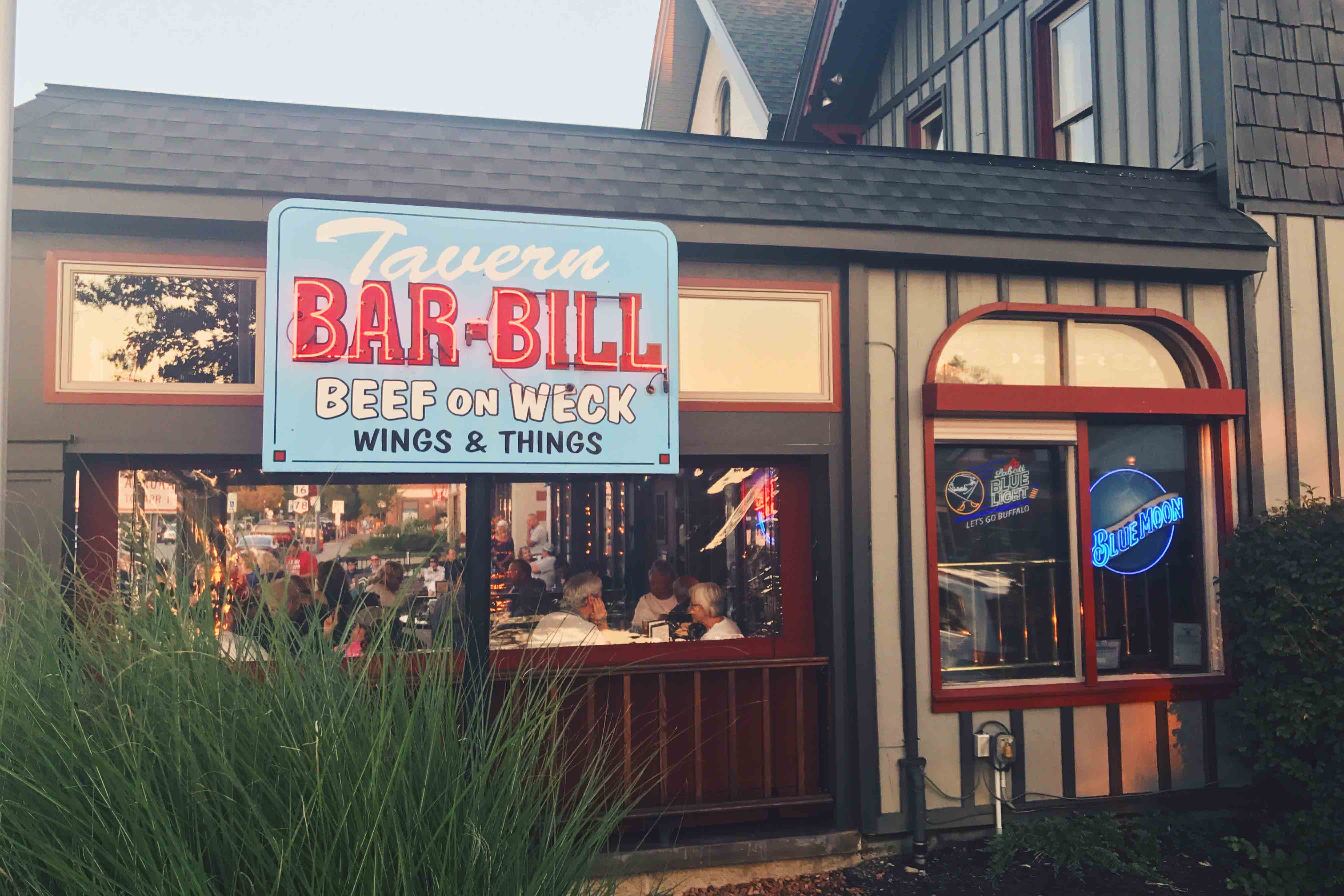
If you’ve ever walked through the streets of Western New York on a Sunday in October, you’ve seen the sea of blue and red. You’ve heard the shouting. You’ve probably seen a folding table or two meet a violent, gravity-induced end. But for someone looking in from the outside, there is often a nagging bit of confusion about the terminology. People ask, "What is a Bill Buffalo?" or "Is a Bill a type of buffalo?" Honestly, it’s a fair question.
It’s a bit of a linguistic knot.
Most people are actually asking about the Buffalo Bills, the NFL franchise that has become a cultural pillar of the region. They aren't asking about a specific biological subspecies of the North American bison named "Bill." Instead, the name is a historical nod, a bit of clever branding from the mid-20th century that stuck so hard it became inseparable from the city of Buffalo itself.
The Origins of the Buffalo Bills Name
Let's clear this up: the team isn't named after the animal first. It's named after a guy.
Back in 1947, there was a contest to rename the city's All-America Football Conference (AAFC) team, which was then known as the Bisons. James Cockrell won the $500 prize by suggesting the "Bills." This was a direct reference to William Frederick "Buffalo Bill" Cody, the famous frontiersman and Pony Express rider.
It was a play on words. Buffalo, the city. Bill, the legendary figure. Together, they made the Buffalo Bills. When the current franchise was founded by Ralph Wilson in 1959 to join the American Football League (AFL), he decided to keep the name because it already had deep roots in the local sports consciousness.
You see, Buffalo Bill Cody was the ultimate showman. He traveled the world with his Wild West show, basically inventing the myth of the American West for global audiences. By adopting the name, the football team grabbed a piece of that rugged, larger-than-life persona. It’s kinda ironic though, because Cody was known for hunting the very animal that eventually became the team’s logo.
The Bison vs. Buffalo Confusion
Biology nerds will always jump in to tell you that there are no "true" buffalo in North America. They’ll point out that the Cape Buffalo is in Africa and the Water Buffalo is in Asia. What we have in the United States, and what represents the city of Buffalo, is the American Bison.
But language is messy.
Common usage won the battle a long time ago. We call them buffalo. The city is named Buffalo. The team is the Bills. So, when someone says "Bill Buffalo," they are usually conflating the mascot—a charging blue bison—with the team name.
The logo itself has evolved significantly. In the early days, it was a relatively simple, stationary red bison. In 1974, designer Stevens Wright created the "Charging Buffalo" logo we know today—the blue silhouette with a red streak coming out of the horn. That red streak is meant to represent motion, but many fans just think it looks cool. It’s arguably one of the most recognizable logos in professional sports because it’s simple and aggressive.
Why the Identity Matters So Much
Being a "Bill" isn't just about wearing a jersey. For people in Western New York, the Buffalo Bills represent a sort of blue-collar defiance. The city has dealt with economic shifts, brutal winters, and a "small market" reputation that often leads national media to overlook them.
The team is the heartbeat.
When you talk about the Bills, you have to talk about Bills Mafia. This isn't just a fan club; it’s an ecosystem. It started as a joke on Twitter (now X) around 2011, but it transformed into a massive charitable force. This is the "Bill Buffalo" in its modern, human form. They’ve raised millions for Oishei Children’s Hospital and various local causes, often donating in $17 increments to honor quarterback Josh Allen or other players.
They are loud. They are loyal. They are occasionally found jumping through tables in stadium parking lots.
The Four Super Bowls and the "Wide Right" Shadow
You can't understand what it means to be a fan of this team without acknowledging the 1990s. The Bills did something no other team has ever done: they went to four consecutive Super Bowls (1990–1993).
They lost all of them.
For many franchises, that would be a source of shame. For Buffalo, it’s a badge of resilience. They had Hall of Famers like Jim Kelly, Thurman Thomas, Bruce Smith, and Andre Reed. They ran the "K-Gun" no-huddle offense that changed how football was played. Even though they didn't get the ring, that era defined the "Bill" identity as someone who gets back up, no matter how hard they get hit.
The Josh Allen Era
If you ask a kid today "what is a Bill Buffalo," they’ll probably just point to a picture of Josh Allen. Since 2018, the franchise has undergone a massive resurgence. Allen, with his cannon arm and "run through a linebacker" attitude, fits the city’s personality perfectly.
The team's success in the 2020s has turned Buffalo back into a powerhouse. They’ve won multiple AFC East titles and are constantly in the Super Bowl conversation. The "buffalo" part of the identity is the strength; the "Bill" part is the history.
It’s worth noting that the team’s stadium situation is also changing. For decades, they played at Highmark Stadium (formerly Rich Stadium) in Orchard Park. It’s an open-air bowl where the wind swirls and the snow can pile up in feet, not inches. A new stadium is currently under construction, set to open in 2026, which will be a massive shift for the region. Many fans are worried about losing the "grit" of the old stadium, but that’s just part of the Buffalo psyche—loving the struggle.
Notable Facts About the "Bills" Identity
- The Name Origin: As mentioned, it comes from William "Buffalo Bill" Cody.
- The Logo: It’s a bison, not a buffalo, technically.
- The Colors: Royal blue, red, and white.
- The Anthem: "The Shout Song" (originally by the Isley Brothers, modified for the team).
- The Ownership: The team was owned by Ralph Wilson from its inception until his death; it was then sold to Terry and Kim Pegula in 2014, keeping the team in Buffalo when fans feared a move to Toronto.
Cultural Impact and the "Small Market" Pride
There is a chip on the shoulder of every Bills fan. Because Buffalo is a smaller city compared to New York City or Chicago, there’s a feeling that the team has to fight harder for respect. This translates into an incredibly intense home-field advantage.
The weather plays a role. People talk about "Bills Weather." When the lake-effect snow kicks in and the temperature drops below freezing, the fans don't stay home. They show up in snowsuits. That is the essence of the Buffalo Bills. It’s about being "built for this."
How to Get Involved with the Bills
If you’re new to this world, don’t just buy a hat. You’ve gotta understand the vibe.
- Watch a home game in December. You won't truly understand the Buffalo Bills until you see a game where the visibility is five feet and the fans are still cheering.
- Learn the roster. It’s not just Josh Allen. Understand the roles of players like Stefon Diggs (during his tenure), Matt Milano, and the rising stars.
- Support the charities. If you want to be part of the Mafia, look into where they are donating. It’s the easiest way to earn respect in that community.
- Visit the city. Go to the Anchor Bar or Duff’s for wings. Don't call them "Buffalo wings." They’re just wings. If you call them "Buffalo wings," everyone will know you're a tourist.
The reality is that "Bill Buffalo" might be a slight misunderstanding of the name, but the sentiment behind it is real. It’s a fusion of a legendary American figure and a powerful, roaming beast of the plains. It represents a city that refuses to quit and a fan base that treats every game like a family reunion. Whether you're calling them the Bills, the Buffalo Bills, or just "the guys," you're talking about one of the most storied and passionate organizations in the history of American sports.
To really dive into the culture, start by following the local beat reporters like Sal Capaccio or Joe Buscaglia. They provide the nuance that national broadcasts often miss. Watch the documentaries on the 90s teams to see the heartbreak that forged the modern fan base. Once you understand the pain of the past, the current success feels a lot more meaningful.
Next Steps for New Fans:
- Check out the Buffalo Bills official website for the latest roster moves and injury reports.
- Follow Bills Mafia on social media to see the latest community-led charity drives.
- Plan a trip to the Buffalo Heritage Museum to see the history of the AFL and how the Bills helped shape modern professional football.