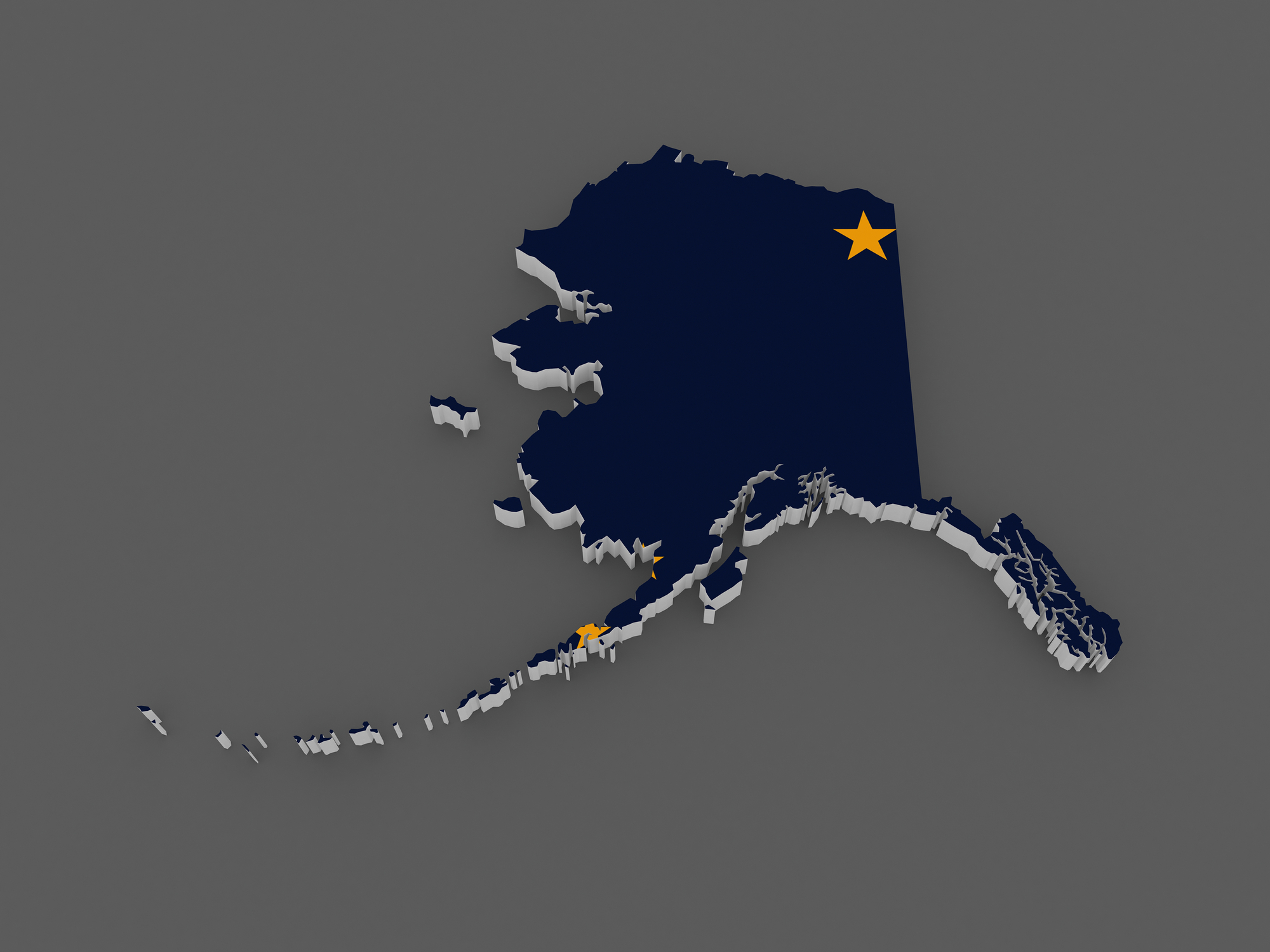
It’s easy to forget that for a huge chunk of American history, the map just looked wrong. We’re so used to the "Lower 48" plus the two outliers that it feels like Alaska has always been part of the club. But it hasn't. Not even close. If you’re asking when did Alaska become a state, the short answer is January 3, 1959.
But honestly? That date is just the finish line of a marathon that lasted nearly a century.
Alaska was basically a giant question mark for the U.S. government for decades. We bought it from Russia in 1867—a deal orchestrated by Secretary of State William Seward—for roughly $7.2 million. People called it "Seward’s Folly." They thought he’d bought a giant, useless icebox. They were wrong, obviously. But even after gold was found and the "icebox" started looking like a treasure chest, Washington D.C. wasn't in any hurry to give Alaskans a seat at the table.
The 92-Year Wait for Statehood
For a long time, Alaska was just a "district." Then it was a "territory."
You have to imagine the frustration of living there in the early 1900s. You’re paying taxes. You’re sending resources back to the mainland. But you have zero vote in Congress. You can’t even vote for the President. It was a classic case of taxation without representation, which is kind of ironic considering how the U.S. started in the first place.
The push for statehood didn't really catch fire until after World War II. During the war, the world realized how strategically important Alaska was. It’s the gateway to the Arctic. It’s a stone’s throw from Asia. After the Japanese invaded the Aleutian Islands, the federal government poured money into the territory, building the Alaska Highway and bringing in thousands of troops. Suddenly, Alaska wasn't just a remote wilderness; it was the front line of national defense.
By the time 1958 rolled around, the momentum was unstoppable. President Dwight D. Eisenhower finally signed the Alaska Statehood Act on July 7, 1958. But it wasn't official yet. The people of Alaska had to vote on it themselves.
They did. By a landslide.
On January 3, 1959, Eisenhower signed the proclamation. Alaska was officially the 49th state. The flag changed for the first time in 47 years. It was a massive deal.
Why it took so long (and the drama you didn't hear about)
Why did it take nearly a century? It wasn't just about the cold.
Politics played a huge, messy role. In the 1950s, the U.S. was locked in a bitter partisan struggle. Democrats generally supported Alaska statehood because they thought the state would lean Democratic. Republicans were nervous about adding two new (likely Democratic) Senators to the mix.
There was also the "Hawaii factor." For years, the fates of Alaska and Hawaii were tied together. The idea was to admit one "red" state and one "blue" state to keep the balance of power in the Senate. Eventually, the logjam broke. Alaska went first in January '59, and Hawaii followed in August.
The Tennessee Plan
Alaskans got so tired of waiting that they tried a bold, borderline-crazy move called the "Tennessee Plan" in 1956. They didn't wait for permission. They just went ahead and elected a "shadow" congressional delegation—two senators and a representative—and sent them to D.C. to demand a seat.
One of those men was Ernest Gruening, a former territorial governor. He and the others basically haunted the halls of Congress, acting like they already belonged there. It was a brilliant bit of political theater that made it impossible for the federal government to keep ignoring them.
Life in the Territory vs. The State
Before when Alaska became a state, the fishing industry—specifically the powerful salmon canneries based in Seattle—basically ran the show. They had massive influence over territorial laws. They used "fish traps" that were incredibly efficient but devastated local fish populations and squeezed out independent Alaskan fishermen.
One of the first things Alaska did as a state? They banned those fish traps.
It was a declaration of independence from outside corporate interests. Statehood meant Alaskans finally had control over their own land and resources. It wasn't just about a star on the flag; it was about survival and self-determination.
The Land Claim Issues
We can't talk about statehood without talking about the Alaska Native communities. When the Statehood Act was passed, it gave the new state the right to select 103 million acres of land. The problem? Much of that land was already inhabited and claimed by Indigenous groups like the Tlingit, Haida, Inupiat, and Yup'ik.
The statehood movement largely ignored Native land rights at first. This tension eventually led to the Alaska Native Claims Settlement Act (ANCSA) in 1971, which was a massive, first-of-its-kind deal that settled land claims by creating Native-owned corporations. It’s a complex legacy that Alaskans are still navigating today.
What changed on January 3, 1959?
The day itself was actually pretty quiet in terms of ceremony in D.C., but in Alaska, it was a party for the ages. People were lighting bonfires in the snow. Bars were packed.
- The Flag: A 49-star flag was authorized. It only lasted for a year before Hawaii's admission forced another redesign to the 50-star version we know now. If you find an old 49-star flag in an attic, keep it. They're rare.
- The Governor: William A. Egan became the first elected governor of the state. Before that, governors were appointed by the President, which meant Alaskans had no say in who led them.
- The Economy: Statehood gave Alaska the legal framework to manage the massive oil discovery at Prudhoe Bay in 1968. Without statehood, that oil wealth might have vanished into federal coffers or private hands outside the state. Instead, it funded the Permanent Fund, which still pays dividends to Alaskans today.
Why statehood still matters in 2026
If you visit Alaska today, you’ll notice a fierce sense of independence. People there often refer to the rest of the country as "Outside." That mindset is a direct carryover from the decades spent as a neglected territory.
Understanding when did Alaska become a state helps explain why Alaskans are so protective of their rights and their land. They fought longer than almost anyone else to be treated as equals. They remember what it was like to be an afterthought.
How to explore Alaska's statehood history yourself
If you’re a history nerd or just planning a trip, don't just look at the mountains. Look at the story.
- Visit the Alaska State Museum in Juneau. They have incredible exhibits on the constitutional convention held at the University of Alaska Fairbanks. They actually wrote the state constitution before they were even allowed to be a state. Talk about confidence.
- Read "The Battle for Alaska Statehood" by Ernest Gruening. He was there in the trenches. It’s not a light read, but it’s the definitive account of the political warfare required to get the 49th star.
- Check out the "Statehood" mural in Anchorage. It’s a visual reminder of the diverse group of people—miners, fishermen, Indigenous leaders, and politicians—who pushed the movement forward.
- Look for 49-star flags. You can sometimes find them in small-town historical societies. They represent a very specific, very brief moment in American history when Alaska stood alone as the newest member of the Union.
Alaska isn't just a place on a map. It’s a reminder that the borders of the United States aren't static. They were built through grit, massive political gambles, and a whole lot of patience. January 3, 1959, wasn't just a date; it was the day the U.S. finally grew up and realized that its future lay as much in the frozen north as it did in the temperate south.