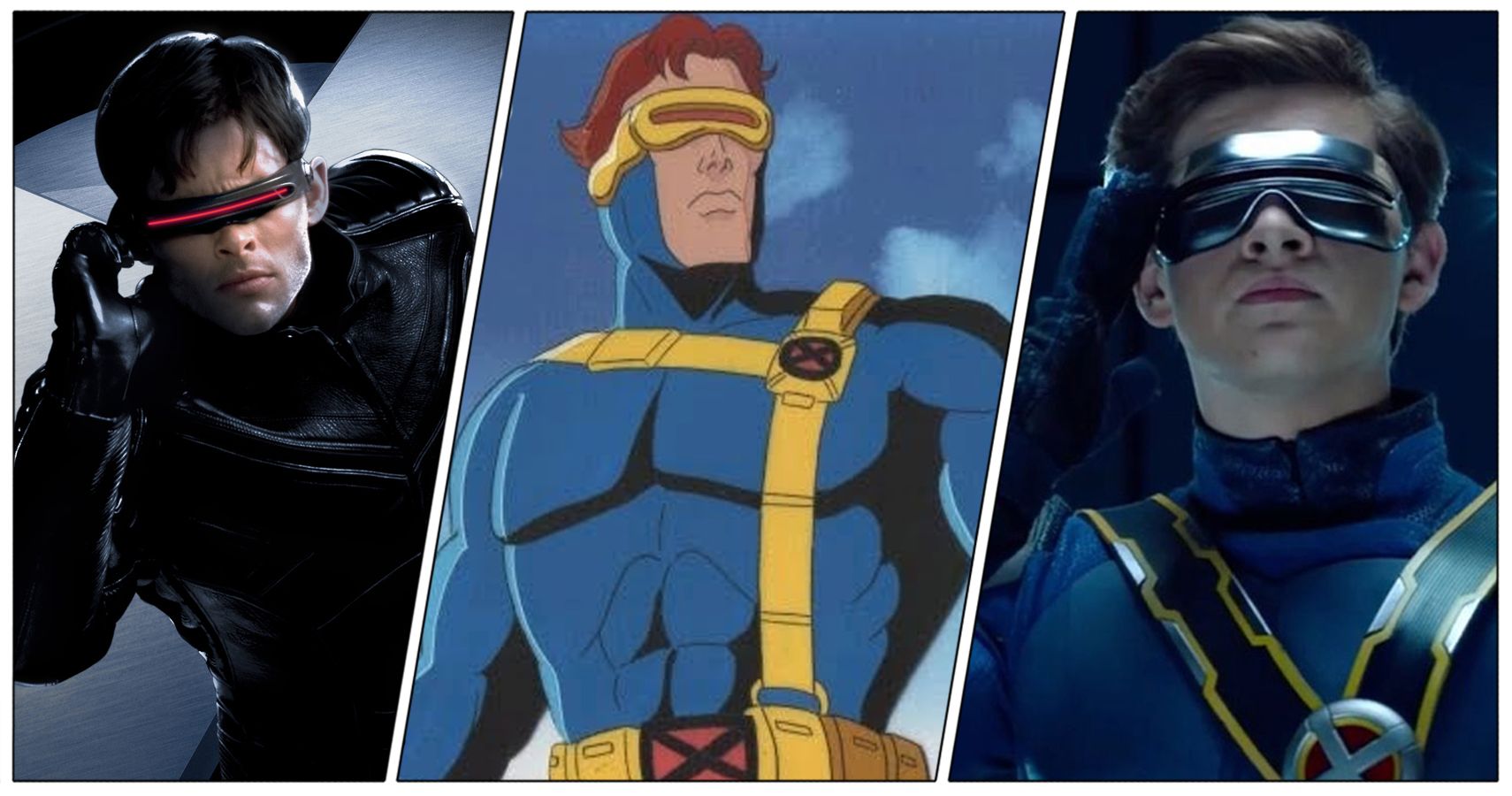
Scott Summers is the glue. Ask any hardcore Marvel reader, and they’ll tell you that while Wolverine gets the covers, Cyclops is the one who actually keeps the X-Men from imploding. But when you look at the movies, things get a little messy. It's weird. Fans have spent decades debating whether the actors who played Cyclops in X-Men were actually given a fair shake or if they were just there to make Logan look cooler.
Honestly, casting a guy who has to act with 60% of his face covered is a nightmare. You lose the eyes. You lose the "windows to the soul," as the cliché goes. Yet, several actors have stepped into those ruby-quartz visors since the year 2000.
The James Marsden Era: The Foundation
James Marsden was the first. Back in 1999, when Bryan Singer was piecing together the original X-Men, Marsden wasn't even the first choice. Fun fact: Jim Caviezel was originally set for the role but dropped out for Frequency. Imagine that timeline. Instead, we got Marsden, who brought this specific, Boy Scout rigidity that the role demanded.
He was 26. He was remarkably handsome. He had to wear lifts because Hugh Jackman is a giant compared to the comic-book Wolverine, and Marsden needed to look like a leader. For three movies—X-Men, X2: X-Men United, and the much-maligned X-Men: The Last Stand—Marsden defined the character for a generation.
He was great. Truly.
The problem wasn't his acting; it was the scripts. By the time The Last Stand rolled around in 2006, Marsden had already signed on for Superman Returns. The writers' solution? They killed him off in the first act. It felt cheap. Fans were livid. You can’t just vaporize the team leader off-screen because of a scheduling conflict, but that’s exactly what happened.
Marsden eventually got his redemption, though. If you blinked, you might have missed his cameo at the very end of X-Men: Days of Future Past in 2014. Seeing him back in the mansion, alive and well in a corrected timeline, felt like a much-needed apology to the fans who felt he was sidelined.
The Prequel Shift: Tye Sheridan Takes the Lead
When the franchise decided to soft-reboot with X-Men: First Class, they skipped Cyclops initially. We saw his brother, Havok (played by Lucas Till), but Scott was nowhere to be found. That changed in 2016 with X-Men: Apocalypse.
Enter Tye Sheridan.
Sheridan brought a totally different energy. He was younger, obviously. He played Scott as a terrified teenager who just accidentally blew up a bathroom with his face. It was a more "human" take. While Marsden was the finished product—the soldier—Sheridan was the raw material.
He stuck around for Dark Phoenix (2019), which, let's be real, was a rough exit for that iteration of the franchise. Even so, Sheridan’s chemistry with Sophie Turner’s Jean Grey felt a bit more central to the plot than the previous films. He played a version of Scott Summers that was more emotional, more desperate to save the woman he loved, rather than just shouting orders.
The Forgotten Appearances and Cameos
It isn't just a two-man show. The "who played Cyclops" question has a few more names attached if you're a completionist.
- Tim Pocock: In the much-criticized X-Men Origins: Wolverine (2009), a younger Scott Summers appears as a prisoner of William Stryker. Pocock played him with the classic red glasses and a 2000s-era haircut. It’s a brief role, mostly existing to show Scott being rescued by Logan before they even knew each other.
- The Voice Actors: We can't talk about Cyclops without mentioning Norm Spencer from the '92 animated series. He passed away in 2020, but his voice is Cyclops for millions of people. Ray Chase took over the mantle for the massive 2024 hit X-Men '97, doing a phenomenal job of echoing Spencer’s authoritative tone while adding modern depth.
- The Stunt Doubles: It sounds trivial, but for a character whose power is "punching things with his eyes," the stunt performers like James Michioka and others did the heavy lifting during the chaotic fight scenes at Liberty Island or Alcatraz.
Why the Casting is So Controversial
The fans are protective. Scott Summers in the comics is a tactical genius. He’s the "Mutant Revolutionary." In the movies, he often felt like the jealous boyfriend.
Kevin Feige, who actually worked as an associate producer on the first X-Men, has often hinted at the complexities of these characters. The struggle with casting Cyclops is that you need an actor who can command a room without using their eyes. Marsden did it with his chin and his posture. Sheridan did it with his vulnerability.
The nuanced truth is that both actors were victims of the "Wolverine-centric" era of Fox's filmmaking. When one character eats up all the screen time, the tactical leader of the team usually gets reduced to a foil.
What’s Next for Scott Summers?
Now that the X-Men are heading to the Marvel Cinematic Universe (MCU), the rumor mill is spinning. People are throwing names out like Glen Powell or Jacob Elordi.
Whoever takes the role next has a massive mountain to climb. They have to bridge the gap between Marsden’s stoicism and the radical leader seen in modern comics like House of X. The MCU has a habit of "fixing" characters that weren't fully realized in previous iterations—just look at what they did with Spider-Man or even Daredevil.
How to Track the Evolution of Cyclops Actors
If you're looking to really understand how these performances differ, you've got to watch them back-to-back, but not in release order. Try this:
- Watch X-Men: Apocalypse first. See Sheridan's origin.
- Skip to the 1992 Animated Series (or '97). This gives you the baseline for who the character is supposed to be.
- Finish with X2: X-Men United. This is arguably Marsden’s best work, specifically the scene where he’s brainwashed and forced to fight Jean. It shows the intensity he was capable of when the script allowed it.
The casting of Cyclops isn't just about finding a guy who looks good in spandex. It’s about finding someone who can convey authority, repression, and immense power while wearing a blindfold. Marsden and Sheridan both brought something unique to a difficult, often thankless role.
If you're building a watchlist or researching the history of the franchise, focus on the deleted scenes from the Blu-rays. There’s a wealth of Marsden footage from the first movie—specifically a scene in the classroom—that explains his relationship with Logan much better than the theatrical cut ever did. Understanding the "Who" behind the visor requires looking at the parts of the performance that the editors left on the floor.
Keep an eye on official casting calls for the upcoming MCU X-Men reboot. The next actor to wear the visor will likely be signed for a ten-year deal, finally giving Scott Summers the breathing room to be more than just a supporting player in someone else’s movie.
Focus on the physical acting. Watch the jawline. Watch the way they tilt their head when they're about to fire an optic blast. That’s where the real performance lives.
Regardless of who your favorite is, the character remains the heartbeat of the X-Men. Without Scott, it's just a group of people in a jet. With him, it's a team. That transition from James Marsden to Tye Sheridan, and eventually to whoever Marvel Studios picks, is the most important thread in the history of mutant cinema.
Stay updated by following industry trades like Variety or The Hollywood Reporter for the official MCU casting announcement, which is expected to break sometime in late 2026 or early 2027 based on the current production slate.
Until then, revisit X-Men '97 on Disney+. It’s the most "Cyclops" the character has ever been, and it serves as the perfect blueprint for what the next live-action actor needs to achieve.