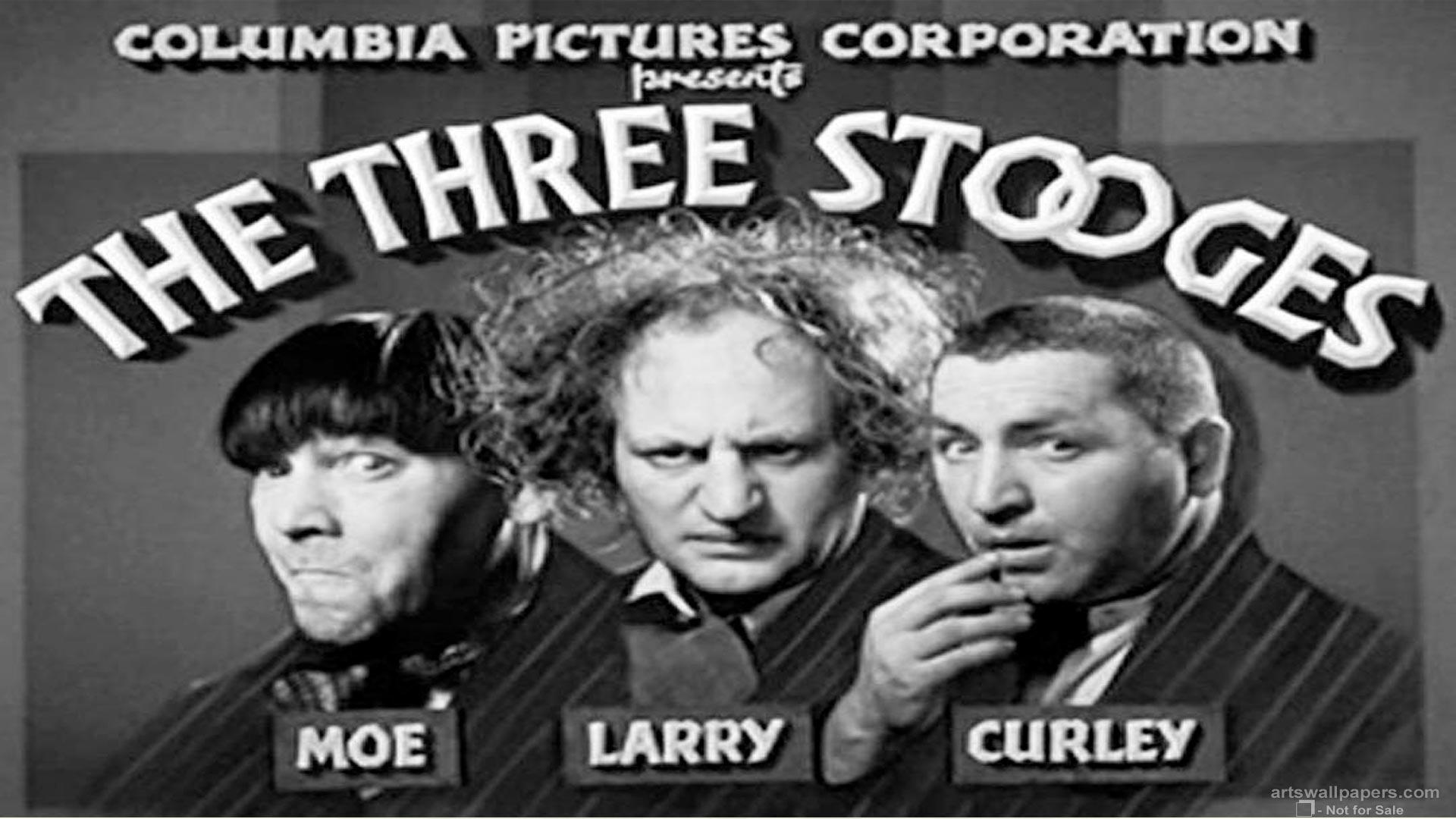
You know the sound. That hollow clonk of two skulls colliding, the frantic nyuck-nyuck-nyuck, or the aggressive whistle of a finger aimed directly at an eyeball. It’s primal. It’s chaotic. And honestly, it’s the DNA of modern comedy. But when people ask about the 3 stooges names, they usually expect a simple three-person list. They're usually surprised to find out the roster was actually a revolving door of brothers and friends that spanned decades of vaudeville, film, and television.
The "classic" lineup most of us picture—Moe, Larry, and Curly—is just one chapter of a much longer, often tragic, and deeply fascinating story of the Howard and Feinberg families.
The Foundation: Moe, Shemp, and the Birth of a Trio
Before the pie fights and the eye pokes, there were the Howard brothers from Brooklyn. Moe Howard, born Moses Harry Horwitz, was the undisputed leader. He wasn't just the guy with the bowl cut who handed out the slaps; he was the business brain. He was the one who kept the act together when things got messy.
Originally, the act didn't even belong to them. They were "stooges" for a vaudeville star named Ted Healy. In those early days of the 1920s, the lineup featured Moe Howard, his older brother Shemp Howard (born Samuel Horwitz), and their friend Larry Fine (born Louis Feinberg).
Shemp was actually the original "third stooge." He had this incredible, natural comedic timing and a face that seemed made of rubber. But Shemp didn't love the chaos of the road, and he certainly didn't love Ted Healy’s erratic, often drunken behavior. In 1932, Shemp decided to strike out on his own for a solo career in film. He was actually quite successful at it for a while. But his departure left a massive hole in the act.
Enter the Icon: Who Was Curly Howard?
When Shemp left, Moe had a younger brother in mind. Jerome Lester Horwitz was the baby of the family. He was handsome, had a thick head of chestnut hair, and a waxed mustache. He didn't look like a Stooge.
Moe told him he had to lose the hair. Jerome went to the barber, shaved his head, and became Curly.
This is the version of the 3 stooges names that most people recognize as the "Golden Era." From 1934 to 1946, Moe, Larry, and Curly produced 97 short films for Columbia Pictures. Curly was a force of nature. He wasn't just doing "bits"—he was a physical comedian on the level of Buster Keaton or Charlie Chaplin. His high-pitched "woo-woo-woo" and his ability to spin on the floor like a top weren't scripted; they were often just Jerome being Jerome.
But it wasn't all laughs. The physical toll was immense. Curly suffered a series of strokes, the first major one occurring in 1946 while on the set of Half-Wits Holiday. He was only 42. He never fully recovered and died in 1952. His passing changed the group forever, turning a family comedy act into a desperate search for a replacement who could fill those impossibly large shoes.
The Return of the Original: Shemp’s Second Act
With Curly unable to perform, Moe turned back to the one person he could trust: Shemp.
Shemp didn't really want to come back. He liked his solo career. But he knew his brothers needed him to keep the Columbia contract alive. So, from 1946 to 1955, the lineup returned to Moe, Larry, and Shemp.
Fans are often divided on this era. Some find Shemp "lesser" than Curly, but purists will tell you that Shemp was the superior technical comedian. He was the master of the "scared take." Sadly, Shemp’s tenure also ended in tragedy. In 1955, while coming home from a boxing match, he suffered a massive heart attack in the back of a cab and died.
This led to one of the most bizarre footnotes in Hollywood history: the "Fake Shemp." Because they still had four films left on their contract, they used a body double (Joe Palma) to film Shemp from behind or with his face obscured. It’s why, to this day, a stand-in or a double in a movie is sometimes jokingly called a "Shemp."
Joe Besser and "Curly Joe" DeRita
By the late 1950s, the Stooges were aging. The high-energy violence of the 30s was getting harder to pull off. They hired Joe Besser, a well-known comedian with a "whiny" persona. Joe’s contract actually had a clause that he couldn't be hit too hard. As you can imagine, a Stooge who doesn't get hit feels a bit like a burger without a patty. It didn't quite click with audiences.
Then came the 1960s. The old shorts started airing on television, and a whole new generation of kids fell in love with them. The Stooges were back in demand.
The final "official" member was Joe DeRita, who was dubbed "Curly Joe" because he looked a bit like the original Curly. This trio—Moe, Larry, and Curly Joe—focused more on feature films and live appearances. They were older, the comedy was softer, and they leaned into their status as living legends.
Understanding the Real Names and Personas
If you’re trying to keep them straight, it helps to look at the real people behind the caricatures.
- Moe Howard (Moses Horwitz): The "boss." Off-camera, he was a quiet family man who loved gardening and handled all the group's finances.
- Larry Fine (Louis Feinberg): The middleman. Larry was a talented violinist and a bit of a gambler. He was often the "bridge" in scenes between the aggression of Moe and the chaos of the third stooge.
- Curly Howard (Jerome Horwitz): The baby brother. He was incredibly shy in real life and often used his fame to mask his social anxieties.
- Shemp Howard (Samuel Horwitz): The elder brother. He was a notorious hypochondriac who was terrified of almost everything, yet played a fearless comedian.
The Stooges' legacy isn't just about the names; it’s about the resilience of a family business that survived the death of its brightest star, the decline of vaudeville, and the transition from black-and-white to color film.
Why the Stooges Still Matter in 2026
It's easy to dismiss them as "low-brow." But watch a modern action movie or a sitcom like It's Always Sunny in Philadelphia, and you'll see the fingerprints of the Stooges everywhere. They mastered the art of the "timing of the blow." They understood that comedy is often about the anticipation of the disaster, not just the disaster itself.
They were also victims of a brutal studio system. Harry Cohn at Columbia Pictures famously kept them in the dark about how popular their shorts were, refusing to give them raises for decades because they "weren't stars." They worked hard, they got hurt, and they kept going because they loved the craft.
If you want to truly appreciate them, don't just look for the 3 stooges names on a trivia card. Go watch A Plumbing We Will Go or Disorder in the Court. Watch how Moe’s eyes narrow before a strike. Look at Larry’s confused expression as he tries to figure out which way is up. Listen to Curly’s vocal gymnastics.
Actionable Steps for the Stooge Enthusiast:
- Check the Credits: Next time you watch a short, look for the year. If it’s between 1934 and 1946, you’re watching the peak Curly era. If it’s 1947–1955, you’re seeing Shemp’s masterful return.
- Visit the Stoogeum: There is actually a museum dedicated to them in Ambler, Pennsylvania. It contains nearly 100,000 pieces of memorabilia.
- Spot the "Fake Shemp": Watch the 1956 shorts Rumpus in the Harem or Hot Stuff. Try to spot the scenes where the "Shemp" you see is actually Joe Palma with his back to the camera. It’s a fun, slightly macabre game for film buffs.
- Listen for the Sound Effects: Pay attention to how the sounds were made. Many of those iconic "bonks" and "splats" were created by a foley artist using simple tools like a wrench hitting a pipe or a hand slapping a wet board.
The Three Stooges weren't just a static group of three guys. They were a brotherhood—literally and figuratively—that defined an entire genre of American humor.
Next Steps for Deep Diving into Comedy History:
If you're interested in the darker side of early Hollywood, research the life of Curly Howard. His rapid decline and the way his brothers tried to protect him is one of the most moving stories in entertainment history. You might also look into the legal battles between the Stooges' heirs and C3 Entertainment, which manages the brand today, to see how the "business" of comedy continues long after the actors have left the stage.