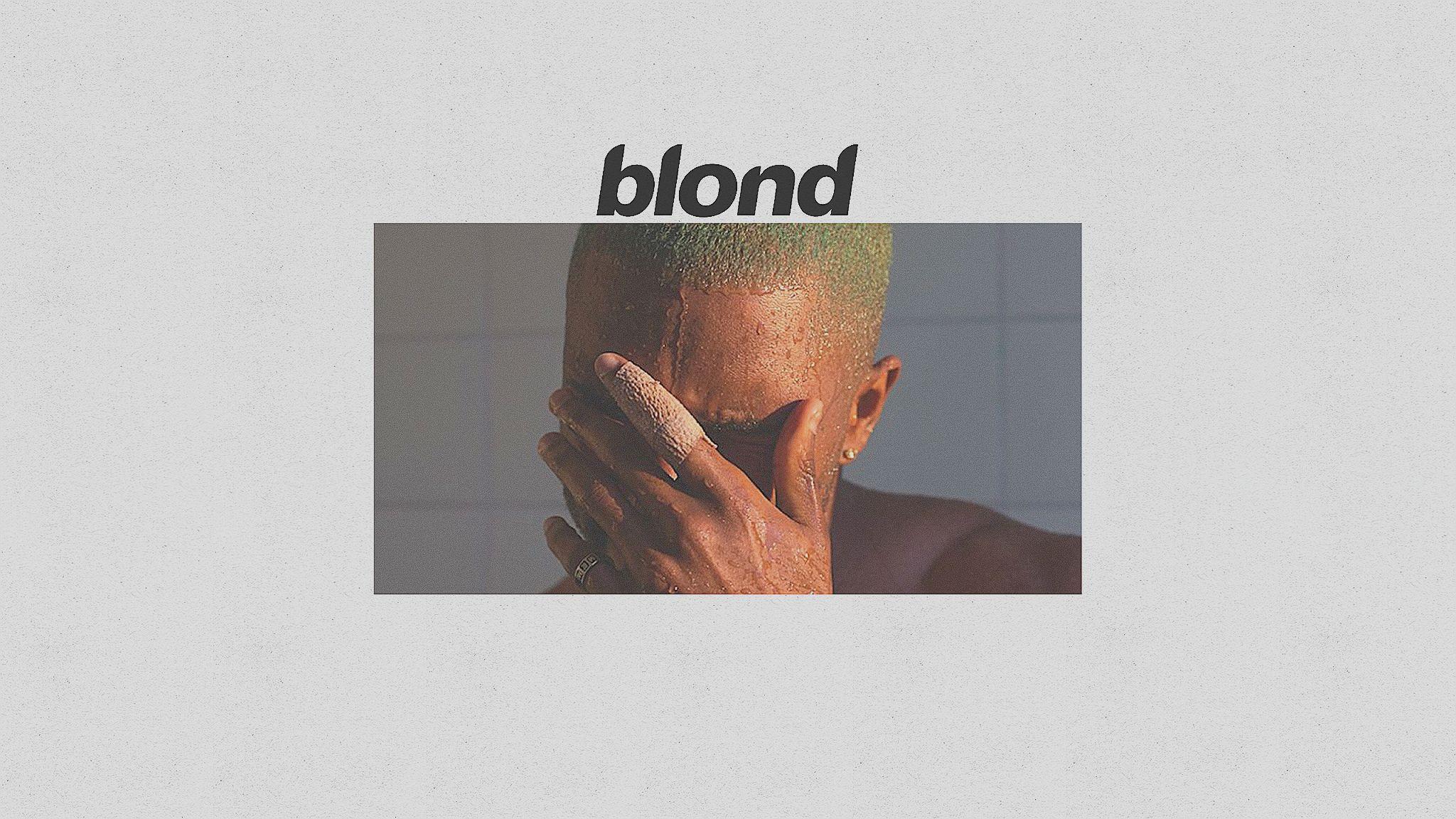
It started with a Tumblr post. On what would have been Aaliyah’s 36th birthday in 2015, Frank Ocean uploaded a cover that felt like it was recorded in a vacuum—totally devoid of the flashy, overproduced veneer of mid-2010s R&B. At Your Best (You Are Love) wasn't just a tribute; it was a pivot point. People were waiting for the follow-up to channel ORANGE, and instead of a radio hit, Frank gave us a falsetto so fragile it sounded like it might snap if you turned the volume up too high.
Frank Ocean has this way of making the world stop. He does it by being quiet. While everyone else was screaming for attention, he was in a studio somewhere, probably in London or LA, stripping away the layers of a song originally written by The Isley Brothers and later immortalized by Aaliyah. He didn't just cover it. He inhabited it.
The Evolution of At Your Best (You Are Love)
You have to understand the lineage here to get why Frank’s version hits the way it does. The Isley Brothers released "(At Your Best) You Are Love" in 1976. It was a soulful, steady groove. Then, in 1994, Aaliyah reworked it for her debut album Age Ain't Nothing but a Number. Her version is the gold standard for many, defined by that smooth, effortless cool that only she possessed.
Then comes Frank.
When he dropped the track on his Tumblr, it was just him and a keyboard, or so it seemed. The textures were hazy. It felt private. When it eventually reappeared as the opening track of his visual album Endless in 2016, it had grown. The Om’Mas Keith-produced version featured a gorgeous, sweeping arrangement with help from James Blake and Jonny Greenwood of Radiohead.
Think about that lineup for a second. You have the vanguard of electronic soul (Blake) and the architect of modern art-rock tension (Greenwood) supporting a man singing in a register that most male vocalists wouldn't dare touch for four minutes straight. It’s an elite assembly of talent, but the result is remarkably subtle. It doesn't sound "expensive." It sounds lonely.
Why the Falsetto Matters
Technique is usually boring to talk about, but with At Your Best (You Are Love), the technique is the entire point. Frank Ocean isn't a powerhouse vocalist in the traditional sense. He’s not Brian McKnight. He’s not Usher. His strength is in his restraint and his tone.
In this song, he stays in his head voice almost the entire time. It’s risky. Falsetto can sound thin or comedic if not handled with absolute emotional sincerity. Frank’s delivery is "breathy," but it’s anchored by a specific kind of yearning. He’s singing to someone—or maybe about someone—with a level of vulnerability that feels almost uncomfortable to eavesdrop on.
There’s a specific moment in the Endless version where the strings swell. It’s right around the transition into the hook. Most artists would use that moment to belt. Frank goes the other way. He gets softer. He lets the instrumentation do the heavy lifting while his voice floats on top like oil on water. It’s a masterclass in tension and release.
The "Endless" Context
Context changes everything. If this song had just been a stray single, it would be a great cover. But as the intro to Endless, it serves a mechanical purpose.
Endless was the "bridge" album—the one Frank used to fulfill his contract with Def Jam before independently releasing Blonde a day later. Because Endless was tied to a video of him building a staircase in a warehouse, the music became the soundtrack to labor.
At Your Best (You Are Love) is the first thing you hear while watching a man methodically cut wood. There’s a strange juxtaposition there. The music is ethereal and heavenly, while the visual is industrial and repetitive. It’s basically Frank saying that beauty requires work. You don't get the staircase without the sawdust, and you don't get the emotional clarity of the lyrics without the struggle of the relationship.
Breaking Down the Collaboration
Honestly, the involvement of Jonny Greenwood is one of those facts that people often overlook. Greenwood provided the string orchestration. If you listen closely to the way the violins move, they have that slightly discordant, cinematic quality he brought to the There Will Be Blood soundtrack. They aren't "pop" strings. They don't just follow the melody; they create a sense of unease.
Then you have James Blake on the synthesizers. Blake is the king of "negative space." He knows when not to play. His influence is felt in the way the low end of the song feels grounded while the high end is drifting away. It’s a sonic representation of someone trying to keep their feet on the ground while their head is in the clouds.
The song is a bridge between genres. It’s R&B, sure. But it’s also ambient. It’s avant-garde. It’s a rejection of the "hook-verse-hook" structure that dominates the charts.
The Lyrics: More Than Just a Love Song
The lyrics, penned by the Isley Brothers, are actually quite complex. "When you're at your best, you are love / You're a positive motivating force within my life."
It’s an acknowledgement of someone’s potential, but it also implies an "at your worst." It’s a song about seeing the divinity in someone even when they’re difficult. When Frank sings it, he strips away the bravado of the original 70s soul. He makes it sound like a plea. He’s not just stating a fact; he’s reminding the person (and maybe himself) of who they are when the world isn't weighing them down.
Why It Still Ranks as a Fan Favorite
If you go to any Frank Ocean forum or subreddit, this track is consistently cited as a top-five performance. Why? Because it’s pure. There are no drums. No beat to hide behind. No clever wordplay or "Linnith" references to decode. It’s just a man and a melody.
In a discography filled with complex puzzles like Pyramids or Nikes, At Your Best (You Are Love) stands out for its simplicity. It’s the "Palace/Curse" of his catalog—a moment of total transparency. It also marked the beginning of his "reclusive" era. This was the first time we really heard his voice in years, and it was a shock to the system.
He didn't come back with a banger. He came back with a prayer.
Critical Reception and Legacy
Critics at the time were floored. Pitchfork and Rolling Stone both noted that the cover was a bold choice for an album opener. Most artists use the first track to set a high-energy tone. Frank used it to set an emotional one.
The song has since been sampled and referenced by dozens of younger artists. It’s become a litmus test for R&B singers—if you can cover Frank’s version of the Aaliyah cover of the Isley Brothers song, you’ve "arrived." But very few can capture that specific "Frank" quality. It’s not about hitting the notes; it’s about the space between them.
Practical Ways to Appreciate the Track
To really "get" what Frank was doing here, you have to change how you listen to it. This isn't background music for a commute.
- Listen to the versions in order: Start with the Isley Brothers' 1976 version. Feel the groove. Then move to Aaliyah’s 1994 version. Notice the coolness. Finally, put on Frank’s version. You’ll hear how he took the DNA of the original and mutated it into something entirely new.
- Use high-quality headphones: The string arrangements by Jonny Greenwood are panned in a way that creates a 3D space. You lose about 40% of the song's emotional impact if you're listening through phone speakers.
- Watch the Endless visual: Even if you just find a clip of the intro. Seeing the physical labor of the staircase construction while hearing those ethereal vocals provides the "why" behind the song’s placement.
- Focus on the silence: Notice the parts where Frank almost stops singing. Those pauses are intentional. They represent the "breath" of the song.
Frank Ocean’s At Your Best (You Are Love) isn't just a cover. It’s a manifesto. It’s a statement that he wasn't interested in being a traditional pop star anymore. He was interested in being an artist. And ten years later, that staircase is still standing.
How to Apply This Vibe to Your Own Playlist
If you’re looking to build a set of tracks that capture this specific "Frank Ocean" energy—vulnerable, stripped-back, and sonically experimental—start by looking for "ambient soul." You want tracks that prioritize mood over melody.
Look for artists who lean into their "imperfections." The magic of Frank's cover is that it sounds human. It’s not pitch-corrected to death. It’s raw. That’s the lesson for any creative: sometimes your "best" isn't your most polished work. It’s your most honest work.
Go back and listen to the Endless version again tonight. Turn off the lights. Let the strings wash over you. It’s a different experience every time.