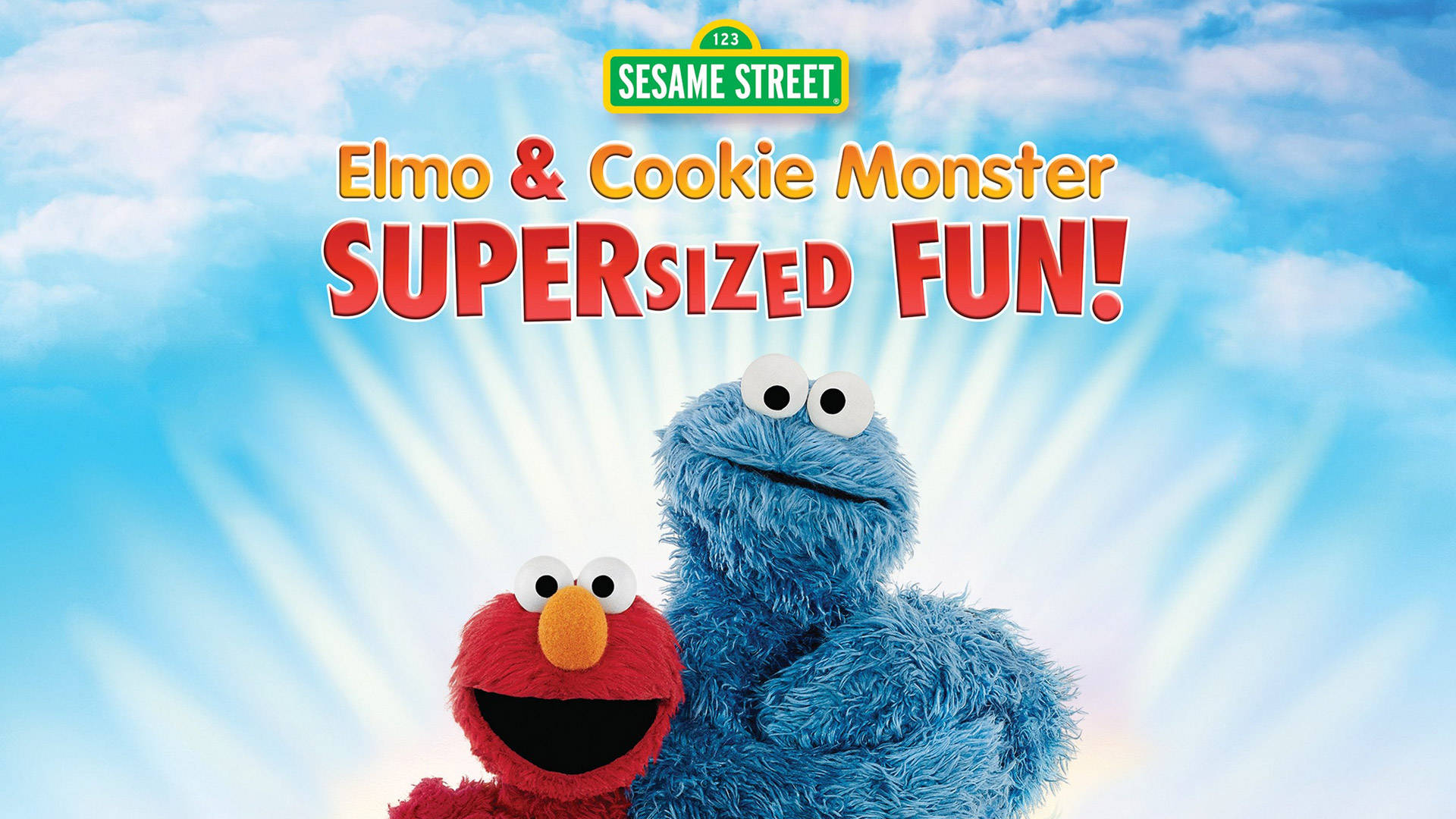
He’s blue. He’s frantic. He has eyes that seem to operate on two entirely different planes of existence. We’re talking about Cookie Monster, the chaotic heart of the Sesame Street characters roster. Most people think they know him. You probably think he’s just a fuzzy guy who likes snacks, but there is actually a pretty deep history behind those googly eyes that explains why he's survived for over five decades while other puppets faded into obscurity.
Honestly, the way he started is kind of weird. Before he was the cookie-obsessed icon we see today, he was basically a shapeshifting monster in commercial pitches. Jim Henson didn't just wake up and decide to make a blue guy who eats chocolate chips.
The Evolution of the Beast
In the mid-1960s, a version of this puppet appeared in a General Foods commercial for a snack called "Wheels, Flutes, and Crowns." Back then, he had teeth. Real, pointy ones. He was a "snack monster" who would literally devour everything in sight. It was high-energy, kinda terrifying, and exactly the kind of physical comedy that Henson loved.
By the time Sesame Street launched in 1969, the teeth were gone. The puppet became softer. He wasn't just a monster; he was a surrogate for a toddler's id. He wants. He takes. He eats. Frank Oz, the legendary performer who originated the voice, once described Cookie as a character defined by "monomanical" focus. If you’ve ever seen a two-year-old look at a juice box, you’ve seen the soul of Cookie Monster.
It's actually fascinating how his name evolved. In the very first season, he didn't even have a fixed name. He was just a monster who happened to like cookies. But the audience—mostly kids who identified with that raw, unfiltered hunger—latched onto him. He became the "Cookie Monster" because that’s what he did. It wasn't a title; it was a lifestyle.
The Great "Veggie Monster" Myth
You might remember a few years back when the internet absolutely lost its mind because people thought Sesame Workshop was turning him into the "Veggie Monster."
Total nonsense.
Basically, around 2005, Sesame Street started focusing more on healthy habits. They introduced a song called "A Cookie is a Sometime Food." People panicked. They thought the PC police were coming for the cookies. In reality, the show was just trying to address rising childhood obesity rates. Cookie Monster still ate cookies; he just started acknowledging that eating a head of lettuce occasionally wasn't the end of the world.
He’s even gone on record during interviews—yes, the puppet does press junkets—to clarify that he still loves cookies more than anything. He just branched out. He’s a connoisseur now. He’s eaten library paste, hubcaps, and even a typewriter. His palate is actually incredibly diverse if you really look at the footage.
The Art of the Crumb
Have you ever wondered what happens to the cookies he eats? Because he doesn't actually have an esophagus. It’s all a clever bit of stagecraft.
The "cookies" used on set are usually specially made rice crackers or thin wafers colored to look like chocolate chips. Why? Because real cookies contain oils and fats that would ruin the blue fleece of the puppet. When David Rudman (the current performer) "eats" a cookie, he's actually mashing it against the puppet's face and letting the crumbs fly everywhere. It creates the illusion of consumption while keeping the Muppet clean.
It’s messy work. It’s loud. It’s iconic.
Why He’s the Most Relatable Sesame Street Character
Most Sesame Street characters represent a specific developmental stage or an emotional archetype. Elmo is the perpetual three-year-old. Big Bird is the inquisitive six-year-old. Oscar the Grouch is... well, he's the part of us that hates Mondays.
But Cookie Monster represents the struggle with self-control.
Dr. Rosemarie Truglio, the Senior VP of Curriculum and Content at Sesame Workshop, has often spoken about how Cookie is the perfect vehicle for teaching "executive function." That’s a fancy way of saying "thinking before you act." When he has to wait to eat a cookie, he’s teaching millions of children (and let's be real, plenty of adults) how to manage their impulses.
- He struggles.
- He fails sometimes.
- He tries again.
- He practices "belly breathing" to calm down.
There’s something deeply human about a monster who knows he has a problem but keeps working on it. He’s not perfect, and that makes him more lovable than the "perfect" characters.
The Voice and the Vibe
The voice is another thing. It’s gravelly. It’s deep. It’s grammatically incorrect ("Me want cookie"). Yet, it’s never threatening.
There’s a specific linguistic pattern he uses that linguists have actually studied. It’s called "null subject" or "pro-drop" language, common in early child development. By speaking like a child, he lowers the barrier for communication. He’s not a teacher lecturing you; he’s a peer who happens to be 20 inches tall and covered in fur.
Behind the Fleece: The Puppeteers
We can't talk about the character without talking about Frank Oz. He gave Cookie his soul. Oz is the same guy who voiced Yoda and Miss Piggy, and you can hear that DNA in Cookie. There’s a certain "grit" to his performance.
When David Rudman took over the role in the early 2000s, he didn't just mimic the voice. He captured the timing. Puppetry is essentially 80% timing and 20% looking in the right direction. If the "om-nom-nom" happens a half-second too late, the magic dies. Rudman has kept that chaotic energy alive for a new generation, ensuring that Cookie remains a staple of the Sesame Street characters lineup.
The Cultural Impact of the Blue Guy
He isn't just for kids anymore. Cookie Monster has a massive social media presence. His Twitter (or X) account is actually one of the funniest things on the internet because it blends classic "monster" logic with modern observations.
He’s appeared on Saturday Night Live. He’s done parodies of The Avengers and Star Wars. He’s a bridge between generations. Your grandparents watched him, you watched him, and now kids are watching him on YouTube and HBO Max.
A Lesson in Resilience
Think about the longevity here. The world has changed immensely since 1969. We have smartphones, the internet, and AI. But a blue monster losing his mind over a baked good? That is universal. It’s a constant.
He reminds us that it's okay to be enthusiastic. In a world that often rewards being "cool" and detached, Cookie Monster is the ultimate enthusiast. He doesn't care if he looks ridiculous. He doesn't care if he has crumbs in his fur. He is 100% authentic, 100% of the time.
How to Apply "Cookie Logic" to Real Life
It sounds silly, but there are actual takeaways from how this character operates.
- Acknowledge the Craving: Don't pretend you don't want the thing. Cookie is honest about his desires.
- Practice the Wait: The "Executive Function" episodes are actually great for productivity. Learning to delay gratification is a superpower.
- Forgive the Mess: If you fail and "eat the whole tray," just start over tomorrow.
- Share the Crumbs: Some of the best Cookie Monster moments involve him learning to share with Prairie Dawn or Elmo. Everything is better when you aren't eating alone.
He’s more than a puppet. He’s a cultural touchstone that teaches us about our own appetites and our own struggles. Whether he’s eating a cookie, a piece of broccoli, or a literal bicycle, he does it with a zest for life that we could all probably use a little more of.
Next time you see him on screen, look past the googling eyes. Look at the craftsmanship. Look at the history. And maybe, just maybe, go grab a snack. You’ve earned it.
Actionable Insights for Parents and Fans
- Watch the "Smart Cookie" segments: These are specifically designed to teach critical thinking and are some of the best modern iterations of the character.
- Check out the "Lifeie" videos: Cookie Monster’s short-form content on YouTube is a great way to see how the character has been adapted for modern digital-first audiences.
- Use the "Monster Meditation" series: If you have kids (or you're stressed yourself), Sesame Workshop partnered with Headspace for a series of Cookie Monster animations that teach actual mindfulness techniques.