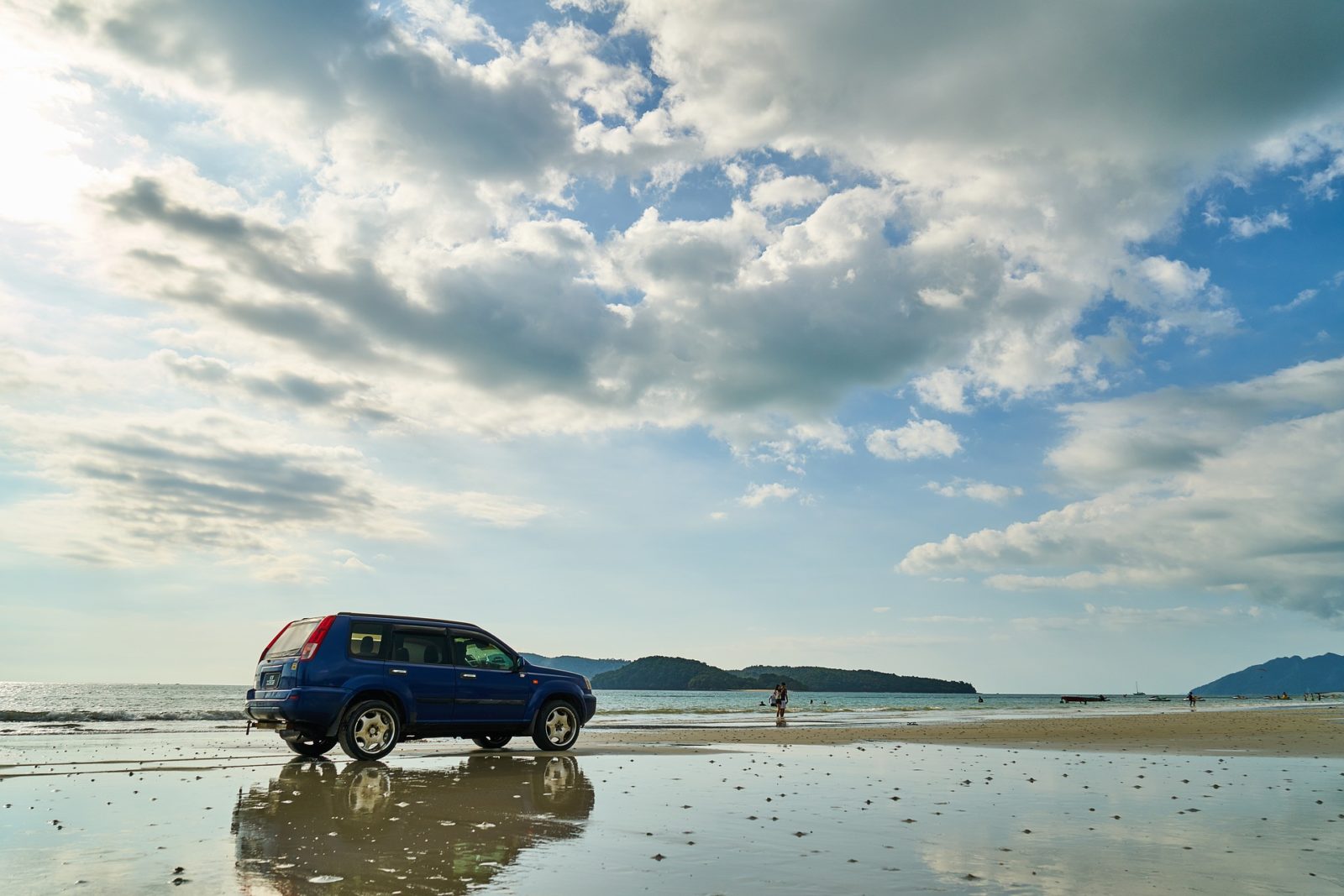
You’re landing in Bangkok or maybe Nairobi. You step out of the airport, jet-lagged and squinting at the sun, and suddenly your brain short-circuits. The cars are coming from the wrong side. Or, well, the "other" side. If you grew up in the US or mainland Europe, seeing a steering wheel on the right side of a dashboard feels like looking in a mirror that isn't supposed to be there.
It’s weird. It’s stressful if you’re the one behind the wheel.
But here’s the thing: about 35% of the world’s population lives in countries which drive on left. We aren't just talking about a few isolated islands. We are talking about massive economic hubs like Japan, India, and Australia.
Most people assume this is just some stubborn British quirk that the UK forced onto its colonies. That is a huge part of the story, sure. But it’s not the whole story. Japan was never a British colony, yet they’re firmly in the left-hand camp. Why? Because of samurai. Seriously.
The Weird History of the "Wrong" Side
Go back to the Middle Ages. If you were traveling down a muddy path on horseback, you wanted your right hand—your sword hand—free. Most people are right-handed. By staying on the left side of the road, you ensured that any stranger approaching you from the opposite direction passed on your right. If they tried to take a swing at you, you were ready.
Left-hand traffic was the original standard.
So what changed? Napoleon, mostly.
Napoleon was left-handed. He found it easier to mount his horse from the right and preferred his troops to march on the right so he could keep his sword arm towards the center. As he conquered his way across Europe, he swapped the rules of the road to fit his preference. The places he couldn't conquer—the UK, the Austro-Hungarian Empire, Portugal—stuck to the old ways.
Eventually, the world split. The US went right-hand because of massive freight wagons pulled by teams of horses. The driver sat on the rear-left horse to keep his right arm free to whip the whole team. Since he was sitting on the left, he wanted oncoming traffic to pass on his left so he could look down and make sure he wasn't scraping wheels.
Japan: The Samurai Connection
Japan is the most famous example of a non-Commonwealth country that drives on the left. It has nothing to do with British imperialism and everything to do with the Edo period.
Samurai wore their long swords (katana) on their left hip. If two samurai passed each other on the right, their scabbards might clank together. In samurai culture, touching someone else's sword was a massive insult—basically a "let's fight to the death right now" kind of move. To avoid accidental duels, everyone just walked on the left.
When Japan started building its first railroads in the 1870s, they needed help. They turned to the British for engineering expertise. The British built the tracks for left-hand running, and the preference just stuck as the country modernized and eventually moved toward cars.
The Logistics of Switching Sides
Can a country just... change? Yeah. But it’s a nightmare.
Sweden is the most legendary example. Up until 1967, Swedes drove on the left, even though all their neighbors (Norway and Finland) drove on the right. Most Swedes actually owned left-hand drive cars (with the steering wheel on the left), which made overtaking on narrow roads incredibly dangerous because you couldn't see past the car in front of you.
On September 3, 1967—known as Dagen H (H-Day)—the entire country swapped.
At 4:50 AM, every vehicle in Sweden had to come to a complete stop. They had ten minutes to carefully crawl over to the other side of the road. At 5:00 AM, the law changed. They had replaced 360,000 traffic signs overnight. Surprisingly, the number of accidents actually dropped for a few months because everyone was terrified and driving extremely cautiously.
Samoa did the opposite in 2009. They moved from the right to the left. Why? To make it cheaper to import used cars from Japan, Australia, and New Zealand. It’s all about the money.
Where You'll Find Countries Which Drive on Left Today
If you look at a map, the distribution is basically a footprint of the former British Empire, plus a few outliers.
- Europe: UK, Ireland, Malta, Cyprus.
- Africa: South Africa, Kenya, Tanzania, Uganda, Zambia, Zimbabwe, Botswana, Malawi, Mauritius, Seychelles, Lesotho, Eswatini.
- Asia: India, Pakistan, Bangladesh, Sri Lanka, Malaysia, Singapore, Thailand, Indonesia, Japan, Bhutan, Nepal, Brunei, Hong Kong.
- Oceania: Australia, New Zealand, Fiji, Papua New Guinea, Samoa, Solomon Islands.
- Americas/Caribbean: Jamaica, Bahamas, Barbados, Trinidad and Tobago, Guyana, Suriname, Bermuda.
Honestly, driving in India or Thailand is a whole different beast compared to driving in London. In London, the rules are rigid. In Bangkok, the left-hand rule is more of a... suggestion during rush hour.
The "Suicide Lane" and Other Mental Hurdles
The biggest danger for a tourist in countries which drive on left isn't the driving itself. It's the walking.
When you grow up in a right-hand country, your brain is hardwired to look left-right-left before crossing the street. In London, that will get you killed. The cars are coming from the right first. This is why London sidewalks are painted with giant "LOOK RIGHT" signs at every intersection. They know we're distracted.
The "suicide lane" is another one—turning across traffic. If you're in Australia, a right-hand turn is the dangerous one because you have to cross the oncoming lane. It feels inherently "wrong" to your lizard brain if you've spent twenty years doing the opposite.
The Steering Wheel Debate
One thing people get confused about is the terminology.
RHD (Right-Hand Drive) means the steering wheel is on the right side of the car. These cars are meant for LHT (Left-Hand Traffic).
Driving a left-hand drive (US style) car in a left-hand traffic country (like the UK) is perfectly legal, but it’s a massive pain. Imagine trying to use a drive-thru window or pull a ticket at a parking garage. You have to unbuckle, climb across the passenger seat, or just carry a "grabber" stick to reach the machine. People do it for imported classic cars, but for a daily driver? Forget it.
Is There a Benefit to Driving on the Left?
Some researchers argue that left-hand traffic is actually safer for the majority of the population.
Since most people are right-eye dominant, sitting on the right side of the car allows the dominant eye to monitor oncoming traffic and the side-view mirror more effectively. Also, in a manual (stick shift) car, your right hand stays on the steering wheel while your left hand does the gear shifting. Since your right hand is generally stronger and more precise, keeping it on the wheel is—theoretically—safer during a blow-out or emergency maneuver.
Is that enough to make the US or France switch? No way. The infrastructure cost would be in the trillions. Think about every highway off-ramp, every bus door (which would now open into traffic), and every traffic light.
Actionable Tips for Navigating Left-Hand Traffic
If you're planning a trip to one of these spots, don't panic. You can adapt.
- The "Follow the Leader" Rule: When you're in a city, just follow the car in front of you. You don't have to think; just mimic. The danger happens on empty country roads where you might revert to your "factory settings" and drift to the right.
- The Passenger's Job: If you have a travel buddy, make them the "left-hand czar." Their only job at intersections is to shout "STAY LEFT" until it becomes muscle memory for you.
- Automatic is King: If you aren't used to shifting gears with your left hand, do not rent a manual car. You're already dealing with a spatial nightmare; don't add "learning to shift with the wrong hand" to the mix.
- The Roundabout Logic: Remember, in these countries, you enter roundabouts to the left (clockwise). Give way to traffic coming from your right.
- Look Both Ways (Twice): As a pedestrian, just look both ways three times. It sounds paranoid, but your internal "radar" for car sounds and directions is wrong. Trust your eyes, not your instincts.
Ultimately, the world is never going to agree on a single side of the road. We are stuck with this beautiful, confusing geographic split. It’s one of those little friction points of travel that reminds you exactly how far from home you really are. Just take the turns wide, keep the curb on your left, and you'll be fine.