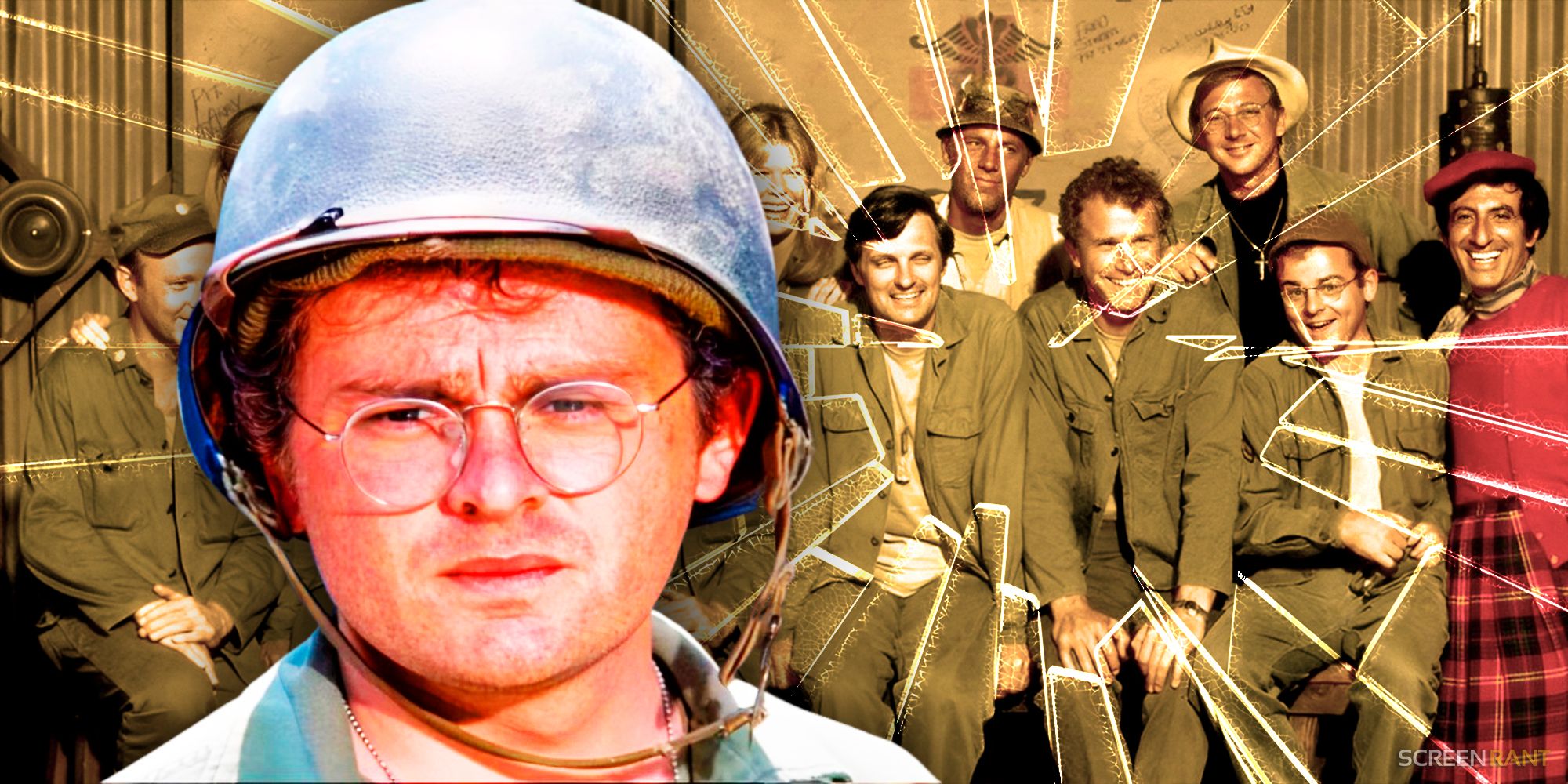
If you grew up watching reruns of MASH*, you probably remember the fishing hat. It was covered in lures, floppy, and looked like it had seen better days. That hat belonged to Lieutenant Colonel Henry Blake, the bumbling, warm-hearted commander of the 4077th. He wasn't your typical TV hero. Honestly, he wasn't even a typical soldier. He was a doctor who just wanted to go home to Bloomington, Illinois.
People still talk about Henry Blake today. It isn't just because of the way he left the show—though we’ll definitely get into that—but because of how he represented the "civilian in uniform" better than almost anyone else in television history. McLean Stevenson, the actor who played him, brought this weird, frantic energy to the role. He was basically a suburban dad thrust into a war zone.
The Command Style of a Man Who Didn't Want to Command
Henry Blake was the polar opposite of Frank Burns. While Frank was obsessed with regulations and "the book," Henry barely knew where the book was. He mostly used it as a coaster for his scotch. This created a dynamic where the 4077th felt less like a military unit and more like a high-stress fraternity house that happened to save lives every day.
You've got to realize that in the early 1970s, when the show premiered, the Vietnam War was still a raw, bleeding wound in the American psyche. MASH* was set in Korea, but everyone knew what it was really about. Henry Blake represented the average guy caught in a bureaucracy he didn't understand. He was incompetent at paperwork but a genius in the operating room. That contrast made him incredibly relatable to veterans and civilians alike.
His relationship with Radar O'Reilly was the glue of the early seasons. Radar basically ran the camp while Henry signed whatever papers were put in front of him. It was a running gag, sure, but it also spoke to a deeper truth about the military: the NCOs and clerks often hold more power than the officers. Henry knew this. He didn't have an ego about it. He just wanted the wounded kids to get patched up and for his supply of booze to stay topped off.
That Fateful Flight: The Moment TV Changed Forever
We have to talk about "Abyssinia, Henry." It aired on March 18, 1975. At the time, nobody saw it coming. The episode starts out as a celebration. Henry finally gets his points. He's going home. There’s a party, gifts are exchanged, and he gives a tearful goodbye to the staff. He hops into a chopper, waves his hat, and flies off into the sunset.
Then came the final scene.
The surgeons are in the OR, covered in blood, doing what they always do. Radar walks in, masked up, looking pale. He delivers the news: "Colonel Blake's plane was shot down over the Sea of Japan. It spun in. There were no survivors."
The silence that followed was deafening.
The producers, Larry Gelbart and Gene Reynolds, received thousands of letters from angry viewers. People were devastated. They felt betrayed. Why kill off the most lovable guy on the show? But that was exactly the point. In war, sometimes the good guys don't make it home. Sometimes the plane just spins in. It was a gritty, brutal piece of realism that shifted MASH* from a sitcom into something much heavier and more significant.
McLean Stevenson and the "Grass is Greener" Trap
Why did McLean Stevenson leave? It’s one of those classic Hollywood cautionary tales. Stevenson was a breakout star. He was funny, he was loved, and he thought he could be the lead of his own show. He didn't want to be third or fourth fiddle to Alan Alda anymore.
He left MASH* to pursue a variety of projects, including The McLean Stevenson Show and Hello, Larry. Unfortunately, none of them captured the magic of the 4077th. Stevenson later admitted that he made a mistake. He realized too late that the chemistry of that ensemble was lightning in a bottle. You can't just manufacture that.
Interestingly, Stevenson passed away on February 15, 1996. In a strange, eerie twist of fate, Roger Bowen—the actor who played Henry Blake in the original 1970 MASH* movie—died just one day later. It was a bizarre footnote in television history that linked the two men who defined the character.
Why the Character Still Resonates in 2026
Even now, Henry Blake stands out because he was unapologetically human. He was flawed. He cheated on his wife (a plot point that hasn't aged particularly well, let's be real), he drank too much, and he avoided responsibility whenever possible. But when the choppers landed and the "meat wagon" arrived, he was a rock.
He showed us that you don't have to be a "soldier" to be a hero. You just have to show up and do the work.
What You Can Learn from Henry’s "Lazy" Leadership
- Trust your experts. Henry knew Radar was better at logistics, so he let Radar lead. Great leaders don't micromanage; they empower the people who actually know what's going on.
- Empathy over ego. He treated Hawkeye and Trapper like peers, not subordinates. This built a level of loyalty that a hundred "by-the-book" commanders couldn't achieve.
- Humor is a survival tool. In a high-stress environment, Henry's refusal to take the military seriously was a psychological defense mechanism for the whole camp.
If you're revisiting the series, pay attention to the episodes where Henry has to stand up to the "Regular Army" types. He usually looks terrified while doing it, but he does it anyway. That’s the definition of courage—being scared to death but saddling up anyway. Or, in Henry's case, putting on the surgical gown anyway.
To truly understand the impact of the character, watch the episode "Sometimes You Hear the Bullet" or the aforementioned "Abyssinia, Henry." They capture the duality of a man who was both a comic foil and the emotional heart of a show that defined a generation. Henry Blake wasn't just a character; he was a reminder that even in the middle of a senseless war, humanity can still find a way to flicker, even if it's just for a little while before spinning into the sea.
Next Steps for MASH Fans
To get the most out of Henry Blake’s legacy, start by re-watching the first three seasons with a focus on his surgical scenes rather than just the office antics. You'll see a sharp contrast between his "bumbling" persona and his technical skill, which adds a layer of depth often missed in casual viewing. Additionally, seek out the 1970 film to compare Roger Bowen's more cynical, detached portrayal of Blake with Stevenson's warmer, more paternal version. Understanding these two different takes helps clarify why the TV version became such a cultural icon. Finally, look for interviews with Larry Gelbart regarding the decision to kill the character; it provides a fascinating look into the risks creators took before the era of "prestige TV."