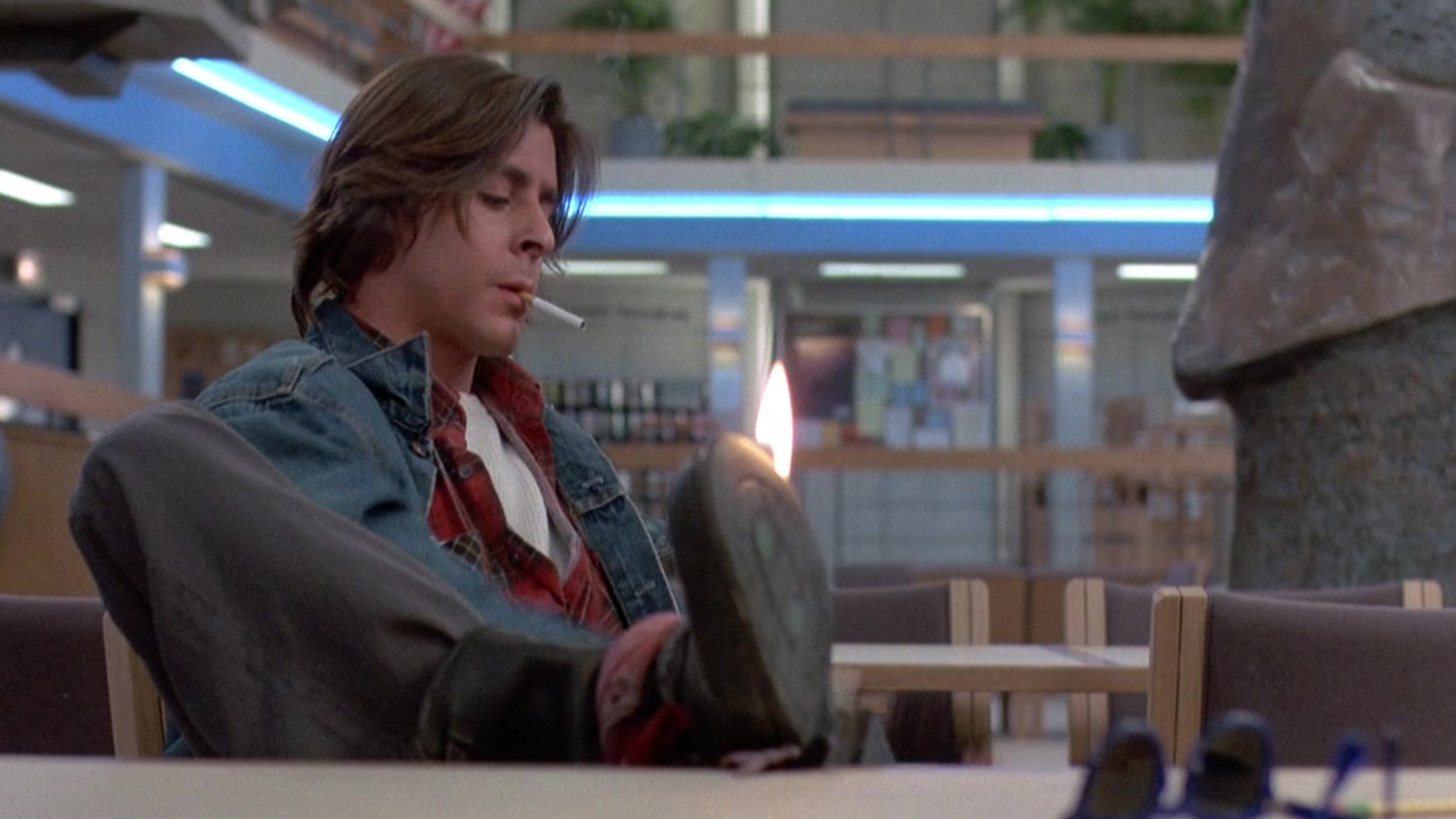
John Hughes was pissed.
Actually, that’s an understatement. The director was reportedly so fed up with Judd Nelson’s behavior on the set of The Breakfast Club that he was ready to fire him. Right there. In the middle of production. Most people see John Bender as the definitive 1980s rebel, but behind the scenes, Nelson was taking the "method" thing a little too far for comfort.
He stayed in character. All. The. Time.
He was relentless. He picked on Molly Ringwald constantly, trying to elicit that genuine, hurt reaction from the "Princess" that his character, the "Criminal," would naturally crave. It worked, but it nearly cost him the biggest role of his life. It was only after the other cast members—specifically Ally Sheedy and Ringwald herself—advocated for him that Hughes decided to keep him on board.
The Audition That Changed Everything
When you think about Judd Nelson in The Breakfast Club, it’s hard to imagine anyone else in those combat boots. But he wasn't the first choice. Not even close. Before Nelson walked in, the production was looking at people like Nicolas Cage or John Cusack. Cusack actually came pretty close, but Hughes felt he lacked that specific, menacing edge that a kid from the "wrong side of the tracks" needed to have.
Then Judd walked in.
He didn't just read the lines. He showed up in the clothes. He had the attitude. He was older than the rest of the "kids"—Nelson was 25 playing a 17-year-old—and that age gap gave him a natural authority that the others couldn't replicate. It’s that maturity masked by teenage angst that makes Bender so terrifying and charismatic at the same time.
The Costume Was Basically His Idea
That iconic outfit? The trench coat, the work gloves with the fingers cut out, the flannel shirt? That wasn't just some wardrobe stylist's vision. Nelson brought a lot of those elements himself. He wanted Bender to look like a guy who lived in a house where things were broken. The layers weren't just a fashion statement; they were armor.
In many ways, Judd Nelson's portrayal of John Bender defined the "Brat Pack" era, even if he was the outlier of the group. He wasn't the heartthrob like Emilio Estevez or the relatable nerd like Anthony Michael Hall. He was the danger.
Why the "Method" Nearly Ruined Him
Method acting is a gamble. For Nelson, it was the only way he knew how to bridge the gap between his own somewhat privileged upbringing and Bender’s abusive reality. He spent time at a local high school in Illinois before filming began, posing as a student to see how kids would react to him. He wanted to feel the genuine ostracization of being the "bad kid."
But on set, the friction was real.
Hughes was a director who valued a certain level of harmony, or at least a controlled chaos. Nelson’s constant ribbing of Ringwald created a tension that wasn't always productive. There’s a famous story that Hughes called Nelson's agent and told him to pack his bags.
It's wild to think about. If Nelson had been fired, the movie would have been fundamentally different. We might be talking about John Cusack’s "Criminal" today, which honestly feels like a totally different movie. Maybe a softer one. Nelson brought a legitimate sense of threat to the library that keeps the stakes high even when they’re just sitting around talking about their parents.
The Improvised Magic
One of the most famous moments in the movie wasn't even in the script. You know the scene. The kids are sitting in a circle, finally opening up, and Bender tells that long, rambling joke about the guy walking into a bar with a poodle and a two-foot salami.
He never finishes it.
Why? Because Nelson was making it up on the spot. He forgot where he was going with it, or he realized the punchline didn't matter as much as the distraction. Hughes kept it in because it felt real. It felt like a kid trying to dominate a room with noise because he didn't want to talk about his own life.
Then there’s the ending. The fist pump.
That wasn't scripted either. Hughes told Nelson to just walk across the football field and do something as he headed toward his ride. Nelson decided to throw his fist in the air. It became the definitive image of 80s cinema. A symbol of small-scale victory against a system that didn't care.
The Legacy of the Criminal
Judd Nelson’s performance in The Breakfast Club is a masterclass in vulnerability hidden behind a mask of aggression. If you watch the movie closely, his eyes are doing a lot more work than his mouth. When he shows the "cigar burn" on his arm, there's a split second where the bravado slips.
That’s why the movie still works. It’s not just a movie about stereotypes; it’s a movie about how those stereotypes are survival mechanisms.
What Most People Get Wrong About Bender
There's this idea that Bender is just a bully who gets the girl in the end. But if you look at the subtext, he’s the most tragic character in the room. Unlike the others, he doesn't have a "home" to go back to that offers any safety. Claire has her dad's money, Andrew has his status, Brian has his grades. Bender has a locker and a leather jacket.
Nelson understood this. He played Bender as a guy who knew that Monday morning, nothing would change for him, even if it changed for everyone else.
Moving Beyond the Library
After 1985, Nelson was everywhere. He did St. Elmo’s Fire, which cemented the Brat Pack label—a label he actually kind of hated. He felt it was reductive. He wanted to be seen as a serious actor, not just a "teen" star, which is probably why his later career took such a hard turn into voice acting (he was Hot Rod in The Transformers: The Movie!) and indie roles.
He never quite escaped the shadow of John Bender, but honestly, who could? It’s one of those rare lightning-in-a-bottle performances where the actor and the role fuse so tightly you can't see the seams.
Actionable Takeaways for Cinephiles
If you’re revisiting the film or studying Nelson’s work, keep these things in mind:
- Watch the physicality: Notice how Nelson uses his height and clothing to take up space in the library. He’s almost always leaning on something or sprawled out, asserting dominance.
- The Power of Silence: Look for the moments where Bender isn't talking. His reactions to the other characters' stories—especially Brian's—show a level of empathy that contradicts his dialogue.
- Contextualize the "Bullying": Understand that Nelson’s choice to stay in character was a tool to create a specific social hierarchy on set that mirrored the script. It was risky, but it’s why the chemistry feels so volatile and authentic.
- Research the "Brat Pack" term: Read the original New York Magazine article by David Blum that coined the phrase. It helps explain why actors like Nelson felt so burned by the media despite their massive success.
Judd Nelson didn't just play a role; he created a blueprint for every cinematic rebel that followed. From the layered clothing to the defiant silence, his version of the "Criminal" remains the gold standard for teenage defiance.