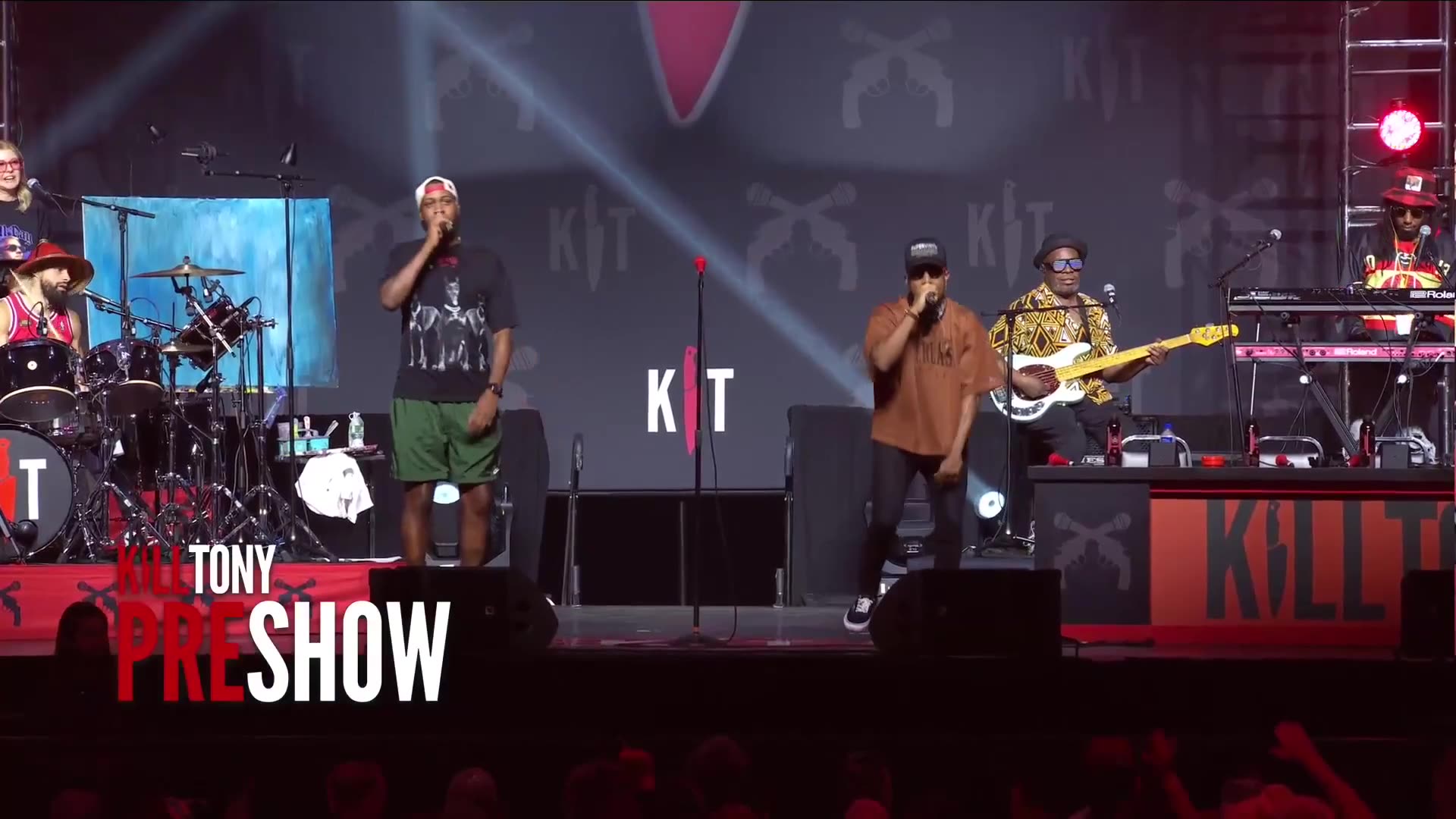
The energy inside Madison Square Garden isn't like a regular comedy club. It’s heavy. It’s loud. When Tony Hinchcliffe walked out for Kill Tony MSG Night 2, you could feel the floor vibrating under 15,000 people. This wasn't just another podcast recording; it was a massive, chaotic middle finger to the idea that "cancel culture" has actually killed off edgy, live entertainment. Honestly, if Night 1 was the high-energy introduction to New York, Night 2 was the fever dream that nobody expected to be quite that unhinged.
Selling out "The World’s Most Famous Arena" twice is a feat most veteran stand-ups never achieve. Tony did it with a bucket and a bunch of strangers.
The Chaos of the MSG Stage
Let’s be real: Kill Tony usually thrives in the dark, cramped quarters of the Comedy Store or the Comedy Mothership in Austin. Moving that intimate, "anything can happen" vibe to a massive arena is a huge risk. Sometimes the timing gets lost in the echo. But on Night 2, the production felt tighter, yet the comedy felt even more dangerous.
Redban was there, predictably being Redban, making soundboard jokes that either landed perfectly or crashed and burned in the vastness of the garden. The band was electric. But the real story was the sheer scale of the guests. You had the heavy hitters. We're talking Joe Rogan, Shane Gillis, and Ari Shaffir. Seeing Gillis—arguably the biggest comic in the world right now—sitting there watching a random person from the audience bomb is a bizarre sight. It’s that contrast that makes the show work.
One of the most talked-about moments of Kill Tony MSG Night 2 was the appearance of Donald Trump and Joe Biden... or at least, the incredible impressions by Shane Gillis and Adam Ray.
They stayed in character the entire time. It was masterful.
Imagine a "President" debating a "former President" while a guy who just did sixty seconds of the worst comedy you've ever heard stands there sweating in front of a sold-out MSG crowd. It’s absurd. It’s high-wire act stuff. If either of them had slipped out of character for a second, the magic would have dissipated. They didn't. Shane’s Trump is so eerily accurate that it stops being a parody and starts feeling like a glitch in the Matrix.
The Bucket Pulls: High Stakes and Total Meltdowns
The heart of the show is the bucket.
You sign up, you hope your name gets called, and you get one minute. That’s it. In a club, if you bomb, you just walk off into the shadows. At MSG? If you bomb, you are failing in front of enough people to fill a small city.
The variety on Night 2 was wild. We had the regulars, of course. Kam Patterson came out with that signature energy that just fills a room. There's something about his confidence that makes the material hit twice as hard. Then you have William Montgomery. The "Big Red Machine" is built for an arena. His screaming, his nonsensical tangents, his "I ain't never gonna stop" catchphrase—it’s designed for 15,000 people to shout back at him.
But the random pulls are where the real tension lives.
There was a palpable sense of "what am I doing here?" from some of the open mic-ers. One guy looked like he was about to pass out before he even reached the microphone. Tony, as usual, was a surgeon. He knows exactly when to lean in and be mean and when to let a weird story breathe. People think he’s just a "mean" host, but if you watch closely, he’s actually a genius at finding the one interesting thing about a boring person.
Why the New York Crowd Hits Different
New York City audiences are notoriously impatient. They don't want to wait for the punchline. They want it now.
On Night 2, the crowd was on a hair-trigger. When a joke landed, the roar was deafening. When someone stumbled, the silence was chilling. It’s a brutal environment for a newcomer. Yet, the show managed to maintain its soul. It didn't feel like a corporate event or a polished Netflix special. It felt like a back-alley fight that somehow got moved to center stage at the Garden.
The guests didn't hold back either. Ari Shaffir was, well, Ari. He’s the chaos agent. He’s the guy who will say the one thing that everyone else is thinking but is too scared to voice because they have "brand deals" to protect. In the current comedy landscape, that’s rare.
The Logistics of a Mega-Podcast
People forget that Kill Tony MSG Night 2 had to be a logistical nightmare.
You have to manage the bucket pulls, the live band, the revolving door of legendary guests, and the live stream all at once. There were moments where the sheer size of the venue seemed to swallow the audio, but for the most part, the tech held up. This is a massive shift from the early days of the podcast where they were lucky if the mics stayed on for an hour.
What’s interesting is how the regulars have adapted.
Hans Kim opened the show, and you can see how his stage presence has evolved. He’s gone from a guy living in a van to a performer who can command a stadium-sized audience. Whether you love his material or not, the growth is undeniable. Same goes for Ari Matti, who has quickly become a fan favorite. His perspective as an outsider looking at American culture provides a much-needed layer of irony to the often self-obsessed world of US comedy.
The Cultural Impact: Is This the New Normal?
We have to talk about what this means for the industry.
For years, the "death of comedy" has been a favorite headline for journalists who don't actually go to comedy clubs. They say people are too sensitive. They say the "line" has moved. Then Tony Hinchcliffe goes and sells out MSG twice.
It proves there is a massive, underserved audience that wants raw, unfiltered, and potentially offensive humor. They don't want a lecture; they want to laugh at things they aren't "supposed" to laugh at. Night 2 was a celebration of that. It was a reminder that comedy is one of the few places left where you can still be a total mess and be celebrated for it.
What People Got Wrong About the Event
There was some criticism that the show was "too long" or that the guests "talked over each other."
Honestly? That’s part of the charm.
If you want a perfectly edited, 60-minute special, go watch a polished special. Kill Tony is a circus. It’s supposed to be messy. It’s supposed to have lulls where the panel argues about something stupid for ten minutes. That’s why the fans love it. They feel like they’re hanging out in the green room, not watching a performance.
Night 2 actually felt more "New York" than Night 1. It had a grittiness to it. Maybe it was the fatigue of the performers or the heightened expectations, but it felt like everyone was pushing a bit harder.
Technical Mastery in Roast Comedy
Tony Hinchcliffe is essentially a professional roaster who happens to host a show.
His ability to dismantle a person's entire life based on a 30-second interview is terrifying. On Night 2, he was in top form. He has this way of looking at a person—their clothes, their posture, their weird nervous habit—and turning it into a devastating punchline in real-time. It’s a specific skill set that very few people have.
And then there’s the panel.
The chemistry between Rogan, Gillis, and Ray (as Biden) was the glue. Rogan often gets flak for "missing jokes" on the podcast, but at MSG, he seemed to be having the time of his life. He was the perfect "hype man" for the more technical comedians. When Shane Gillis/Trump started riffing with Adam Ray/Biden, it wasn't just funny; it was a masterclass in improvisational timing.
The Future of the Show
So, where do they go from here?
After Kill Tony MSG Night 2, the bar is incredibly high. Do they do a stadium next? Do they take it to the O2 in London?
The danger is that the show becomes "too big." Part of the appeal is the intimacy of the failure. When someone bombs in a club, it’s awkward. When they bomb in an arena, it’s a tragedy. Tony has to be careful not to lose the "basement" feel that made the show a cult hit in the first place.
But based on the MSG run, he knows exactly what he’s doing.
The show has become a legitimate star-making machine. If you have a good minute on Kill Tony, your life can change overnight. We’ve seen it with Casey Rocket. We’ve seen it with Drew Nickens. Night 2 gave a few more people that chance, even if most of them just ended up being the butt of the joke.
Moving Forward: Lessons for Comedy Fans
If you missed the live stream or weren't there in person, there are a few things you should keep in mind when watching the VOD.
- Pay attention to the background: Half the fun is watching the guests' reactions to the bucket pulls. Shane Gillis’s face when a joke tanks is often funnier than the joke itself.
- Don't skip the interviews: The "one minute" is just the entrance fee. The real comedy happens in the 10-15 minutes of questioning that follows.
- Look for the callbacks: The show is deeply self-referential. If you aren't a regular listener, some of the inside jokes might fly over your head, but the vibe is infectious regardless.
The success of these shows proves that the "live" element of comedy is more important than ever. In a world of AI-generated content and over-edited social media clips, people crave the risk of something going horribly wrong on stage.
Kill Tony MSG Night 2 wasn't just a podcast; it was a cultural moment. It showed that "The Garden" can still be a place for the outcasts, the weirdos, and the dangerously funny. It wasn't "perfect," and that’s exactly why it was great.
To get the most out of the Kill Tony experience now that the MSG run is in the books, you should dive back into the "Regulars" archives. Understanding the backstories of William Montgomery or Kam Patterson makes their arena appearances feel much more earned. If you're a creator or aspiring comic, study Tony’s interview technique—it’s a masterclass in finding the hook in any conversation. Finally, keep an eye on the upcoming Austin residency dates; the show is always at its most volatile in its home turf at the Comedy Mothership.