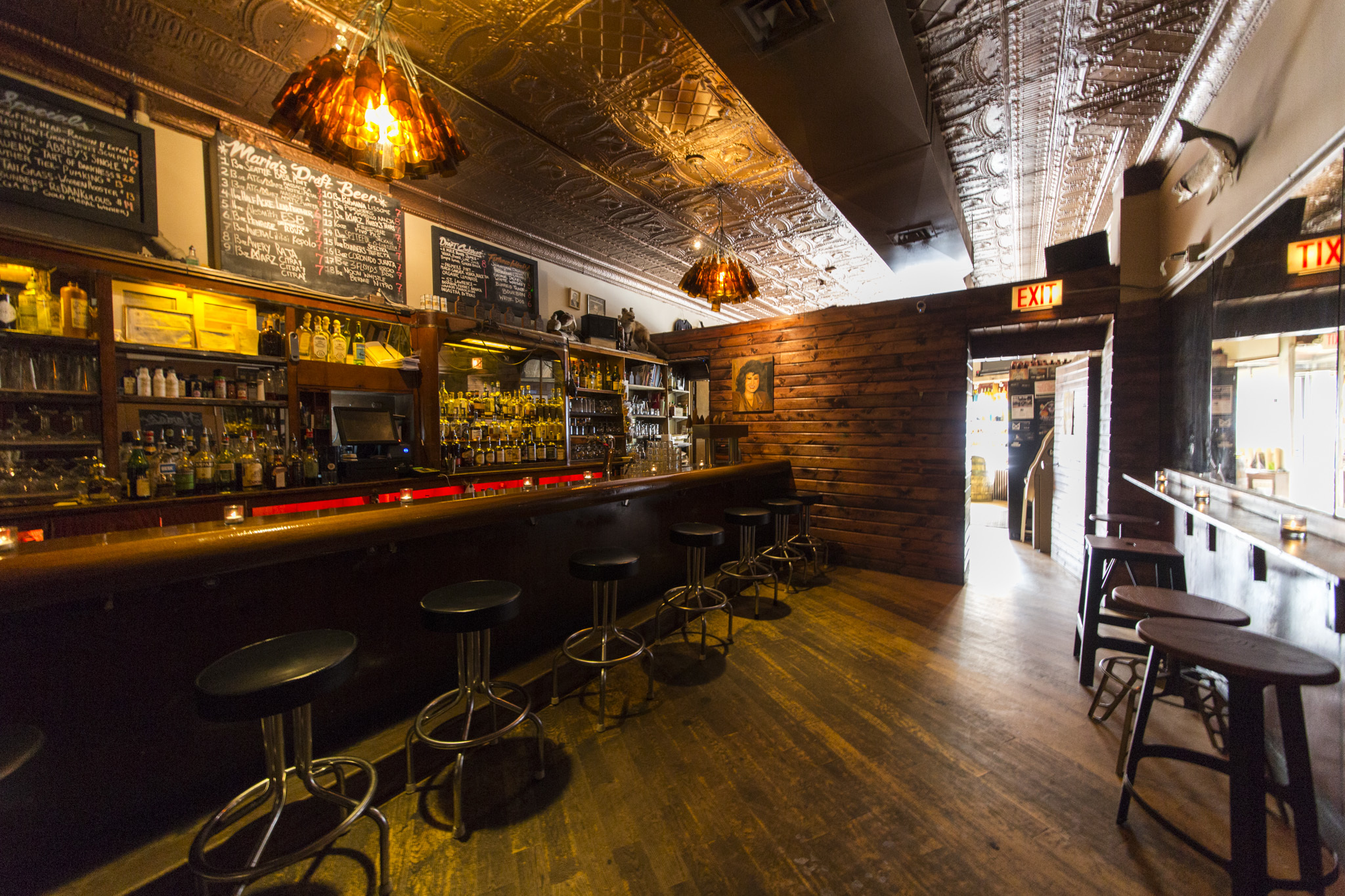
Walk into Maria’s Packaged Goods & Community Bar on a Tuesday night and you’ll see exactly why the "slashie" is the backbone of Chicago drinking culture. It’s a liquor store. It’s a craft cocktail lounge. It’s a neighborhood anchor that somehow managed to survive the aggressive gentrification of the South Side while keeping its soul intact. Most people just call it Maria's.
You might know it for the Polish-Korean fusion food next door or the massive craft beer list. But the real story of Maria's Packaged Goods Chicago isn't just about booze. It is a story of a family—specifically the Marszewski family—who took a dusty, old-school tavern and turned it into a cultural lighthouse.
The Slashie Tradition and the Marszewski Legacy
Chicago used to be full of "slashies." These are businesses with a "Tavern / Packaged Goods" license. Basically, you can buy a six-pack to go or sit at the bar and drink a pint. In the mid-20th century, they were everywhere. Today, they are a dying breed, but Maria's kept the flame alive by evolving when everyone else was closing up shop.
Maria Marszewski, the matriarch and namesake, took over the spot in 1986. Back then, it was Kaplan’s Liquors. It was a standard, no-frills Bridgeport bucket shop. When her sons, Ed and Mike Marszewski, got involved in the late 2000s, they didn't kick their mom out or gut the history. They layered something new on top of it. They recognized that Bridgeport was changing. Artists were moving in. The old guard was still there. They needed a place where a guy who just finished a shift at the stockyards (if they still existed) could sit next to a graphic designer drinking a $14 negroni.
The 2010 Pivot That Changed Everything
Around 2010, the bar underwent a massive renovation. This wasn't just a coat of paint. They split the space. The front remained a high-end liquor store—the "Packaged Goods" side—stocked with rare finds you couldn't get at a Jewel-Osco. The back became the "Community Bar."
Wood paneling. Low lighting. A massive bar built from reclaimed materials. It felt like a basement in the 1970s but with better glassware. This was the moment Maria's Packaged Goods Chicago stopped being a local secret and became a destination.
Honestly, it’s hard to overstate how much this influenced the rest of the city. Before Maria's, you went to Logan Square for craft beer and Bridgeport for Old Style. Maria's proved you could do world-class curation on 31st Street. They weren't trying to be "cool." They were just being Chicago.
Marz Community Brewing and the Maria's Ecosystem
You can't talk about the bar without talking about the beer. Ed Marszewski didn't just want to sell other people’s beer; he wanted to make his own. This led to the birth of Marz Community Brewing.
If you've ever seen those psychedelic labels on cans of "Jungle Boogie" or "Chug Life," that started here. The brewery eventually got its own massive space on Iron Street, but the DNA remains at Maria's. The bar acts as a testing ground. You get experimental pours there that never see wide distribution. It's a feedback loop between the tap and the customer.
Kimski: The Fusion Nobody Asked For But Everyone Needed
In 2016, they added Kimski. It’s a counter-service spot attached to the bar. The menu is Polish-Korean fusion. Think about that for a second. Bridgeport is historically a Polish neighborhood. Maria is Korean. It is the most honest representation of a family’s heritage put onto a plate.
The "K-Pop" sausage is a masterpiece. It’s a smoked Polish kielbasa topped with kimchi sauerkraut, honey mustard, and scallions. It sounds like a gimmick. It isn't. It’s a bridge between two cultures that have defined this specific corner of the city for decades. It's messy, salty, and perfect with a pale ale.
What Most People Get Wrong About the Neighborhood
A lot of travel writers treat Bridgeport like it’s "the next Logan Square."
That’s lazy.
Bridgeport doesn't want to be Logan Square. It has a chip on its shoulder. This is the neighborhood that produced five Chicago mayors. It’s gritty. It’s industrial. Maria's Packaged Goods Chicago reflects that. It isn't polished to a corporate sheen.
If you show up acting like a tourist, people might give you a side-eye, but if you sit down and show some respect for the history, you’re in. The bar is a "community bar" in the literal sense. They host art shows, radio broadcasts (via Lumpen Radio), and neighborhood meetings.
Why the Physical Space Matters
Architecture nerds love this place. The renovation, handled by Nushu Design, managed to keep the "shack" feel while making it feel like a modern lounge. The outdoor patio is one of the best in the city. It’s tucked away, surrounded by brick walls, and feels like a private courtyard.
In the winter, the front room stays cozy. You’re surrounded by shelves of bourbon and hard-to-find gins. It feels like you’re drinking in a library, but instead of books, it's booze. There is something deeply comforting about being surrounded by "packaged goods" while you drink. It feels productive, even if you’re just procrastinating.
The Impact of the "Lumpen" Movement
The Marszewski brothers are involved in more than just hospitality. They are part of Public Media Institute, a non-profit arts organization. They publish Lumpen Magazine. They run an FM radio station.
This is why Maria's feels different. It’s an extension of an art project. The bartenders are often artists or musicians. The playlist isn't some curated Spotify "Top 40" trash; it’s usually something weird, eclectic, and local. When you spend money at Maria's Packaged Goods Chicago, you aren't just paying for a drink. You’re subsidizing a whole ecosystem of South Side creativity.
Navigating the Menu: A Quick Guide
Don't just walk in and ask for "whatever is light." That's a waste of a trip.
- The Beer List: It’s huge. Look for the Marz rotators. If they have anything in the "Liquid Dreams" series, get it.
- The Cocktails: They do a great job with shrubs (vinegar-based syrups). The "Maria’s Mule" is a staple, but look at the seasonal menu for anything involving ginger or bitters.
- The Non-Alcoholic Options: They actually care about this. Between their house-made sodas and kombucha, you don't have to feel like a kid ordering a Sprite if you aren't drinking.
The Realities of Visiting Today
Is it crowded? Yes. On weekends, it’s packed. You’ll be shoulder-to-shoulder with White Sox fans, art students from UIC, and neighborhood lifers.
The prices have gone up over the years. That’s just the reality of the industry. You’re going to pay $8-$12 for a good craft pint. Some people complain that it’s lost its "dive bar" edge. Honestly, those people probably didn't spend much time in the original Kaplan’s. Evolution is better than extinction.
Parking in Bridgeport is a nightmare near 31st and Morgan. Don't even try to park right in front. Go a block or two west and walk. It’s a safe neighborhood, and you’ll get to see some of the cool old bungalows that make the area famous.
Making the Most of Your Visit
If you want the real Maria's experience, go on a weeknight around 4:00 PM. The light hits the front window just right. You can browse the liquor selection, talk to the staff about what’s new in the coolers, and grab a quiet corner in the back.
Order some food from Kimski before the kitchen gets slammed. Get the potato pierogi with kimchi butter. It’s the kind of food that makes you wonder why no one else thought of it sooner.
Next Steps for Your Trip:
- Check the Marz Website: Before you go, see if there are any special bottle releases happening. You can often pre-order for pickup at the Packaged Goods side.
- Look at the Kimski Menu Online: It changes. Sometimes they do special pop-ups or collaborations with other Chicago chefs.
- Bring Home a Souvenir: Don't just drink there. Buy a unique bottle of vermouth or a 4-pack of something local from the front. It’s how the "slashie" model stays viable.
- Explore the Block: After your drink, walk down to Jackalope Coffee & Tea or check out the Zhou B Art Center nearby.
Maria's Packaged Goods Chicago isn't just a place to get drunk. It's a case study in how to run a family business in a city that is constantly trying to tear things down. It respects the past without being trapped by it. Whether you're there for the Korean-Polish tacos, the high-concept beer, or just a quiet place to hide from the Chicago wind, it delivers every single time.