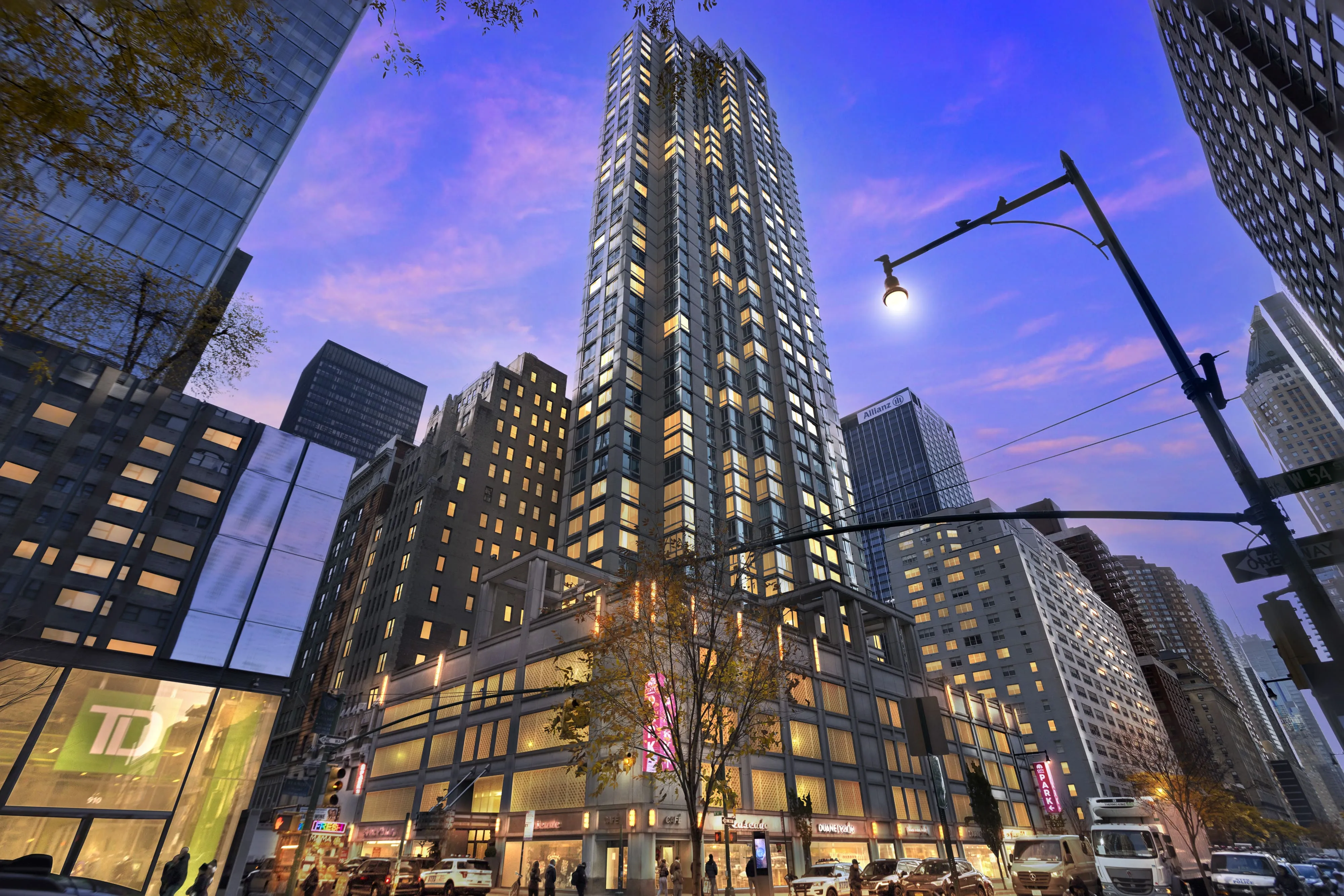
You walk out of the subway at 7th Avenue and suddenly, the air changes. It’s that specific New York 54th Street hum. It isn't just the noise of yellow cabs or the tourists looking up at the skyscrapers until they trip over their own feet. It’s the history. If you’ve spent any time in Midtown Manhattan, you know that 54th Street acts as a sort of backbone for the city’s cultural ego. It’s where high-art grit meets the kind of polished luxury that makes you want to straighten your tie, even if you aren’t wearing one.
Honestly, most people just see it as a thoroughfare. They’re wrong.
From the shadows of the Museum of Modern Art (MoMA) to the neon ghosts of Studio 54, this stretch of pavement has seen more transitions than almost any other cross-town street in the borough. It’s a microcosm of New York’s evolution from a jazz-age playground to a corporate powerhouse, and now, to a modern hub for the culinary obsessed and the art-hungry.
The Ghost of 254 West 54th Street
You can't talk about New York 54th Street without mentioning the elephant in the room—or rather, the disco ball in the room. Studio 54. It’s located between Broadway and Eighth Avenue. Back in the late '70s, this was the center of the universe. Steve Rubell and Ian Schrager turned an old CBS soundstage into a hedonistic palace where Bianca Jagger rode a white horse and Andy Warhol felt like a regular guy.
It’s a theater now. Roundabout Theatre Company runs the space. But if you stand outside long enough, you can almost feel the vibration of the bass from 1977.
The interesting thing about this specific block is how it transitioned. It went from a literal den of iniquity to a respected cultural institution. It’s a very New York trajectory. We take something messy and loud, and we eventually put a velvet rope and a high-ticket price on it. Just down the street, the legendary Jazz club scene thrived at places like the Hickory House (at 144 West 54th), which closed its doors decades ago but once hosted greats like Marian McPartland.
The street remembers. Even if the storefronts change, the architecture holds that energy.
Art, Glass, and the MoMA Footprint
Walk East. Cross 6th Avenue. You hit the institutional heavyweights.
The Museum of Modern Art technically has its main entrance on 53rd Street, but the MoMA’s expansion has essentially swallowed the 54th Street side as well. The Abby Aldrich Rockefeller Sculpture Garden is the quietest place in the loudest city on earth. If you look through the gate on New York 54th Street, you see the Rodins and the Giacomettis just sitting there, completely indifferent to the chaos of the delivery bikes zooming past.
It’s a weird contrast.
On one side of the glass, you have tourists paying $30 to look at a Picasso. On the other side, you have a hot dog vendor arguing with a guy in a $4,000 suit. That’s the magic of this specific corridor. It doesn't apologize for being expensive, but it doesn't exclude the street life either.
The Warwick and the Hollywood Connection
Right on the corner of 54th and 6th stands The Warwick. William Randolph Hearst built it in 1926. Why? Because he wanted a place for his Hollywood friends and his mistress, Marion Davies, to stay when they were in town. Cary Grant lived there for 12 years. Think about that. Twelve years in a hotel on 54th Street.
The hotel still feels like old money. It’s not trendy in the way a Soho boutique hotel is trendy. It’s heavy. It’s marble. It’s the kind of place where you expect to see someone writing a screenplay on a typewriter in the corner of the bar. It anchors the street in a history that predates the glass towers.
Where to Actually Eat Without Falling for a Tourist Trap
Let’s be real. Midtown food can be a nightmare. You’re often stuck between a $15 mediocre salad and a $500 steakhouse dinner that feels like a business meeting. But New York 54th Street has some outliers that are genuinely worth your time.
La Bonne Soupe is a classic. It’s been there since 1973. It’s a French bistro that survived the pandemic, the rise of "fast-casual" dining, and the ever-shifting tastes of New Yorkers. Their onion soup is basically a religious experience. It’s cramped, the service is brisk, and it feels exactly like New York should feel.
Then you have the high-end stuff. The Modern. It’s tucked into the MoMA and overlooks the sculpture garden. It has two Michelin stars. Is it expensive? Yes. Is it worth it? Also yes. But if you don't want to drop half a paycheck, you can sit in the Bar Room and get the Alsatian tarte flambée. It’s the "insider" move.
Then there's the Halal Guys.
Technically, their most famous cart is on the corner of 53rd and 6th, but the line—the legendary, never-ending line—often snakes up toward 54th Street. You see people in tuxedos standing next to construction workers, all waiting for that white sauce. It’s the great equalizer of New York 54th Street.
The Architecture of Power
If you look up—really look up—between 5th and Madison, the buildings change. You move away from the gritty theater district vibes and into the world of "Black Rock" (the CBS Building) and the Sony Tower (formerly the AT&T Building).
The CBS Building at 51 West 52nd Street (bordering the 53rd/54th corridor) was Eero Saarinen’s only skyscraper. It’s dark. It’s imposing. It looks like it was carved out of a single block of granite. It represents the era when New York was the undisputed capital of global media.
Walking these blocks feels different than walking through the Village or the Upper West Side. The scale is massive. You feel small, but in a way that’s weirdly energizing. The street canyons trap the wind, so even on a mild day, you get these sudden gusts that remind you the city is alive.
Hidden Gems and Small Details
- The University Club of New York: Located at 1 West 54th Street. It’s a McKim, Mead & White masterpiece. You probably can't get in unless you're a member or know someone, but the exterior carvings are some of the best in the city.
- The Paley Museum: Formerly the Museum of Television & Radio. If you care about the history of media, this is your pilgrimage site.
- The London NYC (now Conrad New York Midtown): A massive hotel that used to house Gordon Ramsay’s flagship restaurant. It’s a hub for business travelers who want to be close to Central Park but need to work in the Financial District.
Why the Location Matters for Travelers
If you’re staying on New York 54th Street, you’ve basically hacked the city. You’re five minutes from Central Park. You’re ten minutes from the Theater District, but far enough away that you don't have to deal with the Elmo costumed characters in Times Square every time you leave your hotel.
It’s the "Goldilocks Zone" of Manhattan.
You have access to the E and M trains at 5th Avenue/53rd Street, and the N, R, W at 5th Avenue/59th Street. You can get anywhere. But more importantly, you can walk. You can walk to Rockefeller Center. You can walk to Fifth Avenue shopping. You can walk to the park and pretend you’re in a Nancy Meyers movie for twenty minutes.
The Reality of the "New" 54th Street
It’s not all glamour.
Like much of Midtown, 54th Street has had to grapple with the post-2020 reality. Office occupancy isn't what it used to be. Some storefronts are still vacant. You’ll see scaffolding—the eternal state of New York architecture. But the street is resilient.
New luxury residential towers are creeping in, replacing older, smaller buildings. This is controversial. It changes the light. It changes the wind patterns. It changes the "soul" of the block, according to the locals who have lived in the rent-stabilized apartments tucked away in the few remaining brownstones.
But that’s the deal you make with New York. It never stays the same. If it did, it would be a museum, not a city.
Making the Most of Your Visit
To truly experience New York 54th Street, don't just walk from point A to point B.
Start at the East side near 2nd Avenue. This area is more residential, quieter, and feels like a "real" neighborhood. Grab a coffee at a local bodega. As you walk West, watch the buildings grow. Watch the people change from dog-walkers to bankers to tourists to actors.
Cross 5th Avenue and feel the shift in energy. Look at the windows of the luxury boutiques. Even if you aren't buying a $5,000 watch, the window displays are basically free art galleries.
Stop at the MoMA sculpture garden. You don't always need a ticket to see into it from the street side. Take a moment to breathe.
Then, finish your walk toward 8th Avenue. Grab a drink at a dive bar. There are still a few left if you look hard enough in the side streets. Contrast that drink with the marble lobby of the Warwick you passed three blocks ago. That’s the full 54th Street experience.
Practical Steps for Your Trip
- Book the MoMA in advance: If you're going to the museum, don't just show up. The lines are brutal. Get a timed entry for 10:30 AM before the crowds peak.
- Dining Reservations: For places like The Modern or La Bonne Soupe, use Resy or OpenTable at least a week out. If you're going for the Halal Guys, bring cash (though many take cards now) and plenty of napkins.
- The "Quiet" Rule: If you need a break from the noise, the New York Public Library - 58th Street Branch is just a few blocks north, but for a 54th Street specific vibe, the courtyard of the Continental Center (180 East 54th) offers a semi-private public space with a waterfall that kills the traffic noise.
- Footwear: This sounds basic, but 54th Street is long. The cross-town blocks in New York are much longer than the up-and-down blocks. Wear sneakers. Even if you're going to a fancy dinner, carry your dress shoes in a bag. Your feet will thank you.
- Look Up: The real details of New York 54th Street are above the first floor. Look for the gargoyles, the ornate cornices, and the way the glass towers reflect the old stone churches. It’s a visual history lesson if you bother to look.
The street is a living thing. It’s messy, it’s expensive, it’s loud, and it’s undeniably New York. Whether you’re there for the art, the history, or just a really good bowl of soup, 54th Street delivers exactly what you ask of it, provided you know where to look.