You know that feeling when a song catches you off guard on the radio and suddenly it’s 2003 again? That’s the "It's My Life" effect. It is a weird, synth-heavy masterpiece that somehow defined an era of No Doubt that shouldn't have even existed. Most people forget this, but No Doubt was basically on its last legs as a unit when they recorded this. They were exhausted. They were headed toward a massive hiatus. Yet, No Doubt It's My Life became one of their most enduring hits, despite being a cover of a British synth-pop band from the early 80s.
Talk Talk originally released the song in 1984. Mark Hollis wrote it with Tim Friese-Greene, and it was moody, experimental, and very... 80s. When Gwen Stefani and the boys decided to tackle it for their The Singles 1992–2003 collection, it felt like a gamble. Why cover a song that was already a cult classic?
Because it fit. It fit Gwen's transition from the ska-punk queen of Anaheim to the global fashion icon she was becoming. It fit the band's desire to go out with a bang.
The Production Magic Behind the Cover
Most covers are lazy. They’re just the original song with a slightly different vocal EQ. This wasn't that. Nellee Hooper produced it, and if you know his work with Björk or Madonna, you know he doesn't do "basic." He brought this polished, shimmering grit to the track.
The band spent time at Olympic Studios in London. It wasn't a quick session. They really labored over how to keep the spirit of Talk Talk while making it sound like something that belonged on TRL. Tom Dumont’s guitar work is subtle but essential here. He isn't shredding. He’s creating a texture that allows the electronics to breathe.
Interestingly, the band actually considered several songs for that greatest hits album. They toyed with other covers, but nothing clicked like this one. It had that perfect blend of defiance and vulnerability that Gwen Stefani does better than almost anyone else in pop history.
Why the Music Video Changed Everything
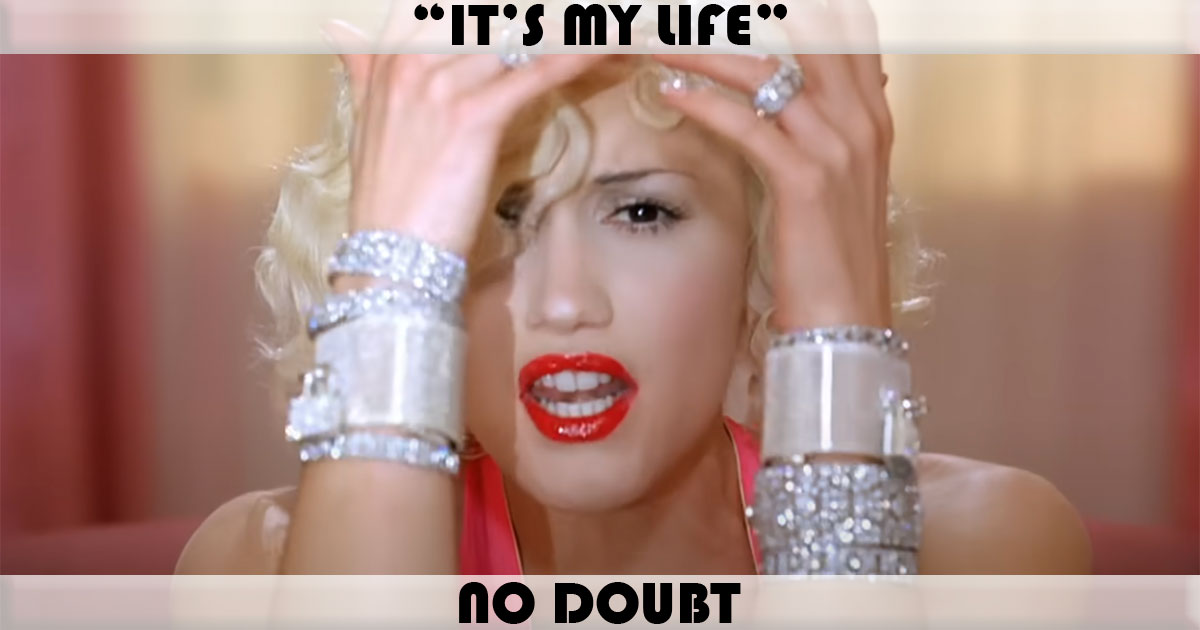
If you haven't watched the video lately, go back and do it. It’s a cinematic trip directed by David LaChapelle. It’s bright, it’s garish, and it’s incredibly dark. Gwen plays a "Black Widow" character who is on trial for murdering the men in her life—played by her actual bandmates, Tony Kanal, Adrian Young, and Tom Dumont.
- She poisons one.
- She runs over another with a car.
- She electrocute's one in the bathtub.
It was meta. It was a commentary on the rumors that she was "killing" the band to start her solo career. People were already whispering about Love. Angel. Music. Baby. before it even had a name. The video for No Doubt It's My Life leaned into that drama. It took the lyrics—which are fundamentally about someone else trying to control your destiny—and turned them into a courtroom drama.
Gwen’s look in the video, that blonde-bombshell-on-trial aesthetic, became iconic. It wasn't just a music video; it was a branding masterclass. It bridged the gap between the girl who sang "Just a Girl" and the woman who would eventually give us "Hollaback Girl."
The Talk Talk Legacy vs. The No Doubt Spin
Purists hated it at first. That's just how music nerds are. They thought No Doubt "glossed up" a masterpiece. But here’s the thing: Mark Hollis of Talk Talk actually made quite a bit of money from the royalties of this cover, which helped fund his quiet life away from the industry.
The original version is cold. It’s distant. It feels like a man watching his life happen from a telescope. Gwen’s version is immediate. It’s a confrontation. When she sings, "Funny how I find myself in love with you," it sounds less like a confession and more like an accusation.
That shift in perspective is what made it a Top 10 hit in over a dozen countries. It peaked at number 10 on the Billboard Hot 100, which is actually higher than some of their original legendary tracks did during their initial runs. It was the swan song of an era.
The Technical Breakdown
If you look at the structure of the song, it’s a masterclass in tension and release. The opening synth line is an earworm. It’s simple, but the way the bass sits under it is heavy. Tony Kanal has always been the secret weapon of that band. His bass lines have a reggae-informed bounce, even when he’s playing straight-ahead pop-rock.
The bridge is where the song really lives. The layering of Gwen’s vocals creates this dizzying effect. It feels claustrophobic, which matches the theme of the lyrics perfectly.
Why It Still Works Today
- Nostalgia: It captures the exact moment digital production began to take over pop-rock.
- Vocal Performance: Gwen doesn't oversing. She stays in a lower register that feels intimate.
- Cross-Generational Appeal: It’s a song your parents know from the 80s and you know from the 2000s.
Honestly, it’s rare for a cover to become the definitive version of a song for an entire generation. But for anyone born after 1985, this is the version.
The Aftermath of the Hit
After this song blew up, the band went their separate ways for a long time. Gwen went on to her massive solo success. Tony Kanal produced for other artists. Adrian and Tom did their own projects. No Doubt It's My Life served as the perfect closing credits to their first act.
It proved they could do more than just ska. They weren't just the kids from Orange County anymore. They were world-class pop stars.
The song was nominated for a Grammy for Best Pop Performance by a Duo or Group with Vocals. It didn't win, but the impact was already felt. It stayed on the charts for months. It was everywhere.
Actionable Takeaways for Music Fans
If you’re looking to dive deeper into this specific moment in music history, don't just stop at the radio edit. There are a few ways to really appreciate what went into this track.
First, find the "Jacques Lu Cont's Thin White Duke Mix." It’s a legendary remix that takes the synth elements and pushes them into a dance-floor anthem. It’s almost seven minutes long and it’s a journey.
Second, listen to the original Talk Talk version immediately after the No Doubt version. Pay attention to the percussion. No Doubt used a lot of electronic drum programming, whereas the original has a much more organic, almost "rubbery" drum sound.
Third, look at the credits. The song features a lot of session work that often goes unnoticed. The attention to detail in the mixing is why it still sounds "expensive" and modern on high-end speakers today, whereas many other songs from 2003 sound dated and thin.
Finally, realize that this song was a statement. In an industry that constantly tries to box artists in, No Doubt chose to exit their peak years by asserting that their lives and their careers belonged to them. It wasn't just a catchy chorus. It was a manifesto.
If you want to understand the DNA of modern pop-rock, you have to understand how No Doubt bridged the gap between the 80s and the 2000s. They took a song about existential dread and turned it into a glamorous, defiant shout into the void. That is how you handle a legacy.