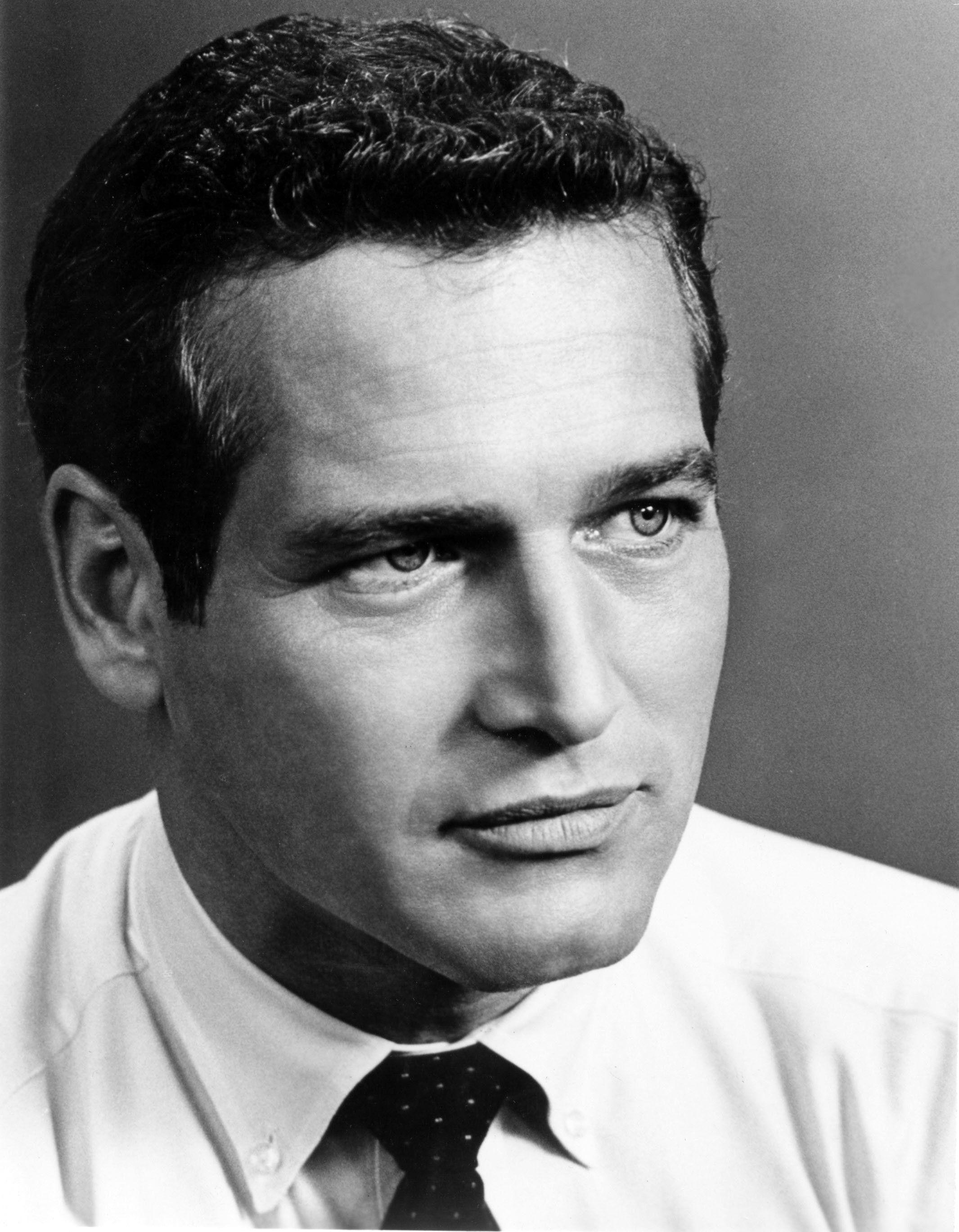
If you look at a photo of Paul Newman from 1963, you're not just looking at a movie star. You're looking at a blueprint. Honestly, the way Paul Newman in the 1960s redefined what it meant to be a leading man is still being felt today in every performance by guys like Ryan Gosling or Brad Pitt. He had those eyes, obviously. That piercing, almost unnatural shade of blue that jumped off the screen even when the film stock was grainy. But the 60s were when Newman decided he didn't want to just be "the handsome guy." He spent the entire decade trying to deconstruct his own stardom. He played jerks. He played losers. He played rebels who didn't actually have a cause other than being annoyed at the world.
He was a paradox.
Most actors spend their careers trying to make you like them. Newman, especially during this stretch, seemed like he couldn't care less if you liked him or not. This was the era of The Hustler (1961), Hud (1963), Cool Hand Luke (1967), and Butch Cassidy and the Sundance Kid (1969). It’s a run of films that most actors wouldn't have in a lifetime, and he knocked them out in ten years while also becoming a professional racing driver and a serious political activist.
The anti-hero era began with a pool cue
When the 1960s kicked off, Newman was already a name, but The Hustler changed the temperature of his career. He played "Fast" Eddie Felson. Eddie wasn't a hero. He was a self-destructive, arrogant pool shark with a massive chip on his shoulder. If you watch that movie today, you'll notice how Newman uses his physicality. He doesn't stand like a movie star. He slumps. He leans. He looks like a guy who has spent too many nights in smoky basements.
Director Robert Rossen actually shot the film in real pool halls around New York to get that gritty feel. Newman spent weeks practicing until he could actually play at a high level. That's the thing people forget—he was a technician. He wasn't just showing up and looking pretty. He was obsessed with the craft. The performance earned him an Oscar nomination, but more importantly, it established the "Newman Type": the gifted man who is his own worst enemy.
It’s a vibe that dominated the decade.
Then came Hud in 1963. This is probably the most interesting point in the history of Paul Newman in the 1960s because it highlights a massive gap between what an actor intends and how an audience reacts. Newman played Hud Bannon as a complete "rotter"—those were his words. Hud was selfish, cruel, and stood for absolutely nothing. Newman and director Martin Ritt thought they were making a cautionary tale about the death of Western morality. Instead? The youth of America fell in love with Hud. They saw his cynicism as "cool."
Newman was actually horrified by this. He didn't want to be a poster boy for being a jerk. He wanted people to see the emptiness of that lifestyle. It’s a rare case where an actor’s charisma is so powerful it accidentally sabotages the movie's message.
How Cool Hand Luke solidified the myth
"What we've got here is failure to communicate."
You know the line. Everyone knows the line. But Cool Hand Luke (1967) is more than just a collection of quotes and an egg-eating contest. By the late 60s, the United States was fractured. Vietnam was escalating. The counter-culture was exploding. Luke, a man who refuses to submit to authority even when it's literally killing him, became a Christ-like figure for a generation that was tired of being told what to do.
Newman played Luke with a sort of detached, saintly stubbornness.
Think about the scene where he plays the banjo after his mother dies. It’s quiet. It’s heartbreaking. Newman actually learned to play the banjo for the film, staying true to that Method acting background he picked up at the Actors Studio in New York. He wasn't a natural musician. He struggled with it. But that struggle is what makes the scene work. It feels real because it was hard for him.
The 1960s were also when Newman’s personal life began to merge with his public persona in a way that felt authentic. He wasn't a "Hollywood" person. He and his wife, Joanne Woodward, lived in Connecticut. They stayed away from the gossip columns as much as they could. This distance gave him a mysterious edge. When he showed up on screen, it felt like he was visiting from a different planet.
Racing, politics, and the pivot to Butch Cassidy
By 1968, Newman was arguably the biggest star in the world, but he was getting restless. He directed Rachel, Rachel starring Woodward, proving he had a sophisticated eye behind the camera. It was a small, quiet, intimate film. It was the total opposite of a blockbuster. It showed that he cared more about the art of storytelling than maintaining his "hunk" status.
Then he started racing cars.
While filming Winning (1969), he went to the Bob Bondurant School of High Performance Driving. He didn't just "learn to drive for a role." He got obsessed. This wasn't a hobby; it was a second career. He eventually said that racing was the only thing he found "grace" in. In the 1960s, this added a layer of genuine danger to his image. He wasn't just playing a tough guy; he was actually hitting 150 mph on the weekends.
And then, right as the decade was closing, we got Butch Cassidy and the Sundance Kid.
This movie shouldn't have worked. It was a Western that felt like a buddy comedy. It used pop music (Burt Bacharach) in the middle of a period piece. It featured two leads who were almost too attractive for their own good. But the chemistry between Newman and Robert Redford was lightning in a bottle.
Newman played Butch as the "brains"—a guy who was constantly talking his way out of trouble because he wasn't actually that good with a gun. It was a meta-commentary on his own career. He was the veteran, the guy who had seen it all, ushering in a new era of film alongside Redford. It was the perfect bridge from the 1960s into the cynical 70s.
The political weight of a movie star
We have to talk about his activism. It wasn't "PR."
In 1963, Newman was there at the March on Washington. He stood with Marlon Brando, Charlton Heston, and Sidney Poitier. He was a vocal supporter of the Civil Rights Movement at a time when that could actually hurt your box office numbers in certain parts of the country. He didn't care.
- 1963: Participated in the March on Washington for Jobs and Freedom.
- 1968: Campaigned heavily for Eugene McCarthy.
- Late 60s: Became so politically active he ended up on Richard Nixon's "Enemies List."
Newman later said that being on Nixon’s list was one of the proudest achievements of his life. That tells you everything you need to know about his mindset during this decade. He used his fame as a shield and a megaphone.
The technical side of the "Newman Look"
Why does he look so much better in 60s movies than other actors of that era? It’s not just the genetics. It was his wardrobe. Newman helped popularize the "Ivy League" or "Preppy" look but wore it with a rugged, blue-collar twist.
Think about the button-down Oxfords with the sleeves rolled up. The chinos that were perfectly tailored but looked like they’d been slept in. The iconic Rolex Daytona (which he started wearing in the late 60s) wasn't a status symbol to him; it was a tool for timing laps on the track. This blend of high-end style and functional utility is exactly what people mean when they talk about "timeless" fashion.
He didn't wear costumes. He wore clothes.
There’s a specific nuance to his acting in this period that often gets overlooked: his silence. Newman was a master of the reaction shot. In The Hustler, watch his face while George C. Scott is talking. He’s not waiting for his turn to speak; he’s actually listening. That sounds simple, but it’s the hardest thing for a movie star to do. He had the confidence to let other actors take the space while he just existed in the frame.
What most people get wrong about Newman’s 60s run
A lot of film historians try to claim Newman was "unlucky" because he didn't win an Oscar during this decade despite being nominated for The Hustler, Hud, and Cool Hand Luke.
That's a misunderstanding of his goals.
By the mid-60s, Newman was actively pushing back against the "Academy" style of acting. He was looking for projects that challenged the status quo. He turned down massive roles because they felt too "safe." He was more interested in working with directors like John Huston or Alfred Hitchcock (though he and Hitchcock famously didn't get along on the set of Torn Curtain because Newman kept asking about his character's "motivation" and Hitchcock just wanted him to stand where the light was).
He wasn't chasing trophies. He was chasing a version of masculinity that felt honest.
Actionable ways to channel the Newman legacy
If you want to understand the impact of Paul Newman in the 1960s, you shouldn't just read about it. You have to see the progression. His evolution from a "pretty boy" in the 50s to a "man’s man" in the late 60s is a masterclass in personal branding and artistic integrity.
- Watch the "Rebel Trilogy": Start with The Hustler, move to Hud, and finish with Cool Hand Luke. You will see an actor slowly stripping away his ego in every film.
- Study the "Method" transition: Notice how Newman mixes the intense, internal style of the Actors Studio with the external requirements of a big-budget Hollywood production. He was the bridge between the old studio system and "New Hollywood."
- Adopt the "Less is More" philosophy: Whether it's in fashion or communication, Newman’s 1960s persona was built on restraint. He never over-dressed, and he never over-acted.
- Find a "Second Passion": Newman’s life became infinitely more interesting when he started racing. It gave him a perspective outside of the film industry, which made his performances feel more grounded in reality.
Paul Newman didn't just survive the 1960s; he owned them. He walked into the decade as a talented actor and walked out of it as an American icon who had successfully navigated the shift from old-school glamour to gritty realism. He proved that you could be the most handsome man in the room and still be the most serious person in the room. That balance is why we are still talking about him sixty years later.
If you're looking for the definitive example of how to handle fame with grace, grit, and a bit of a rebellious streak, look no further than Newman's work between 1960 and 1969. It's all there on the screen. The blue eyes might have been what got people into the theater, but the soul he put into those "broken" characters is what kept them there.