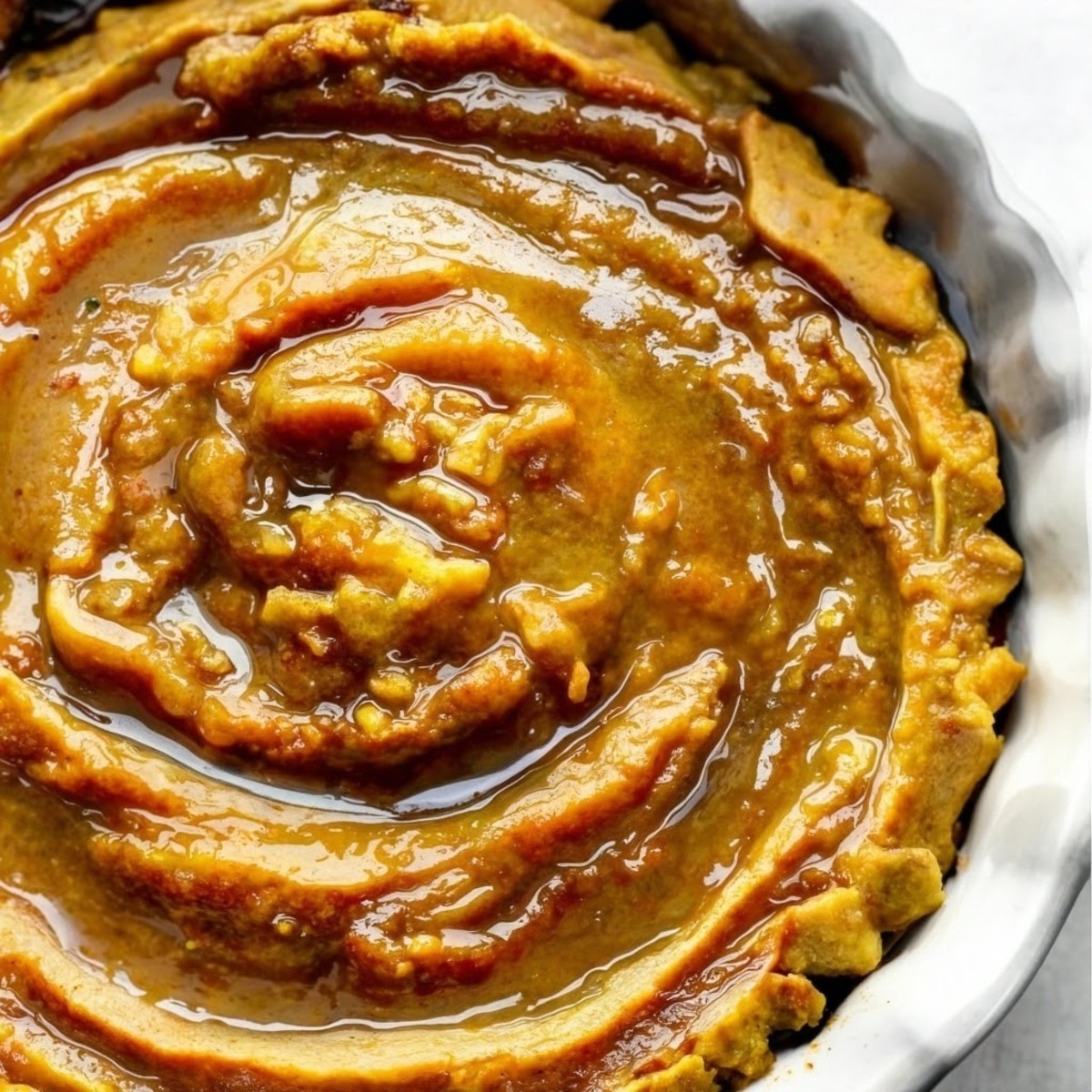
Let's be honest. You’ve probably felt that weird pang of guilt standing in the baking aisle, staring at the orange labels. You want to be the person who roasts a whole sugar pumpkin, scoops out the guts, and purees it to perfection. But then you remember reality. Roasting a pumpkin is a giant, watery mess. Most of the time, pumpkin pie filling from can isn't just a shortcut; it’s actually the superior choice for your Thanksgiving table.
It's consistent. It's smooth.
If you try to make a pie from a standard Jack-o'-lantern, you're going to have a bad time. Those things are bred for carving, not eating. They are stringy and taste like wet grass. Even "sugar pumpkins" vary wildly in moisture content. One day your pie is firm, the next it’s a soup bowl. Canned stuff doesn't do that to you.
What's actually inside your pumpkin pie filling from can?
Here is the secret that the big companies don't really shout from the rooftops: it’s usually not the orange pumpkin you're thinking of. Most canned pumpkin—specifically the giant in the industry, Libby’s—is actually a proprietary strain of Dickinson squash.
Wait, squash?
Yep. But before you feel lied to, you should know that botanically, pumpkins are squash. The USDA is pretty relaxed about the labeling here. They allow various firm-fleshed, golden-colored sweet squashes to be labeled as "pumpkin" because, frankly, they taste more like what we want pumpkin to taste like than actual pumpkins do.
The Dickinson squash looks more like a pale, oblong butternut squash. It has a creamy, dense texture and a much deeper flavor profile than the field pumpkins you buy at the patch. Libby’s grows nearly 80% of the world’s canned pumpkin in Morton, Illinois. They’ve spent decades perfecting a seed that has a specific starch-to-sugar ratio. When you open that can, you're getting the result of massive agricultural engineering designed specifically for a flaky crust.
The Puree vs. Pie Mix Trap
You have to be careful here. There are two very different cans on the shelf.
- 100% Pure Pumpkin: This is just the cooked, mashed squash. No sugar. No cinnamon. Nothing.
- Pumpkin Pie Mix (or Filling): This is the "just add eggs and milk" version.
If you buy the "mix" thinking it’s the "puree," your recipe is going to be a disaster. The mix already has the sugar and the spices (clove, ginger, nutmeg, cinnamon) dialed in. If you add your own spices on top of that, it’ll taste like you’re eating a candle. I always tell people to buy the 100% pure version. Why? Because you can control the flavor. Maybe you want a lot of ginger. Maybe you want to use maple syrup instead of white sugar. You can't do that with the pre-spiced stuff.
Texture is the hill most pies die on
Ever had a pie that felt "gritty"?
That happens when the fiber in the squash hasn't been properly broken down. When companies process pumpkin pie filling from can, they use industrial-strength steamers and strainers that no home blender can match. They get the particle size down to a microscopic level.
According to food scientists like J. Kenji López-Alt, the consistency of canned puree is almost impossible to replicate at home unless you’re willing to spend hours roasting, pureeing, and then—critically—straining the mash through a fine-mesh chinois or cheesecloth to remove the excess water. Most people forget the straining. If you don't strain home-roasted pumpkin, the water separates during baking. This leads to the dreaded "weeping" crust.
Canned pumpkin is pre-condensed. They’ve already cooked out the excess water for you.
Why the color looks different
If you've ever roasted a pumpkin, you noticed it's a bright, cheerful orange. Canned pumpkin is a darker, almost brownish-orange. That’s not because it’s old. It’s because of the Maillard reaction. The high-heat canning process slightly caramelizes the natural sugars in the squash. This deepens the flavor and gives the pie that classic, autumnal look we all expect.
The nutrition side of the tin
Surprisingly, the canned stuff wins here too. Because it’s concentrated, you’re getting more nutrients per spoonful than you would from a fresh, watery pumpkin.
- Vitamin A: A single half-cup serving of canned pumpkin has about 250% of your daily recommended intake.
- Fiber: It’s a powerhouse for digestion.
- Beta-carotene: This is what gives it that color and helps with eye health.
Health experts often recommend canned pumpkin as a fat substitute in baking. You can swap out oil or butter for pumpkin puree in brownies or muffins. It keeps things moist without the heavy saturated fats. Just keep in mind that "pumpkin pie mix" is loaded with sugar, so that’s not the one you want for your health kicks.
Hacks for the "Canned" Taste
Some people claim they can taste the "tin" in pumpkin pie filling from can. If you have a sensitive palate, there’s an easy fix.
Cook the puree before you make the pie. Dump the can into a saucepan over medium heat for about five to ten minutes. Stir it constantly. This does two things. First, it cooks off any "tinny" metallic notes. Second, it further concentrates the flavor. When it starts to smell fragrant and looks a little darker, it’s ready. This is a trick used by professional pastry chefs to make "store-bought" taste "artisanal."
Another trick? Switch your liquids. Most back-of-the-can recipes call for evaporated milk. It’s fine. It’s classic. But if you want a richer, more modern pie, try using heavy cream or even a mix of cream and mascarpone.
The shelf life reality
Canned pumpkin lasts forever. Well, not literally, but usually two to five years past the "best by" date if the can isn't dented or rusted. It’s one of the most stable pantry staples you can own. This is why it’s a crime that people only buy it in November.
Think about savory uses.
I’ve started using it in chili. It sounds weird, but a half-cup of pumpkin puree in a spicy beef chili adds a thickness and an earthy undertone that rounds out the heat of the peppers. It doesn't make the chili taste like pie. It just makes it taste... expensive.
Environmental impact and the supply chain
Back in 2015 and again in 2020, there were "pumpkin shortages." People panicked.
The issue is that since so much of the world's supply comes from one specific region in Illinois, a bad rainy season there can wreck the whole year’s crop. The Dickinson squash needs a very specific window to dry out before harvest. If the tractors can't get into the muddy fields, the pumpkins rot.
This centralization is a bit of a risk. Some smaller brands like Farmer’s Market or Trader Joe’s source from different regions, often using organic methods. If you’re worried about pesticides or want to support different soil ecosystems, looking for organic pumpkin pie filling from can is a solid move. These often use different squash varieties, like Kabocha, which can give your pie a slightly nuttier, more "gourmet" flavor.
Common mistakes to avoid
- Not checking for dents: Never buy a dented can of pumpkin. Dents near the seams can allow botulism-causing bacteria to enter. It’s rare, but it’s not worth the risk for a three-dollar can.
- Leaving it in the can: If you don't use the whole can, don't put the open tin in the fridge. The acidity can cause the metal to leach into the food faster once exposed to oxygen. Move it to a glass container.
- Ignoring the expiration: While it lasts a long time, very old pumpkin puree can lose its vitamin C content and the color will eventually turn a dull grey-brown.
The Verdict: Don't overthink it
There is a time and place for "from scratch" cooking. Making your own pasta? Great. Sourdough? Awesome. But when it comes to the holiday rush, pumpkin pie filling from can is the one area where the industrial version actually beats the home-grown version in nearly every category: texture, flavor, reliability, and ease.
If you really want that "homemade" credit, spend your time on the crust. A lard or high-fat butter crust made by hand will elevate a canned filling to legendary status. Nobody will know you didn't roast the pumpkin yourself. And honestly, even if they did know, they’d probably prefer the taste of the canned Dickinson squash anyway.
Next Steps for Your Baking:
- Check your pantry: Look for 100% Pure Pumpkin, not "Pie Mix," to ensure you have total control over the spice levels.
- The Sizzle Test: Next time you bake, try sautéing your canned puree in a pan for 5 minutes before adding other ingredients to see how the flavor deepens.
- Think beyond the pie: Use your leftover puree in oatmeal, smoothies, or even as a thickener for stews to get that Vitamin A boost without the sugar.
- Temperature Matters: Always let your canned pumpkin come to room temperature before mixing with eggs to ensure a smooth, emulsified custard that won't crack in the oven.