It’s the hit that echoes across the Pride Lands. That hollow thwack of a wooden staff meeting a lion’s skull. We all remember it. Simba is moping by a stream, wallowing in a decade of repressed trauma and bug-eating habits, when a mandrill with a penchant for cryptic chanting starts dancing around him. It's weird. It’s colorful. Honestly, it's the most important scene in Disney’s 1994 masterpiece. Rafiki and Simba aren't just a mentor and a student; they represent the friction between who we are and who we’re running away from.
Most people think of Rafiki as just the "crazy monkey" archetype. You’ve seen the memes. But if you look closer at the narrative structure developed by screenwriters Irene Mecchi, Jonathan Roberts, and Linda Woolverton, Rafiki serves as the bridge between the physical world of the Pride Lands and the spiritual legacy of Mufasa. Without him, Simba dies a happy, lazy failure in the jungle.
The Shaman and the Exile: A Weird Dynamic
When we first meet Rafiki, he’s painting a stylized lion cub on a baobab tree. He knows Simba is alive long before anyone else does. He catches the scent in the wind—literally. This isn't just Disney magic; it’s a nod to the "Old Wise Man" archetype often discussed by Carl Jung. Rafiki is the catalyst. Simba, on the other hand, is a mess.
Living with Timon and Pumbaa was great for his stress levels, sure. But "Hakuna Matata" is basically a philosophy of avoidance. It’s a coping mechanism for a kid who thinks he killed his father. When Rafiki and Simba finally reunite in the thorns and tall grass, the vibe is chaotic. Rafiki doesn't give him a hug. He mocks him. He leads him on a literal chase through the jungle, forcing Simba to work for the truth.
The lesson? The past hurts.
"Oh yes, the past can hurt," Rafiki famously says. "But the way I see it, you can either run from it, or learn from it." That moment, followed by the iconic staff-swing-and-dodge, is the turning point of the entire film. It’s visceral. You can almost feel the shift in Simba’s posture. He goes from a slouching outcast to a king-in-waiting in roughly ninety seconds of screen time.
Why the "He Lives in You" Moment Still Hits
Religion and spirituality in The Lion King are handled with a surprisingly heavy hand for a G-rated flick. When Rafiki leads Simba to the water’s edge, he isn't just showing him a reflection. He’s performing a ritual.
Look at the way the scene is framed. The blue hues, the shimmering water, the silence. Rafiki tells him to look harder. Simba sees his own face. Then, the reflection ripples and morphs into Mufasa. It’s a psychological breakthrough. Rafiki and Simba are engaging in a form of grief counseling that involves celestial apparitions and booming voices from the clouds.
James Earl Jones’ voice provides the gravitas, but Rafiki provides the context. He’s the one who identifies the spirit. "You see? He lives in you." This isn't just about genetics or looking like your dad. It’s about the "Circle of Life" philosophy—the idea that our ancestors occupy a space in our current identity.
Breaking Down the "Crazy" Act
Is Rafiki actually insane? Probably not.
In many African cultures, the figure of the Sangoma or the traditional healer often uses unconventional methods to jar people out of their stagnation. Rafiki’s laughter, his "Asante sana" chant (which is actually a playground nursery rhyme in Swahili), and his erratic movements are all designed to keep Simba off-balance. If Simba is off-balance, he can’t rely on his practiced "Hakuna Matata" defenses.
Basically, Rafiki is the only character who treats Simba like an adult. Timon and Pumbaa treat him like a permanent child. Nala treats him like a lost hope. Scar treats him like a threat. But Rafiki? Rafiki treats him like a solution.
The dynamic between Rafiki and Simba shifts again during the final battle at Pride Rock. We see Rafiki transition from a spiritual guide to a literal warrior. He uses that same staff—the one he used to teach Simba about the past—to lay waste to hyenas using a stylized version of martial arts. It shows that his wisdom isn't passive. It’s active. It’s fierce.
The Legacy of the Staff
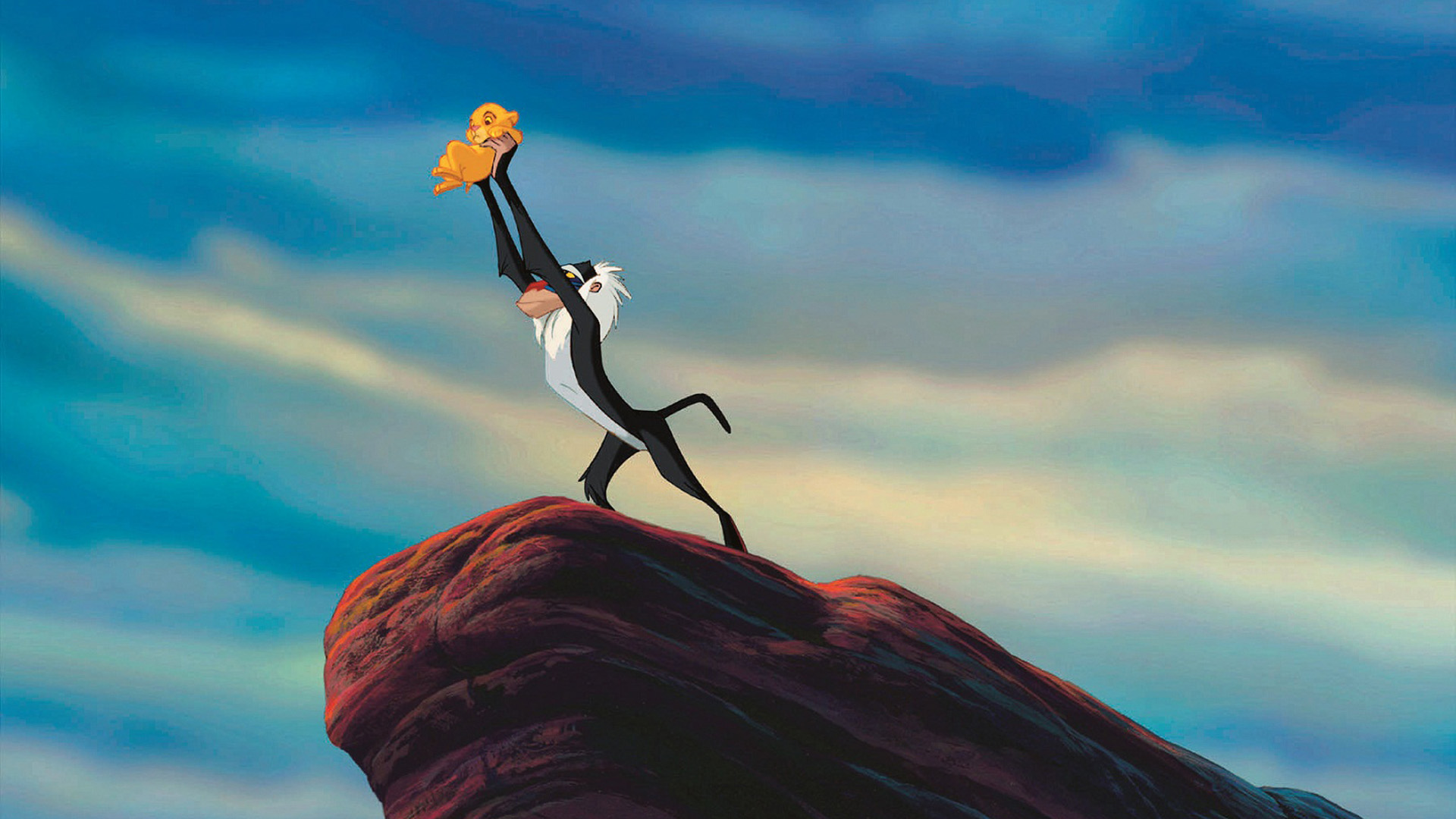
That staff is important. It’s called a bakora. It holds gourds that likely contain herbs or pigments for his paintings. Throughout the film, the staff acts as a physical extension of Rafiki's will. When he presents the newborn cub to the kingdom, the staff is raised high. When he knocks sense into the adult Simba, the staff is the tool of instruction.
It’s worth noting that in the Broadway musical, Rafiki is portrayed by a woman (originally the legendary Tsidii Le Loka). This change actually deepens the connection with Simba. It adds a maternal, earth-mother layer to the guidance, making the transition from Mufasa’s death to Simba’s rebirth feel even more like a full cycle of nature. Whether on stage or on film, the interaction remains the emotional heartbeat of the story.
Common Misconceptions About Their Relationship
- Rafiki is a baboon: Actually, he’s a mandrill. You can tell by the blue and red coloring on his face. However, real mandrills don't have tails, and Rafiki does. Disney took some creative liberties there.
- They spent years together: Nope. Rafiki likely didn't see Simba from the day of the presentation until that fateful encounter in the jungle. He knew of him, but they weren't "hanging out."
- The "past hurts" quote is just advice: It's actually a prompt for action. Notice that immediately after this exchange, Simba steals Rafiki's staff (briefly) and starts running back to the Pride Lands. The lesson wasn't just to feel better; it was to move.
Actionable Insights for Fans and Storytellers
If you’re looking at Rafiki and Simba through the lens of storytelling or personal growth, there are some pretty heavy takeaways here.
1. Identify your "Rafiki"
Everyone needs someone in their life who isn't afraid to hit them over the head (metaphorically) when they’re making bad choices. Comfort is the enemy of growth. Simba was comfortable in the jungle, but he was empty.
2. The past isn't a prison
The film argues that your history—no matter how messy or tragic—is a tool. You can use the "bruises" of your past to navigate the present. Simba stopped seeing his father’s death as a reason to hide and started seeing his father’s life as a reason to lead.
3. Ritual matters
Whether it’s a morning routine or a specific way you tackle work, rituals help ground us. Rafiki’s drawings on the tree weren't just art; they were a way of tracking the health of the world. Find your version of the baobab tree.
The relationship between the wise mandrill and the wayward king reminds us that we often need a nudge from the outside to see what’s already inside us. Simba had the strength of a king the whole time. He just needed a colorful, staff-wielding mystic to laugh at him until he realized it himself.
To truly understand the impact of their bond, re-watch the scene where Simba ascends Pride Rock in the rain. Rafiki is there at the bottom of the path. He doesn't say a word. He simply bows. The transition is complete. The student is now the master, and the cycle continues exactly as it was meant to.
Next Steps for Deepening Your Knowledge
- Watch the 2019 "Live Action" Version: Compare how the interaction between Rafiki and Simba changes when the characters are rendered realistically. Many fans feel the lack of facial expressions in the remake softens the "crazy" energy Rafiki brings to the table.
- Read "The Art of The Lion King": This book provides incredible insight into how the character designers used African landscapes and traditional folklore to build Rafiki’s persona.
- Listen to the Broadway Soundtrack: Specifically the track "He Lives in You." It expands on the themes Rafiki teaches Simba in a way the original film only touches upon.
- Study the Hero’s Journey: Map Simba’s progress against Joseph Campbell’s stages. You’ll find that Rafiki fits the "Meeting with the Mentor" stage perfectly, occurring exactly when the hero is most stuck.