The 1959 Studebaker Silver Hawk is a weird bird. Honestly, if you saw one cruising down a suburban street in the late fifties, you’d probably think it was a spaceship that accidentally landed in the wrong decade. It looked nothing like the chrome-heavy, slab-sided "Forward Look" cars coming out of Detroit at the time. While Chevy was busy slapping massive bat-wing fins on the Impala and Cadillac was reaching for the moon with the Eldorado, Studebaker was doing something... different. They were struggling. They were desperate. And in that desperation, they kept producing one of the most beautiful silhouettes in automotive history.
Most people today walk right past them at car shows to go look at another Mustang. Their loss.
The 1959 model year was a massive pivot point for the South Bend, Indiana, company. They were hemorrhaging cash and betting the entire farm on the compact Lark. Because of that, the Silver Hawk almost felt like a leftover thought, but it’s actually the purest expression of the Raymond Loewy design language that started years earlier with the Starliner. It’s got these soaring tailfins that look like they were sharpened with a whetstone, a massive upright grille that screams "I'm European, actually," and a greenhouse that provides better visibility than most modern SUVs. It’s a car of contradictions. It’s a budget-friendly grand tourer that somehow feels more expensive than it was.
The 1959 Studebaker Silver Hawk: A Design Born of Survival
To understand why this car looks the way it does, you have to look at the mess Studebaker was in. By 1959, the company had trimmed the Hawk line down significantly. Gone were the Golden Hawks with their supercharged engines and Packard V8s. Gone were the Sky Hawks and Power Hawks. All that remained was the Silver Hawk. It was the "everyman's" performance coupe, though "performance" is a relative term when you’re talking about a heavy steel frame and 1950s drum brakes.
The design is the real hero here. Robert Bourke, working under the legendary Raymond Loewy, originally penned the "Starlight" coupe back in 1953. By 1959, that design had been tweaked, tucked, and finned to death, yet it still worked. It stayed low to the ground. In an era where cars were getting taller and wider, the Silver Hawk stayed sleek. The 1959 version is particularly interesting because it lost some of the heavy chrome trim of previous years, making it look a bit leaner, a bit more purposeful.
You’ve got those fiberglass fins. Yeah, fiberglass. Studebaker didn't have the money to re-tool the rear quarter panels in steel every time they wanted to change the look, so they just bolted on these magnificent fins. It was a "fake it till you make it" strategy that actually resulted in a classic aesthetic.
What’s Under the Hood? (It’s Not a Hemi)
Don't expect to win many drag races against a modern Camry.
In 1959, the Silver Hawk came with two main engine choices. You had the 170-cubic-inch inline-six, which was basically a tractor engine. It was reliable, sure, but it produced about 90 horsepower. That’s barely enough to get the car moving if you have a passenger and a trunk full of groceries. Then there was the 259-cubic-inch V8. That’s the one you want. With a four-barrel carburetor, it put out around 180 to 195 horsepower.
It’s a "small block" before that was really a cool term to use.
Driving one is an experience in mechanical sympathy. The steering is heavy—no, really heavy—unless the original buyer shelled out for power steering, which many didn't. The suspension is soft. It’s meant for the open highway, not a canyon carving session. If you try to take a corner too fast, the bias-ply tires will scream at you like a banshee. But on a straight stretch of Route 66? It glides. It has this weighted, mechanical dignity that you just don't get in a modern car.
Why Collectors Are Finally Waking Up
For decades, the 1959 Studebaker Silver Hawk was the "cheap" classic. You could pick one up for a few thousand bucks, toss some primer on it, and have a fun weekend cruiser. Those days are gone. People are starting to realize that these cars are rarer than the equivalent Fords or Chevys. Only 7,788 Silver Hawks were produced in 1959. Compare that to the hundreds of thousands of Impalas or Fairlanes.
When you see one at a gas station, people don't ask "What year is that Chevy?" They ask "What is that?"
The parts situation is also surprisingly decent. Because Studebaker enthusiasts are a cult-like group of dedicated keepers-of-the-flame, companies like Studebaker International and various owners' clubs have kept the supply chain alive. You can still get floor pans, weatherstripping, and engine gaskets. Try finding a door handle for a random 1959 Mercury—it’s a nightmare. For the Studebaker, it’s a phone call away.
Common Myths and Realistic Problems
Let’s get real for a second. These cars rust. They don't just rust; they dissolve if they see a picture of rain. The "dog legs" behind the front wheels and the trunk floors are notorious. If you're looking at buying one, bring a magnet and a flashlight. If the seller says "it's just surface rust," they are probably lying to you or themselves.
Another thing: the 1959 model specifically used a "Twin-Traction" limited-slip differential as an option. It was great for snow (not that you should drive this in snow), but they can be finicky after 60 years. And the electrical systems? They’re 12-volt by '59, which is good, but the wiring harnesses are usually brittle enough to snap like dry spaghetti.
There’s also this weird misconception that Studebakers are "orphans" and therefore impossible to fix. Not true. The 259 V8 is a tank. It’s an over-engineered hunk of iron that can handle modern fuels reasonably well if you add a lead substitute or hardened valve seats. It’s a very approachable car for a hobbyist mechanic. You don't need a computer to talk to it; you just need a set of wrenches and a shop manual.
How to Buy and Maintain a '59 Silver Hawk
If you’re hunting for one, don't buy the first one you see on Facebook Marketplace. Look for a car that has a known history within the Studebaker Drivers Club (SDC). These guys know every bolt on these cars.
- Check the Frame: Specifically the rear crossmember. If that's gone, the car is basically a parts donor.
- The V8 is King: Unless you really love the sound of a struggling six-cylinder, hold out for the 259 V8. It changes the entire character of the car.
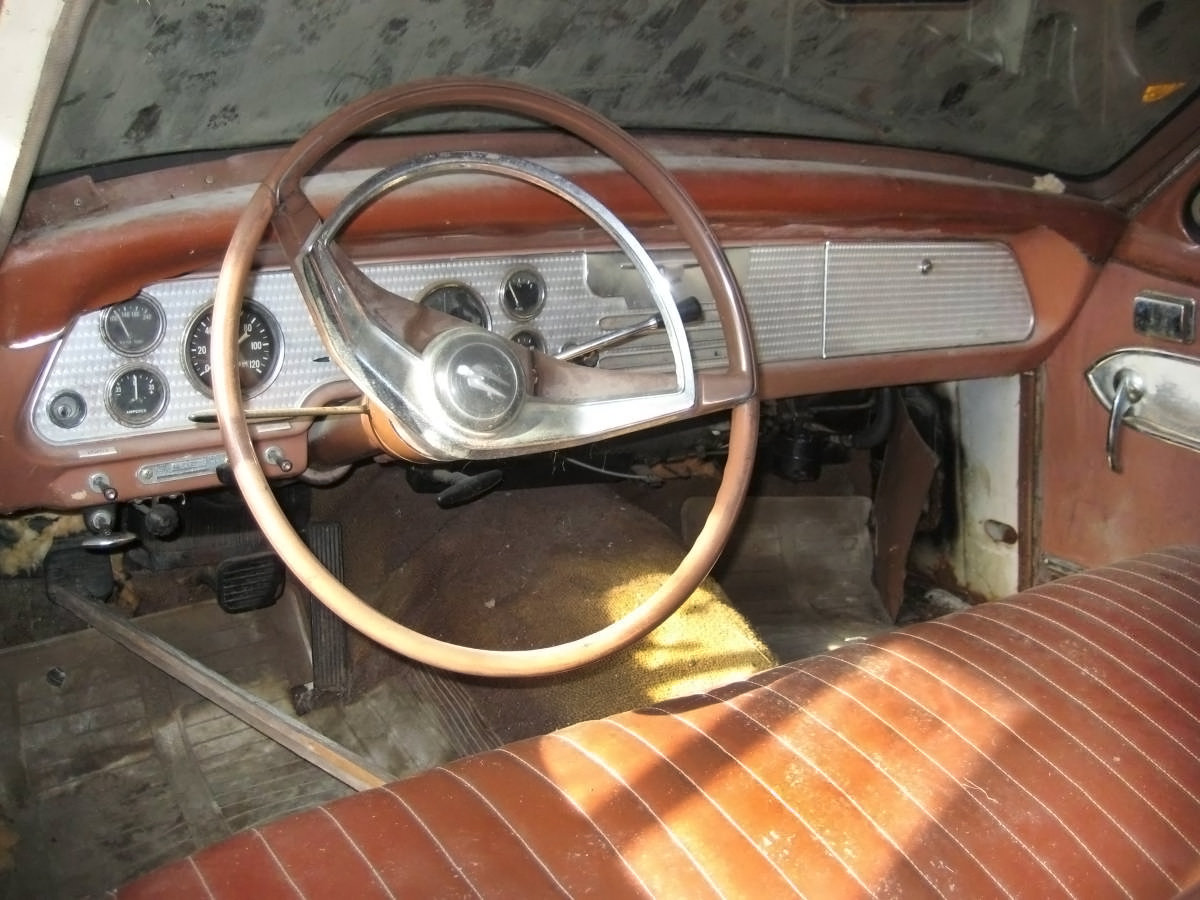
- Interior Trim: Chrome bits and interior knobs are expensive to re-plate or replace. A complete interior is worth its weight in gold.
- Disc Brake Conversion: Seriously, do it. The original drums are "adventurous" in modern traffic. Several kits exist to put Turner brakes on the front spindles.
The 1959 Studebaker Silver Hawk represents the end of an era. It was the last year before the Hawk got a major facelift into the Gran Turismo Hawk of the 60s. It’s the final evolution of that low-slung, 1950s European-inspired American GT. It’s not the fastest car from 1959, and it certainly wasn't the most popular. But it was, and still is, the most interesting.
Practical Next Steps for Enthusiasts
If you are serious about owning or restoring one, your first move isn't looking at listings. It's joining the Studebaker Drivers Club. Their monthly magazine, Turning Wheels, is the literal bible for these cars. You’ll find classifieds there that never hit the public internet, usually from older owners who have pampered their cars for forty years.
Next, source a Shop Manual and a Parts Catalog. These aren't generic Haynes manuals; they are reprints of the original factory books. They contain exploded diagrams that make the car's complex-looking heater box or "Flightomatic" transmission actually make sense.
Finally, plan a trip to the Studebaker National Museum in South Bend. Seeing the prototype designs and the literal history of the company gives you a perspective on the Silver Hawk that no YouTube video can provide. You'll start to see the car not just as a piece of old metal, but as a brave attempt by an underdog company to stay relevant in a world of giants.