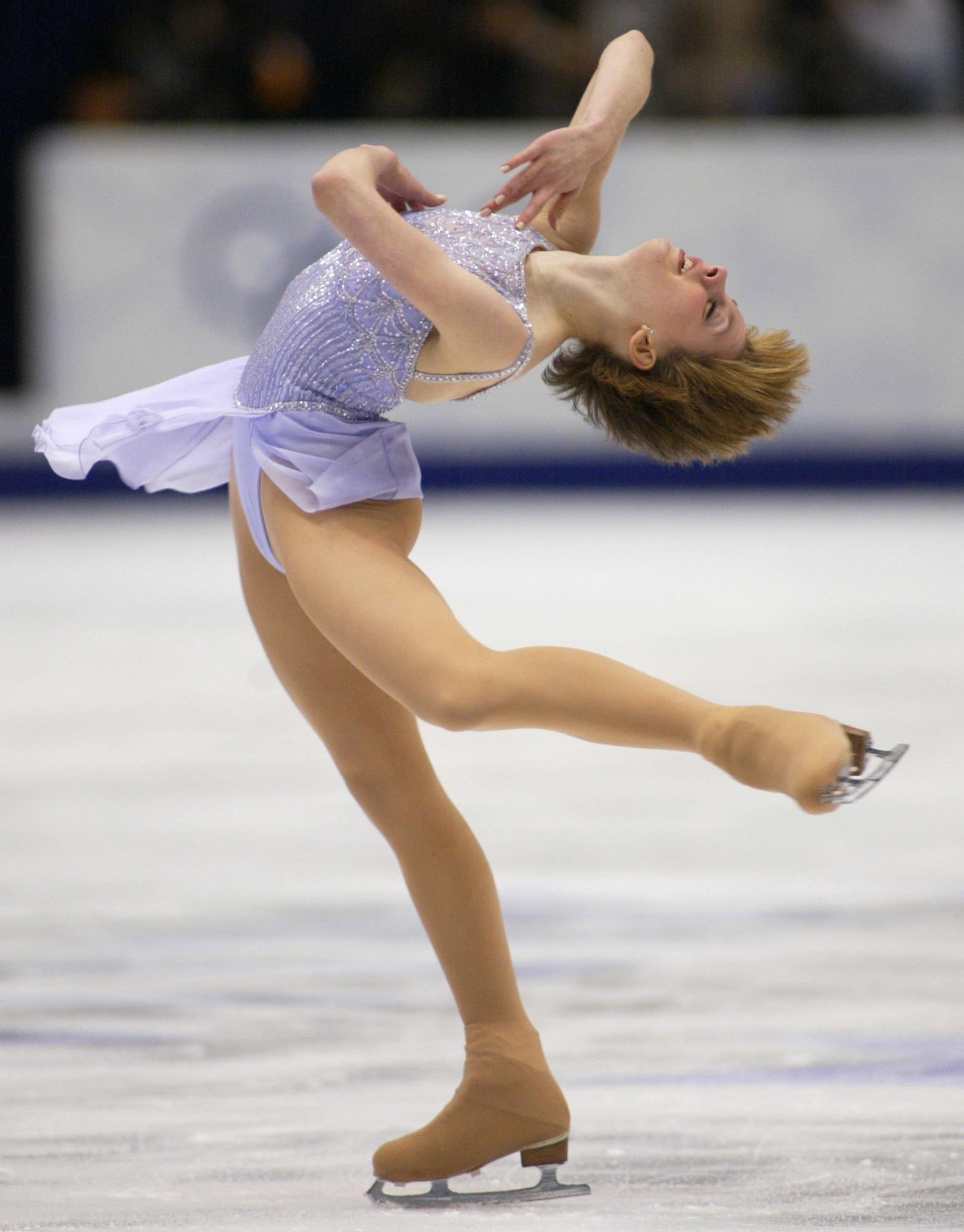
Salt Lake City was supposed to be a comeback story for the Olympics after the bribery scandals of the late '90s. Instead, the 2002 Olympic figure skating events became the definitive moment where "French judge" turned into a global punchline and the entire scoring system of a sport had to be demolished and rebuilt from the ground up. Honestly, if you weren't watching TV on the night of February 11, 2002, it’s hard to describe the sheer, "wait, what?" energy that took over the world when the pairs' scores flashed on the screen.
Elena Berezhnaya and Anton Sikharulidze of Russia stood there, looking just as shocked as the Canadians, Jamie Salé and David Pelletier. The Canadians had skated a flawless, emotionally charged program to "Love Story." The Russians had stumbled. Sikharulidze stepped out of a double Axel. It wasn't even a debate among the commentators. Scott Hamilton was practically screaming on the broadcast that the Canadians had won. Then the marks came up. Five to four for the Russians.
The crowd didn't just boo. They revolted.
The Night the Music Died (and the Logic Too)
We usually think of sports as having a clear finish line. You run faster, you win. You score more goals, you take the trophy. Figure skating has always been the weird cousin of the sports world because it relies on the "eye of the beholder," but the 2002 Olympic figure skating pairs final pushed that subjectivity into the realm of the absurd.
It wasn't just that Salé and Pelletier skated well. It was that they performed a program that felt modern and connected. Berezhnaya and Sikharulidze were technically magnificent, traditional, and regal, but they made a glaring technical error. In the old 6.0 system, a major mistake like a stepped-out landing was supposed to be the death knell in a close race. When the 5-4 split favored Russia, it confirmed everyone’s worst fears about backroom deals and "bloc voting" between Eastern European nations.
People forget that the drama didn't end that night. It actually got weirder the next morning.
Marie-Reine Le Gougne, the French judge, reportedly broke down in a hotel lobby. She allegedly told a technical committee chair that she had been pressured by the head of the French skating federation, Didier Gailhaguet, to vote for the Russians regardless of what happened on the ice. The "quid pro quo" was supposedly a reciprocal vote for the French ice dance team later in the week. She later recanted this, claiming she truly believed the Russians were better, but the damage was done. The International Olympic Committee (IOC) was in a full-blown PR nightmare.
Double Gold and the Death of the 6.0
What happened next was unprecedented. You don’t usually get a "do-over" at the Olympics. But by February 15, the IOC and the International Skating Union (ISU) announced they would award a second set of gold medals to Salé and Pelletier.
It was a mess.
There was this awkward second medal ceremony where the Canadians wore their tracksuits and the Russians showed up too, looking understandably uncomfortable. While it "fixed" the immediate injustice, it left a permanent stain on the 2002 Olympic figure skating results. It also signaled the end of the 6.0 scoring system. The ISU knew they couldn't keep a system where a single judge's bias could be so easily identified and manipulated.
They moved to the International Judging System (IJS), which is what we use today. Now, every jump has a "base value," and judges give a "Grade of Execution" (GOE). It's way more technical. It's also way harder for a casual fan to follow. In a weird way, trying to make the sport more objective made it less accessible to the person sitting on their couch.
The Men’s Event: Yagudin vs. Plushenko
While the pairs scandal sucked all the oxygen out of the room, the men's competition was arguably the highest level of skating we'd seen in decades. You had two Russians, Alexei Yagudin and Evgeni Plushenko, who absolutely loathed each other. They trained with rival coaches—Tatiana Tarasova and Alexei Mishin—and their styles couldn't have been more different.
Plushenko was the king of the quad. He was lanky, arrogant in a way that worked for him, and technically terrifying. Yagudin was the artist. He skated "Winter" in the short program, and it’s still considered one of the greatest pieces of choreography ever. He was throwing salt into the air (it was actually ice shavings) and footworking his way into history.
- Alexei Yagudin: Captured the gold with two sets of perfect 6.0s for presentation. He was the first skater in 50 years to get a clean sweep of first-place votes from every judge in every stage of the competition.
- Evgeni Plushenko: Took the silver after a fall in the short program. He’d go on to dominate for another decade, but 2002 belonged to Yagudin.
- Timothy Goebel: The American "Quad King" took the bronze, landing three quads in his free skate. This was a big deal back then. Now, kids are doing five, but Goebel was the pioneer.
The men's event was a reminder that when the 2002 Olympic figure skating competition wasn't mired in corruption, it was producing some of the most athletic displays in the history of the Winter Games.
Sarah Hughes and the Greatest Upset Ever
If you want to talk about "Olympic moments," you have to talk about Sarah Hughes. Going into the long program, nobody was looking at her. All eyes were on Michelle Kwan and Irina Slutskaya. Kwan was the legend, the "Kween," the one who was finally supposed to get her gold after the heartbreak of 1998 in Nagano.
Kwan made a mistake. She touched the ice on a triple flip. It wasn't a disaster, but it opened the door.
Hughes, who was 16 at the time, went out and did something no one expected: she landed two triple-triple combinations. It was a "kitchen sink" program. She skated with this pure, unadulterated joy that the leaders simply didn't have because they were paralyzed by the pressure.
When the results came up, Hughes jumped from fourth to first.
Kwan took the bronze. Slutskaya took the silver. The image of Michelle Kwan standing on the podium with tears in her eyes is one of the most heartbreaking images in American sports. She was the best skater of her generation, maybe of all time, but the Olympic gold remained the one thing she couldn't touch.
Why 2002 Still Matters Today
People still argue about Salt Lake City because it changed the DNA of the sport. We lost the "perfect 6.0." We gained a complex point system that requires a PhD to understand in real-time. But more than that, it changed how we view the Olympics. It was the moment the "curtain" was pulled back on the politics of judged sports.
If you’re looking back at 2002, you see a sport at a crossroads. It was the peak of its popularity in the United States—TV ratings were through the roof—but it was also the beginning of its decline. The scandal made people cynical. When people think figure skating is "fixed," they stop caring about the triple Axels.
Actionable Takeaways for Skating Fans
If you're diving back into the history of the 2002 Olympic figure skating era or just trying to understand why your favorite skater got a weird score last night, here is what you need to know:
- Watch the "Winter" Short Program: Go find Yagudin's 2002 short program on YouTube. Even with the old camera quality, the footwork is better than almost anything you'll see today. It explains why he won.
- Understand the "New" System: If you're watching modern skating, don't look for the 6.0. Look for the TES (Technical Element Score) and PCS (Program Components Score). The TES is the math; the PCS is the "vibes" and artistry.
- The French Judge Factor: When you hear people joke about biased judges, this is where it started. It’s why judges' names are now often hidden or their scores are randomized in some formats—to prevent the kind of pressure Marie-Reine Le Gougne faced.
- Check Out the Documentary "Meddling": If you want a deep dive into the 2002 scandal, there's a multi-part documentary that interviews almost everyone involved. It’s the best way to see how the "deal" actually went down.
Salt Lake City wasn't just a competition; it was a soap opera on ice. It gave us the greatest upset in Sarah Hughes, the greatest rivalry in Yagudin and Plushenko, and the greatest scandal in the history of the Winter Games. It’s the year figure skating grew up, for better or worse.