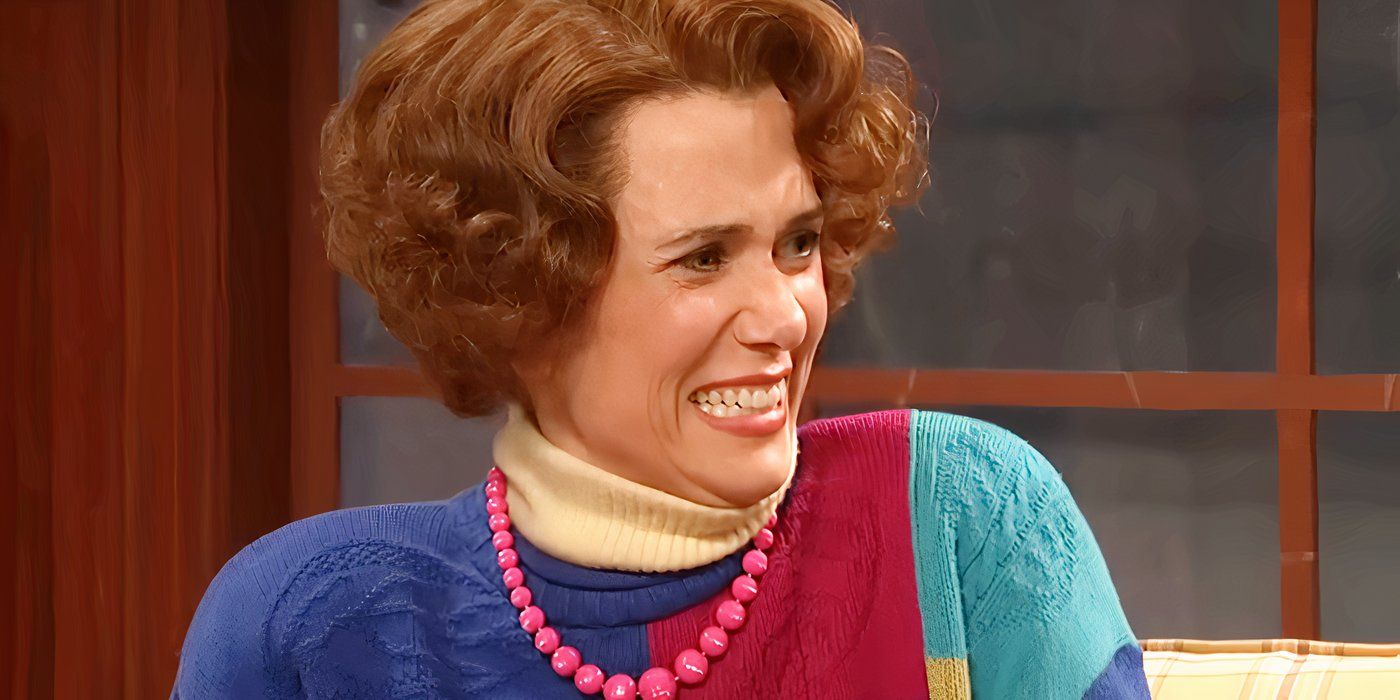
It's hard to explain the early 90s to someone who wasn't there. Culturally, we were in this weird transition where the loud, neon-soaked 80s were dying and the cynical, flannel-wearing 90s were taking over. Right in the middle of that shift, Julia Sweeney walked onto the stage of Studio 8H and introduced the world to Pat.
Honestly, the Pat Saturday Night Live skit is one of the most polarizing things the show ever produced. It wasn't just a recurring bit; it was a phenomenon that eventually birthed a movie, It’s Pat, which famously holds a 0% rating on Rotten Tomatoes. But if you look at the sketches today, they feel like they’re from a completely different planet.
Pat was defined by one thing: ambiguity. The joke, if you can call it that, was that nobody could tell if Pat was a man or a woman. The other characters in the sketch would spend the entire five minutes desperately trying to find a clue—asking about Pat's middle name, hobbies, or past relationships—only to be thwarted by answers like "Chris" or "we both wore suits." It was repetitive. It was awkward. And for about three years, it was basically the biggest thing on NBC.
The Origins of a Character Nobody Could Pin Down
Julia Sweeney didn't actually come up with Pat for SNL. She developed the character while she was part of The Groundlings, the famous improv troupe in Los Angeles. According to Sweeney’s own accounts in her memoir God Said Ha!, she based Pat on a real person she encountered who had a specific, somewhat aggressive way of speaking and a very neutral physical presence.
When she brought the character to Saturday Night Live in 1990, it clicked immediately. People loved the puzzle. This was a pre-internet era where "mysteries" lasted longer because you couldn't just go to Reddit to dissect every frame of a video. You had to wait until next Saturday to see if you’d finally get an answer.
The first few sketches were genuinely clever in how they danced around the reveal. You had guests like Harvey Keitel and Roseanne Barr getting visibly frustrated as Pat talked about "their" life in a way that offered zero biological data. It’s fascinating to watch now because the humor isn’t really about Pat; it’s about the neurotic obsession of everyone else in the room. They needed to know. Pat, meanwhile, was just living life, completely oblivious or perhaps brilliantly trolling everyone.
Why the Pat Saturday Night Live Skit Feels Different Today
If you try to pitch the Pat Saturday Night Live skit in a writers' room in 2026, you’d probably be shown the door. Not because it’s "forbidden," but because the world has changed so much in how we talk about gender identity. Back in 1991, the concept of being non-binary or gender-fluid wasn't in the mainstream lexicon for most of the SNL audience.
To the audience then, Pat was a "gag." To a modern viewer, Pat looks like a clumsy, early attempt to engage with gender non-conformity, even if the writers didn't realize that's what they were doing.
Julia Sweeney has been asked about this a lot lately. In interviews, she’s mentioned that she never intended Pat to be a commentary on the trans community or anything political. It was just a character study of an annoying, nasally person who happened to be impossible to categorize. But intent doesn't always dictate impact. For some, Pat was a rare moment of seeing someone who didn't fit the binary on screen. For others, it felt like the character was the butt of a joke simply for existing outside of "normal" categories.
It’s a complicated legacy. You have to balance the fact that it was a product of its time with the reality of how it reads now. The sketches often leaned into "gross-out" humor or Pat being socially inept, which added a layer of "othering" that feels heavy-handed by today's standards.
The Movie Disaster: It's Pat
We have to talk about the movie. Oh boy.
By 1994, SNL was in a "make everything a movie" phase. Wayne’s World had been a massive hit, so the studio heads thought, "Why not Pat?" This is where the wheels fell off. What works as a three-minute sketch rarely works as a ninety-minute feature film.
- The mystery gets boring fast.
- Pat’s personality is intentionally grating, which is hard to watch for two hours.
- The plot, involving a neighbor played by Charles Rocket who becomes obsessed with Pat, felt dark instead of funny.
The film was such a disaster that it was pulled from theaters after only one weekend in most cities. It’s one of the few movies to have absolutely no positive reviews from critics at the time. Even Quentin Tarantino reportedly did an uncredited rewrite on the script, which is one of those "truth is stranger than fiction" Hollywood facts. Even his touch couldn't save the Pat Saturday Night Live skit from its own cinematic weight.
Musical Guests and the Pat Effect
One of the most memorable Pat moments wasn't even about a script. It was the "It's Pat" theme song. Sung by Ween. Yes, the legendary cult band Ween wrote and performed the theme for the movie.
"A lot of people say, 'What's that?' It's Pat!"
It’s a catchy, weird little tune that perfectly encapsulated the 90s' obsession with "alternative" culture. This is the kind of detail people forget when they look back at the Pat Saturday Night Live skit. It wasn't just a lonely island of a sketch; it was woven into the fabric of the alternative music and comedy scene of the decade.
The Technical Side of Being Pat
Sweeney’s transformation was actually pretty impressive from a technical standpoint. She wore a wig of short, curly brown hair, thick glasses, and a specific blue and tan plaid shirt that became the character's uniform. She changed her posture, standing with a slight slouch and a protruding stomach.
But the voice was the key. It was a high-pitched, whiny, "nasal-y" tone that felt like it was vibrating in the back of her throat. It was an exhausting character to play. Sweeney has noted that the physical toll of doing the voice and the specific "Pat walk" was one of the reasons she was okay with moving on from the character after she left the show in 1994.
Assessing the Cultural Impact
Is Pat funny? It depends on who you ask and how old they are.
If you grew up watching Chris Farley fall through tables, Pat might feel a bit slow and repetitive. But if you appreciate the era of SNL that relied on character quirks—think Mary Katherine Gallagher or The Church Lady—then Pat fits right in.
The Pat Saturday Night Live skit served as a bridge. It showed that audiences were fascinated by the idea of identity, even if they were only ready to engage with it through the lens of a comedy sketch. It paved the way for more nuanced discussions later on, even if Pat itself was anything but nuanced.
What You Should Do Next
If you’re looking to revisit this era of comedy, don't just watch the movie. It’s a slog. Instead, go back to the original sketches from Season 16 through Season 19.
- Watch the Roseanne Barr episode: It’s arguably the most "classic" version of the sketch because the chemistry (or lack thereof) between the two characters is palpable.
- Pay attention to the background actors: Often, the funniest part of a Pat sketch isn't Julia Sweeney; it's the horrified or confused expressions of the people around her.
- Compare it to modern SNL: Watch a Pat sketch and then watch something like "Portlandia" or modern SNL characters. You’ll see how the DNA of "character-based awkwardness" has evolved.
Ultimately, the Pat sketches are a reminder that comedy is a living thing. It grows, it ages, and sometimes, it gets wrinkles that are hard to ignore. But you can't talk about the history of late-night television without mentioning that plaid shirt and that high-pitched "Hi!"
The best way to appreciate it now is as a relic. It’s a piece of 90s history that tells us as much about the audience of that time as it does about the writers. Whether you find it hilarious or cringeworthy, Pat remains one of the most successful "unsolved mysteries" in TV history.