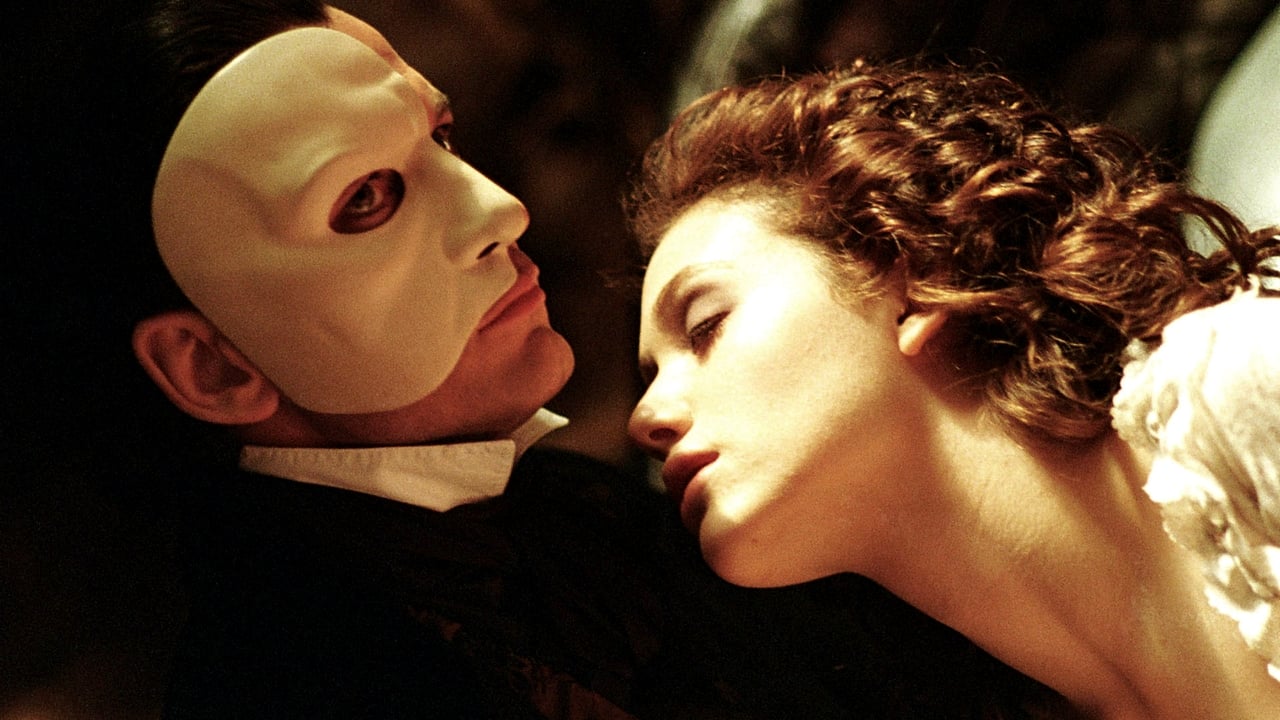
It was a massive gamble. Joel Schumacher, the man who famously put nipples on the Batsuit, was tasked with bringing Andrew Lloyd Webber’s stage juggernaut to the big screen. When people talk about the Phantom of the Opera cast 2004, they usually start with one name: Gerard Butler. He wasn't a singer. He wasn't even the first choice. But there he was, mask on, roaring through "The Music of the Night" with a rock-and-roll grit that sent theater purists into a total tailspin.
The movie didn't just try to replicate the Broadway show; it tried to make it "sexy" for a new generation. Looking back, the casting choices were incredibly bold, bordering on reckless. You had a teenage Christine Daaé, a Phantom who looked more like a calendar model than a "disfigured genius," and a Raoul who actually felt like a viable romantic contender. It’s been over twenty years, yet the debate over whether these actors captured the soul of the Opera Populaire or just looked good in 19th-century costumes hasn't slowed down one bit.
The Gerard Butler Factor: A Phantom Without the Operatic Pipes
Let’s be real for a second. If you grew up listening to Michael Crawford, Gerard Butler’s vocal performance in the 2004 film felt like a slap in the face. He didn't have the vibrato. He didn't have the effortless high notes. What he did have, though, was a raw, visceral masculinity that transformed the character from a ghostly mentor into a dangerous, leather-clad lover.
Schumacher wanted a Phantom with "rock and roll" energy. Butler, who was mostly known at the time for Dracula 2000 and hadn't quite hit his 300 fame, took vocal lessons for a year. It shows—sorta. You can hear the strain in his voice during "The Point of No Return," but strangely, that strain adds a layer of desperation that works for the character. He isn't a polished performer; he’s a man living in a basement who is literally losing his mind over a girl.
Critics at the time were brutal. They called his singing "serviceable" at best. But if you look at the fan reception, especially among those who saw the movie before the stage play, Butler is their Phantom. He brought a brooding, physical presence to the role that made the "Final Lair" scene feel less like a musical number and more like a psychological breakdown.
Emmy Rossum and the Burden of Being Sixteen
While Butler was the controversial lead, Emmy Rossum was the revelation. It’s easy to forget she was only 16 years old when she was cast as Christine Daaé. That’s actually much closer to the age of the character in Gaston Leroux’s original novel than the 30-something women who usually play her on stage.
Rossum had the classical training that Butler lacked. Having performed at the Metropolitan Opera as a child, she brought a genuine soprano clarity to the role. When she sings "Wishing You Were Somehow Here Again," you aren't just hearing a technical performance; you’re seeing a grieving teenager. Her youth made the predatory nature of the Phantom’s "teaching" much more apparent and, frankly, much creepier.
There’s a specific nuance in her performance that often gets overlooked. In the "Don Juan Triumphant" sequence, Rossum manages to convey a mix of terror and genuine sexual awakening. It’s a tricky balance. If she’s too scared, the romance dies; if she’s too into it, the Phantom’s threat vanishes. She nailed it.
The Supporting Players: From Raoul to La Carlotta
Patrick Wilson played Raoul, Vicomte de Chagny. Usually, Raoul is the boring "nice guy" who Christine picks because he’s rich and doesn't live in a sewer. But Wilson, a seasoned Broadway veteran, actually out-sang everyone in the cast. His "All I Ask of You" is arguably the musical highlight of the film. He gave Raoul some backbone. You actually believed he could hold his own in a sword fight against the Phantom in that snowy cemetery.
And then there’s Minnie Driver.
Honestly, she’s the best part of the movie. Playing the diva Carlotta Giudicelli, Driver leaned into the campiness of the role with every fiber of her being. Here’s a fun fact: she’s the only main member of the Phantom of the Opera cast 2004 who didn't do her own singing for the character's operatic parts. Those vocals were dubbed by Margaret Preece. However, Driver did sing the end-credits song "Learn to Be Lonely," which Lloyd Webber wrote specifically for the film. Her comedic timing provided the much-needed breath of air in a movie that otherwise took itself very seriously.
- The Managers: Simon Callow and Ciarán Hinds brought a theatrical pedigree to Gilles André and Richard Firmin. They played the comedy beats perfectly, acting as the audience's proxy for the sheer absurdity of the Opera House hauntings.
- Madame Giry: Miranda Richardson was stoic and mysterious, though her faux-French accent was a bit of a choice. She served as the bridge between the Phantom’s past and the present-day narrative.
- Meg Giry: A young Jennifer Ellison provided the innocent foil to Christine’s darker journey, though her role was significantly trimmed compared to the stage version.
Why the Casting Influenced the "Phandom" Forever
The 2004 film changed how people perceived the story. Before this, the Phantom was often portrayed as a more paternal or monstrous figure. Schumacher’s cast turned it into a high-stakes romance. This shift is why you still see "Team Erik" vs. "Team Raoul" debates on social media today.
By choosing actors who were young and conventionally attractive, the film leaned into the "Beauty and the Beast" trope. This made the ending much more polarizing. When Christine leaves with Raoul, the 2004 audience felt a genuine sense of loss for the Phantom, largely because Butler played him as a tragic anti-hero rather than a ghost.
The cinematography by John Mathieson also played a huge role in how these actors were perceived. Every shot was drenched in gold, red, and deep shadows. It made the performances feel larger than life. Even if the vocals weren't always up to the "25th Anniversary at the Royal Albert Hall" standard, the visual storytelling was undeniably lush.
The Vocal Controversy: Polished vs. Raw
If you talk to a vocal coach about this movie, they’ll probably point out the heavy use of pitch correction and studio layering. Because most of the cast weren't professional musical theater singers, the production had to do some heavy lifting in the booth.
This created a "studio-clean" sound that lacks the grit of a live performance. For some, it makes the soundtrack a perfect gateway drug into the world of Andrew Lloyd Webber. For others, it’s a sanitized version of a masterpiece.
Wait—did it matter? In terms of box office, the movie did okay, but its real life started on DVD and later, streaming. It became a cult classic for a specific generation. You’ve probably met someone whose entire obsession with musicals started because they saw Gerard Butler in a cape on a random Tuesday night in 2005.
Actionable Takeaways for Fans of the 2004 Film
If you’re a fan of this specific iteration of the story, there are a few things you should do to deepen your appreciation for what this cast pulled off:
- Listen to the "Learn to Be Lonely" demo: Compare Minnie Driver’s version to the various stage versions to see how Lloyd Webber tailored his music for the film’s specific tone.
- Watch the "Behind the Mask" documentary: It features extensive interviews with the 2004 cast during rehearsals. Seeing Gerard Butler try to hit those notes in a t-shirt and jeans is a fascinating look at the work that went into his transformation.
- Compare the Cemetery Sword Fight: This scene doesn't exist in the stage play in the same way. It was added specifically to capitalize on Patrick Wilson and Gerard Butler's physical chemistry and to add "action" to the second act.
- Check out Emmy Rossum’s solo albums: If you liked her voice as Christine, her actual music career explores a very different, more ethereal pop sound that shows off her range.
The Phantom of the Opera cast 2004 might not be the "definitive" version for the purists, but it is undeniably the most influential version for the modern era of film musicals. It proved that you could take a massive, operatic property and turn it into a moody, gothic blockbuster. Whether you love Butler’s growl or wish they’d cast a Broadway pro, you can't deny that this group of actors left an indelible mark on the legacy of the Paris Opera House.
To truly understand the impact, go back and watch the "Final Lair" scene. Forget the singing for a moment. Look at the acting. Look at the way Rossum looks at Butler—it’s a mix of pity, fear, and a weird kind of love. That’s something you can only get with a cast that was willing to be that vulnerable on camera.