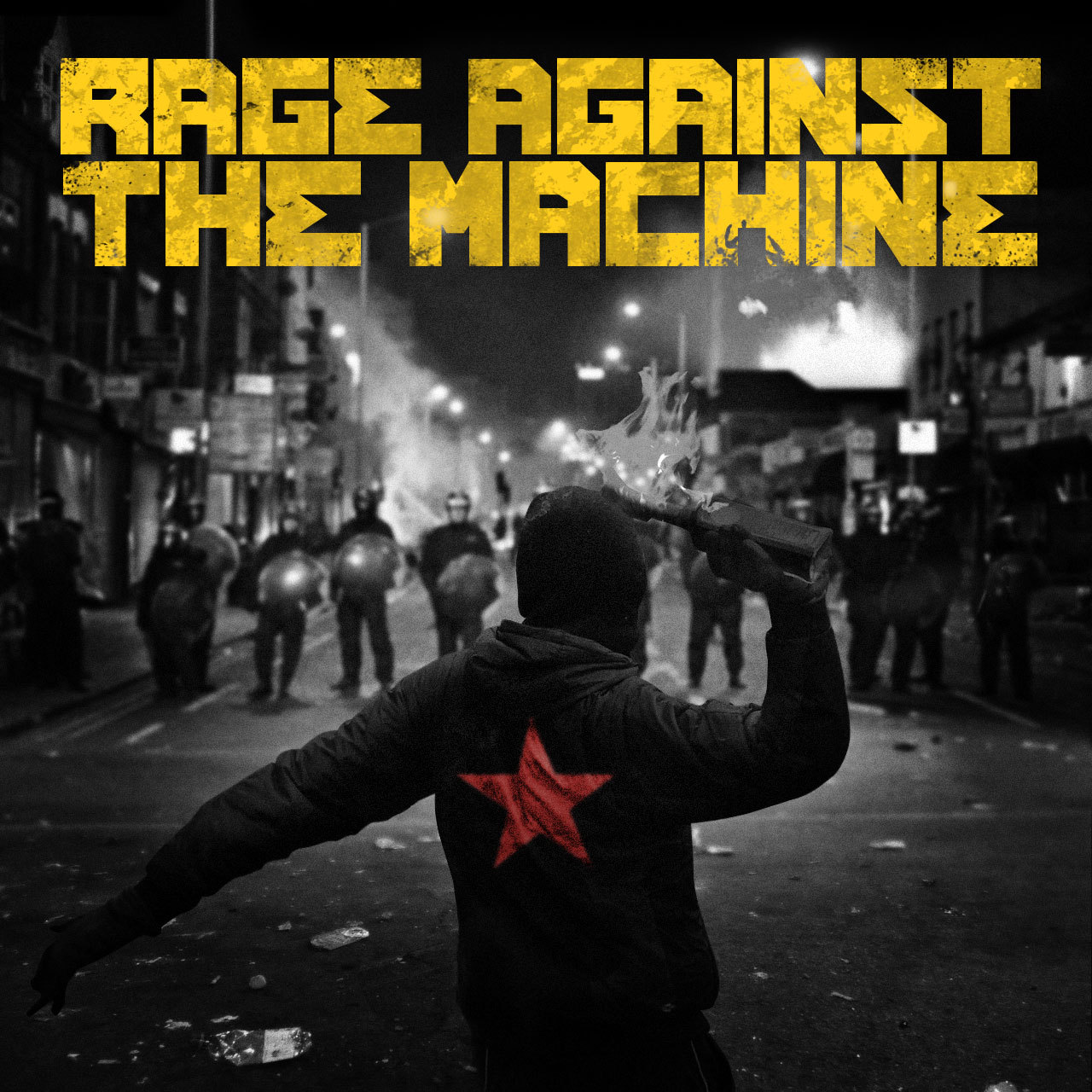
It is arguably the most jarring image in rock history. You’re flipping through a bin of CDs—back when people actually did that—and you see it. No flashy logos. No airbrushed portraits of the band members looking moody in leather jackets. Just a grainy, black-and-white photograph of a man sitting perfectly still while he is consumed by a massive, roaring pillar of fire.
The Rage Against the Machine CD cover didn't just market an album; it served as a brutal introduction to a band that intended to burn the entire system down.
When that self-titled debut dropped in 1992, people were confused. Was it a stunt? Was it Photoshop? (Photoshop was barely a thing then, anyway). It felt too real because it was. That man was Thich Quang Duc. He was a Vietnamese Mahayana Buddhist monk. On June 11, 1963, he sat down at a busy intersection in Saigon, had gasoline poured over his robes, and struck a match. He was protesting the persecution of Buddhists by the South Vietnamese government, led by Ngo Dinh Diem.
The photo was taken by Malcolm Browne. It won a Pulitzer. Decades later, it became the face of the most influential political metal album of all time.
The Brutal Reality Behind the Lens
Honestly, it’s hard to talk about the Rage Against the Machine CD cover without talking about the sheer discipline of Thich Quang Duc. Witnesses, including Browne himself, noted that the monk never moved a muscle. He didn't scream. He didn't twitch. He just sat in the lotus position while his flesh turned to ash.
The band—Zack de la Rocha, Tom Morello, Tim Commerford, and Brad Wilk—weren't just using the image for "edge" or shock value. That’s a common misconception. They were obsessed with the idea of sacrifice for a cause. If you listen to "Know Your Enemy" or "Take the Power Back," the lyrics aren't just angry; they are instructional. They are about the cost of resistance.
Using Browne's photo was a massive gamble.
Retailers in certain parts of the world were terrified of it. Some censored it. Others refused to stock it. But for the band, the image was the ultimate "fuck you" to the status quo. It communicated their entire ethos before you even pressed play on "Bombtrack."
Why Malcolm Browne’s Photo Changed Everything
Before this photo hit the wires in '63, the American public had a very different view of what was happening in Vietnam. This single image, often called "The Ultimate Protest," forced President John F. Kennedy to admit that "no news picture in history has generated so much emotion around the world as that one."
When Rage chose it for their Rage Against the Machine CD cover, they were linking the 1990s American zeitgeist—the aftermath of the LA Riots, the burgeoning anti-globalization movement—to a historical legacy of radical resistance. It was a bridge. It told listeners that the struggle for justice isn't a trend; it's a terrifying, lifelong commitment.
The photo is stark. The contrast between the dark car in the background and the brilliant white-hot flames creates a visual tension that’s hard to look away from.
The Controversy of "Selling" Revolution
Let’s be real for a second. There is a weird irony here. You have a photo of a monk dying to protest a government, and it's being used to sell a plastic disc manufactured by Epic Records, a subsidiary of Sony Music—one of the biggest corporations on the planet.
Critics have hammered the band for this for years. Is it "revolutionary" to use a death photo to sell records? Or is it the ultimate hypocrisy?
Tom Morello has addressed this sort of thing plenty of times. The band’s logic was basically: use the machine against the machine. They wanted the widest possible distribution for their message. If that meant using a corporate giant to put a photo of a martyred monk into every suburban mall in America, they were going to do it. They didn't want to be a "cool underground band" that only 50 people heard. They wanted to be a firestorm.
Design Choices You Might Have Missed
The typography on the Rage Against the Machine CD cover is almost as important as the photo. The font is a simple, typewriter-style serif. It looks like a leaked government document or a grassroots manifesto.
- Placement: The band name is tucked at the bottom.
- Color Palette: Monochrome. It strips away the "fun" of rock and roll.
- The Back Cover: If you flip the physical CD case over, you’ll see the lyrics to the songs, but also a photograph of a parent and child, highlighting the human cost of systemic oppression.
It’s all intentional. Every inch of that packaging was designed to make the listener feel uncomfortable. It’s meant to make you realize that while you’re sitting in your room listening to "Killing in the Name," people are out there literally dying for what they believe in.
How the Cover Influenced a Generation of Art
The impact of the Rage Against the Machine CD cover on graphic design and political activism can't be overstated. Suddenly, album art wasn't just about the artist; it was about the subject.
You see the echoes of this in later bands. System of a Down used 1915 Armenian Genocide imagery. Public Enemy used the target over the silhouette of a Black man. But Rage did it with a level of raw, unedited violence that felt different. It wasn't an illustration. It was a witness.
The photo also helped keep the story of Thich Quang Duc alive for a generation that wasn't alive in 1963. Ask any Gen X or Millennial fan where they first saw that image. Nine times out of ten, it wasn't in a history book. It was on the cover of a CD they bought at a Tower Records.
Misinterpretations and Urban Legends
There are some weird myths floating around about the Rage Against the Machine CD cover. Some people think the monk survived. He didn't. Others believe the band staged a reenactment. That’s absurd.
One of the more persistent rumors is that the band didn't have permission to use the photo. Actually, they went through the proper channels to license Malcolm Browne’s work. They respected the gravity of the image. They weren't trying to steal it; they were trying to amplify it.
The image remains powerful because it is authentic. In an era of AI-generated art and "aesthetic" protests, the grit of that 1963 film stock is a reminder of what real stakes look like. It’s not a "vibe." It’s a tragedy and a triumph of the will at the same time.
The Legacy in 2026
Even now, decades after the band’s peak, the image still appears on t-shirts, posters, and digital thumbnails. It has become a shorthand for "rebellion."
But the Rage Against the Machine CD cover is more than just a cool graphic. It’s a challenge. Every time you see it, it asks: what do you care about enough to actually sacrifice for? The band didn't have the answer for you, but they made sure you couldn't ignore the question.
Next Steps for the Interested Collector
If you want to truly understand the history behind the Rage Against the Machine CD cover, you should look beyond the music.
- Read Malcolm Browne’s account: He wrote extensively about the morning he spent in Saigon and the haunting silence of the crowd. It adds a layer of weight to the image that you can’t get from just looking at it.
- Compare the regional versions: Some international releases of the album shifted the cropping or added "Parental Advisory" stickers that actually covered parts of the flames, which is a meta-commentary on censorship in itself.
- Check out the "World Within a Song" perspective: Jeff Tweedy of Wilco recently talked about how certain songs and images act as "portals." This cover is the ultimate portal.
- Examine the 20th Anniversary Box Set: It includes a lot of the early flyers and photos from the band's first few shows, showing how they built an entire visual language around this single, fiery moment.
The image is a piece of history. Treat it as such. It’s not just "cool" art—it’s a record of a human being’s final, most extreme act of communication. Keep that in mind next time the bassline for "Know Your Enemy" kicks in.
The power isn't just in the music. It's in the fire.
By understanding the context of the Thich Quang Duc self-immolation, the listener moves from being a passive consumer to an informed witness. That was always the band’s goal. The CD cover wasn't an accessory; it was the mission statement.
If you own the original pressing, hold onto it. It's a reminder of a time when music felt like it could actually change the world—or at least, when it wasn't afraid to try. Read the liner notes. Look at the photo again. Don't look away. That’s the whole point. Resistance starts with the eyes. Then it moves to the ears. Finally, it moves to the hands.
What you do with it after that is up to you.
The Rage Against the Machine CD cover is waiting for your response. It’s been waiting since 1992. And it’s not going anywhere. The flames are still burning. They always will be. That is the nature of a true icon. It transcends the medium. It survives the artist. It outlives the moment. It remains. It burns. It speaks. Listen closely. Look harder. Learn.
The record is over, but the fire is still there.
Practical Insights
- Image Rights: If you are a creator looking to use historical protest imagery, understand that licenses like the one for the Malcolm Browne photo are strictly controlled by agencies like AP (Associated Press).
- Historical Context: Research the 1963 Buddhist Crisis to understand why Thich Quang Duc felt he had no other choice. It gives the music a much deeper, more tragic resonance.
- Media Literacy: Recognize the difference between "shock rock" (meant to offend) and "protest art" (meant to inform). The Rage cover falls firmly into the latter.
The story of the Rage Against the Machine CD cover is ultimately a story about the power of a single moment caught on film. It proved that one man, a camera, and a terrifying amount of resolve could stop a war—and decades later, start a musical revolution.
Don't just listen to the album. Study the image. Understand the cost. That is how you honor the art and the history it represents.
The band's message was never about the music alone. It was about the awakening. And that awakening starts the moment you look at that cover and realize exactly what you are seeing. It’s not a movie. It’s not a drawing. It’s the truth. And the truth, as the band would say, is a fire that cannot be put out.
Keep the history alive. Keep the questions coming. Never stop looking at the things they tell you to turn away from. That is the legacy of Rage Against the Machine. That is the power of the cover. It is yours to carry now. Use it well. Be the fire. Or at least, don't be afraid of it.