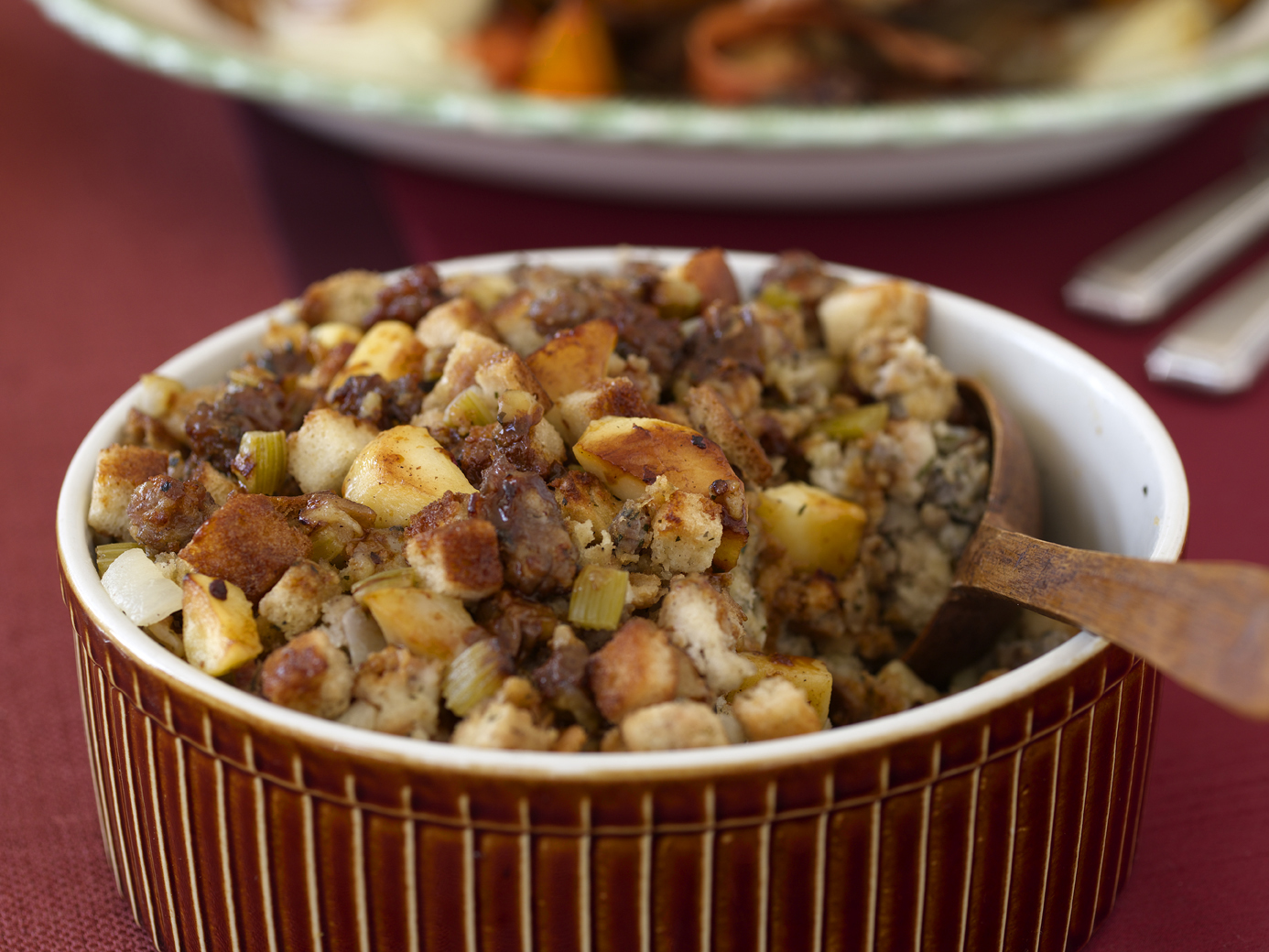
Stuffing is polarizing. People argue about it constantly. Some folks insist on oysters, while others get weirdly defensive about using cornbread versus white bread. But honestly? Most of us just want that specific, savory, sage-heavy flavor that reminds us of a crowded kitchen in November. That’s where the classic sausage stuffing recipe Jimmy Dean style comes in. It isn't fancy. It doesn’t use artisanal sourdough fermented for seventy-two hours. It uses a tube of pork sausage, some chopped veggies, and a lot of butter. And it’s usually the first thing to vanish from the table.
Most people mess up stuffing because they’re afraid of moisture. They end up with a tray of dry croutons or, even worse, a literal brick of mush. To get it right, you have to understand the fat-to-liquid ratio. Jimmy Dean sausage is high in fat. That’s a good thing. That rendered fat coats the bread cubes, creating a barrier so they don't just dissolve when you pour in the turkey stock. It’s chemistry, basically.
The Core Components of a Better Bird Filler
You need the regular Premium Pork Sausage. Don't grab the maple one unless you want your Thanksgiving to taste like a pancake house. The "Regular" or "Sage" varieties are the gold standard here. Sage is the dominant herb in traditional American stuffing, and using the sage-infused sausage helps layer that flavor so it doesn't just taste like wet bread.
You’ll need about sixteen ounces of sausage for every ten to twelve cups of bread cubes. If you use less, it’s just bread. If you use more, it gets greasy. Balance matters.
Then there’s the "Holy Trinity" of stuffing: onion, celery, and butter. Don't skimp on the butter. Use a full stick. Maybe a stick and a half. We aren't making a salad. You want to sauté those vegetables until they’re translucent and soft. Nobody wants a crunchy onion in the middle of a soft spoonful of stuffing. It ruins the vibe.
Choosing the Right Bread
Store-bought bagged stuffing cubes are fine. They’re consistent. However, if you want to level up, buy a loaf of cheap white bread and a loaf of French bread, cube them yourself, and let them sit out overnight. Stale bread is essential. Fresh bread turns into paste the second it touches broth. If you’re in a rush, toast the cubes in a 300-degree oven for twenty minutes. You want them feeling like rocks.
How to Execute the Sausage Stuffing Recipe Jimmy Dean Method
Start by browning the sausage in a large skillet. Break it up small. You don't want giant meatballs; you want little crumbles that distribute everywhere. Once it's browned, don't you dare drain all that fat. Keep a tablespoon or two in the pan. Toss in your diced onions and celery.
Some people add apples or dried cranberries. That’s fine if you like sweet and savory, but the purists usually stick to the basics. If you do add apples, use something tart like a Granny Smith so it holds its shape.
The Liquid Gold Moment
This is where people panic. How much broth?
Start with two cups of chicken or turkey broth. Whisk two eggs into the broth before you pour it over the bread and sausage mixture. The eggs act as a binder, giving the stuffing that slightly custardy, rich texture rather than just being a pile of loose grains. Pour it slowly. Toss gently. You want the bread to be damp but not swimming. If there’s a pool of liquid at the bottom of the bowl, you went too far. Add more bread or just pray the oven evaporates the excess.
Common Mistakes That Ruin Your Side Dish
The biggest mistake? Over-mixing. If you stir it like you’re whipping a cake batter, you’ll break the bread cubes down into a slurry. Use a big spatula or even your hands. Fold it.
Another disaster is under-seasoning. Most people assume the sausage has enough salt. It usually does, but the bread and the vegetables don't. Taste the mixture before you add the raw eggs. If it tastes bland now, it’ll be boring later. Add black pepper, a little extra poultry seasoning, and a pinch of salt.
To Stuff or Not To Stuff?
Food safety experts at the USDA will tell you that stuffing the bird is a gamble. To get the stuffing to a safe 165°F, you often have to overcook the turkey breast until it’s the texture of drywall.
Cooking the stuffing in a casserole dish—technically making "dressing"—is just easier. You get more crispy bits on top. Everyone fights over the crispy bits. To get that perfect crust, dot the top of the dressing with small pieces of butter before sliding it into the oven. Cover it with foil for the first thirty minutes to steam the inside, then rip the foil off for the last fifteen to brown the top.
Why This Specific Flavor Profile Works
There’s a reason Jimmy Dean has dominated this niche for decades. It’s the spice blend. It’s heavy on the black pepper and sage, which cuts through the richness of the turkey and gravy. When you use a generic "breakfast sausage," it often lacks that punch.
If you're looking to experiment, try mixing in some chopped fresh parsley right at the end. It adds a pop of green and a bit of freshness that cuts through the "brown-on-brown" color palette of a holiday plate.
Storage and Reheating
Stuffing actually tastes better the next day. The flavors marry. The bread fully absorbs every drop of fat and broth. To reheat it without turning it into a rubber puck, add a splash of broth over the top and cover it with foil. Heat it low and slow.
Actionable Steps for Your Next Holiday Meal
If you're ready to make this, don't wait until the morning of the big dinner to prep.
- Dry your bread two days early. Spread it out on baking sheets and just leave it on the counter.
- Chop the veg the night before. Keep the onions and celery in a sealed container so your whole fridge doesn't smell like a deli.
- Brown the sausage in advance. You can cook the sausage and veg mixture, cool it, and keep it in the fridge.
- Assemble and bake. Combine everything right before it goes in the oven.
- Use a thermometer. Don't guess. Check the center of the dish to ensure it reached 165°F.
Following these steps ensures the bread keeps its integrity while absorbing all that savory sausage goodness. It’s a foolproof way to handle a dish that people have surprisingly high emotional stakes in.