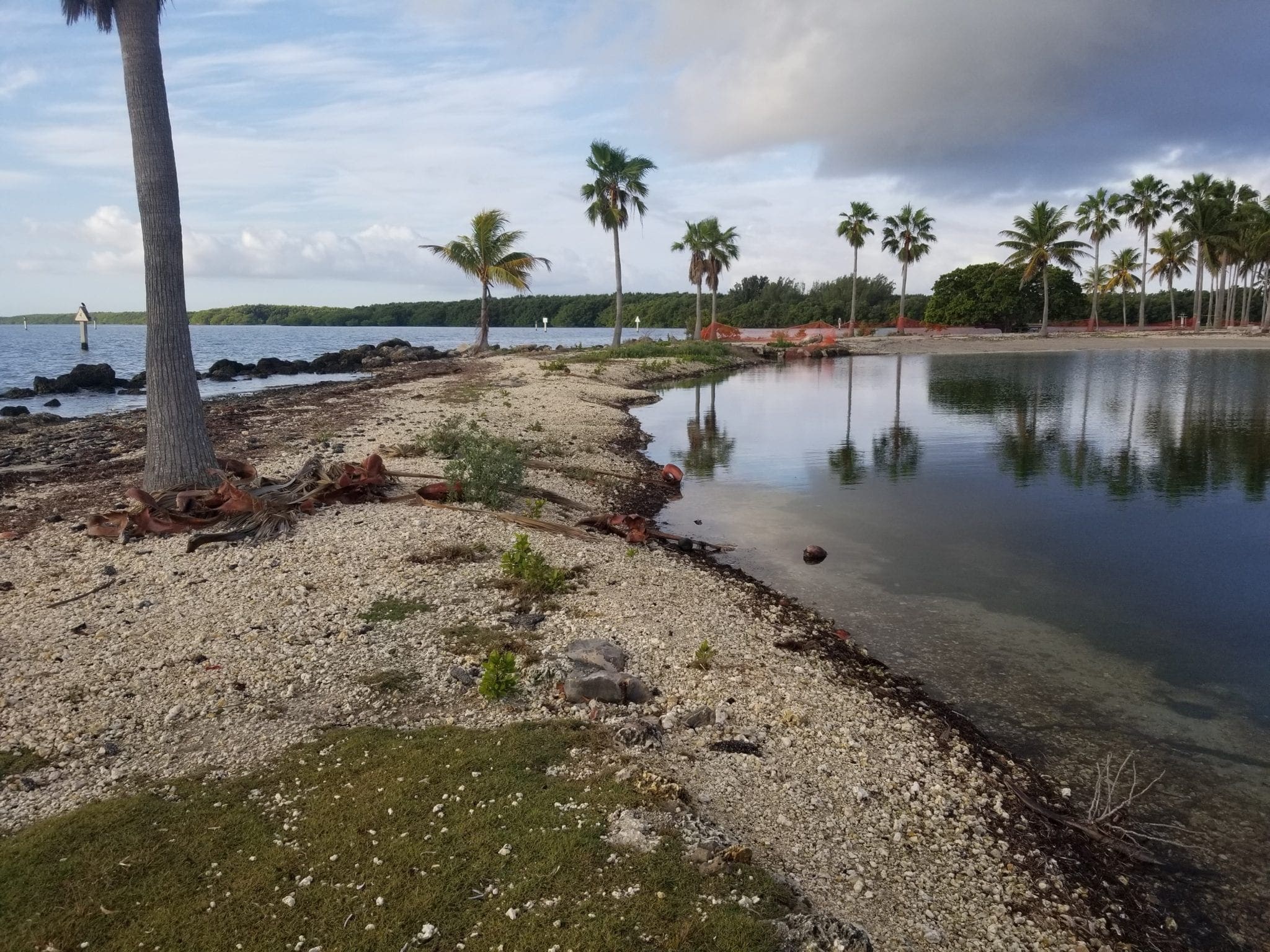
If you’ve lived in Miami for more than a week, you’ve probably heard of Matheson Hammock Park. It’s the one with the man-made atoll pool, the fancy restaurant in a coral rock building, and the kiteboarders catching air on the breezy side of Biscayne Bay. But there is a second, quieter half that most people literally drive right past without a second glance. It's called West Matheson Hammock Park, and honestly, it is a completely different world.
While the "east" side is all about the ocean and the views, the west side is a dense, tangled, and wonderfully messy slice of tropical hardwood hammock. It’s located just across Old Cutler Road. If you aren't looking for the entrance, you'll miss it. It’s basically a massive off-leash dog heaven that feels more like a forest in the Carolinas than a park in a major metropolitan area. Well, minus the humidity. The humidity is still very much Miami.
What is West Matheson Hammock Park exactly?
Most people get confused about the layout here. West Matheson Hammock Park isn't just an overflow parking lot or a backup plan for when the beach is full. It’s a 100-acre-plus expanse of land that serves as a critical buffer for the local ecosystem. You’ve got the cypress wetlands, the mangroves, and that high-ground hammock that gives the park its name.
The vibes here are casual. Really casual.
While the main park has a gate house and fees, the west side is often where locals go to disappear for an hour. It’s rugged. The trails aren't paved with pristine asphalt; they’re often dirt, limestone, and roots that want to trip you if you’re looking at your phone instead of the canopy.
The Dog Culture
Let’s be real: if you come here, you’re going to see dogs. Lots of them.
Technically, Miami-Dade County has specific rules about leashes, but West Matheson Hammock Park has long existed in a sort of "gentleman’s agreement" space for dog owners. It is arguably the most popular unofficial off-leash spot in the Gables. You’ll see Labradors sprinting through the underbrush and Goldens covered in mud from the low-lying areas. It’s a community. You see the same people every Tuesday at 5:00 PM. They know each other’s dogs’ names but probably don’t know each other’s last names.
If you aren’t a dog person, this might be a dealbreaker. But if you are, it’s basically Disneyland.
The History You’re Walking Over
This land wasn't always a park. Back in the 1930s, the Matheson family—who were massive players in the early development of Miami—donated this land to the county. William J. Matheson wanted to preserve the "hammock," which is a fancy ecological term for a stand of broad-leafed trees that grow on slightly elevated ground.
- It was the first county park in Miami-Dade.
- The CCC (Civilian Conservation Corps) did a lot of the heavy lifting here during the Great Depression.
- They built those iconic limestone structures you see scattered around the area.
Walking through the west side, you can still see the remnants of old nurseries and stone walls. It feels like the jungle is slowly reclaiming what was once a very manicured estate. There’s something kinda poetic about that, isn't there? The way the banyan trees wrap their aerial roots around anything that stays still long enough.
Navigating the Trails and the Mud
Don’t wear your expensive white sneakers here. Just don't.
West Matheson Hammock Park can get incredibly muddy after a typical South Florida afternoon thunderstorm. Because the elevation is so low, the water sits in the limestone pockets. Some parts of the trail can turn into a swamp overnight.
- The main loop is wide and relatively easy to follow.
- The side trails are where things get interesting. These narrow paths wind through dense foliage where the light barely hits the ground.
- Expect spiders. Specifically, the Golden Silk Orb-weavers. They’re huge, they’re intimidating, but they’re harmless. Just keep an eye out so you don’t walk face-first into a web.
Birding and Wildlife
If you’re a photographer, bring the long lens. This is a prime spot for spotting Yellow-crowned Night Herons and various migratory warblers. Because it’s quieter than the seaside portion of the park, the wildlife is less skittish. I’ve seen pileated woodpeckers hammering away at dead snags just a few feet off the trail. It’s loud. It sounds like someone is using a jackhammer in the middle of the woods.
The Practical Reality of Visiting
Parking can be a bit of a nightmare on weekends. Since the entrance is right off Old Cutler Road, the small gravel lot fills up fast. People end up parking along the shoulder, which is a bit sketchy given how fast people drive on that road.
The park is free to enter on the west side, which is a huge plus.
- Hours: Sunrise to sunset. Don't be there after dark; the mosquitoes will literally carry you away.
- Amenities: Minimal. There aren't bathrooms every fifty feet like in the main park. There are a few trash cans and a couple of benches, but that’s about it.
- Water: Bring your own. There aren't many functioning water fountains on this side of the street.
Why it Matters for Coral Gables
Miami is a city that is rapidly being paved over. We love our high-rises and our luxury condos. Places like West Matheson Hammock Park are the lungs of the city. They help manage drainage, they keep the temperature down (it’s usually about 5 degrees cooler under the canopy than on the street), and they provide a mental break from the gridlock on US-1.
It’s a "wild" park. Not a "manicured" park.
If you want a playground and a BBQ pit, go to the east side. If you want to feel like you’ve traveled back in time to what Florida looked like before the air conditioner was invented, stay on the west side.
Getting the Most Out of Your Visit
To actually enjoy yourself, you need to change your expectations. This isn't a place for a power walk. It’s a place for a wander.
Look for the "Big Tree." There are several massive Banyan and Oak trees that have survived decades of hurricanes. Their scale is hard to capture in a photo. You have to stand under them to feel how old they are.
Also, keep an eye on the ground for solution holes. These are pits in the limestone caused by acidic rainwater. Some are small; some are deep enough to twist an ankle. It’s part of the raw charm of the place.
Actionable Steps for Your Trip
- Check the Tide: Even though this is the "land" side, the water table is linked to the bay. If it’s been raining heavily or there's a King Tide, the lower trails will be underwater.
- Bug Spray is Non-Negotiable: Use the heavy-duty stuff. The "natural" lemon-eucalyptus spray won't save you from the salt marsh mosquitoes here.
- Download an Offline Map: Cell service can be surprisingly spotty once you get deep into the hammock, and it’s easy to get turned around on the smaller winding paths.
- Hydrate Your Dog: If you’re bringing a pup, bring a collapsible bowl. They’ll be running a lot and the humidity hits them harder than it hits you.
- Time Your Arrival: Aim for 8:00 AM on a weekday. You’ll have the place almost entirely to yourself, and the morning light filtering through the oaks is incredible for photos.
West Matheson Hammock Park remains one of the few places in Miami where you can truly escape the noise. It isn't polished, it isn't fancy, and it doesn't care about your Instagram aesthetic. It’s just raw, green, and wonderfully peaceful. Whether you're there to tire out a high-energy dog or just to hear the wind in the mangroves, it's a slice of the real Florida that is becoming harder and harder to find.