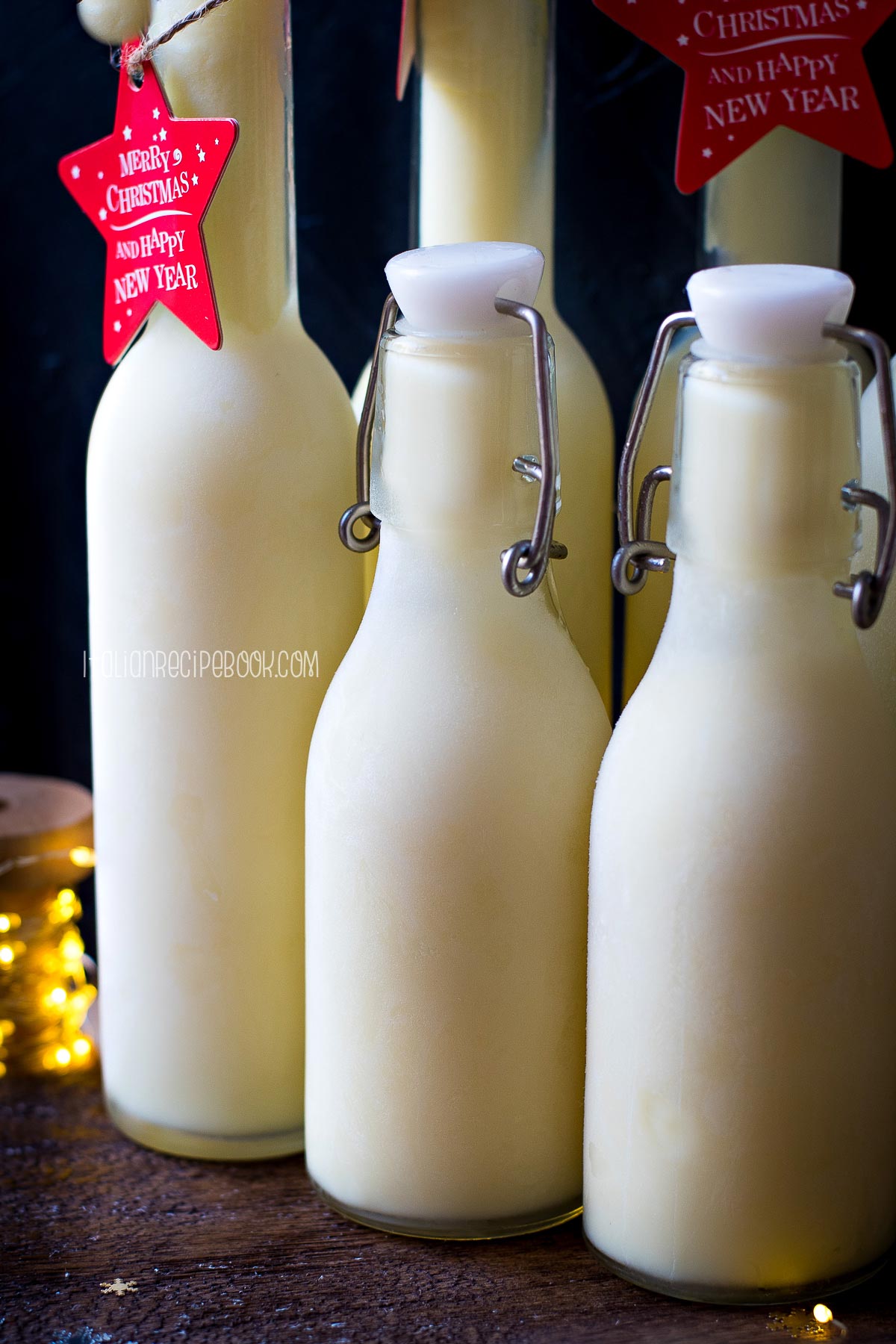
You’ve had it. That frosty, opaque yellow bottle pulled straight from an Italian freezer. It’s thick. It’s sweet. It tastes like a lemon cloud. Then you go home, buy a bag of lemons, and try a limoncello recipe with cream yourself. Usually, it’s a disaster. It curdles. Or it’s too watery. Or, worst of all, it tastes like furniture polish because you messed up the maceration period.
Making Crema di Limoncello isn't just about dumping milk into vodka. It’s chemistry. High-proof alcohol is aggressive. Dairy is sensitive. When they meet, things get weird. But if you get the ratio of essential oils to milk fat just right, you end up with something better than any store-bought bottle of Pallini.
Honestly, most people overcomplicate the "steeping" part and under-think the "emulsion" part.
The Chemistry of a Great Limoncello Recipe with Cream
First, let's talk about the lemons. You aren't using the juice. Forget the juice. The juice is acidic and will kill your cream instantly. You want the zest. Specifically, you want the flavedo—that bright yellow outer layer. The white pith underneath? That’s the albedo. It’s bitter. It contains tannins that will ruin the delicate profile of a cream liqueur.
If you use a standard vegetable peeler, you’re probably getting too much pith. Use a microplane or a very sharp pairing knife and scrape the back of the peels. If you see white, keep scraping. You want translucent yellow ribbons.
Why Alcohol Percentage Matters
You need high-proof grain alcohol. We’re talking Everclear (190 proof) or at least a 100-proof vodka. Why? Because alcohol is a solvent. It needs to pull the oils out of the lemon skins. Lower-proof spirits contain too much water, which doesn't extract the lemon flavor nearly as efficiently.
If you use 80-proof vodka, your limoncello recipe with cream will taste "thin." The alcohol won't be strong enough to hold the fats in the cream in a stable suspension once you freeze it. You want that high proof to act as a preservative and a stabilizer.
The Secret Ingredient Nobody Mentions: Fat Content
I’ve seen recipes calling for 2% milk. Stop. Just stop.
A proper limoncello recipe with cream requires a mix of whole milk and heavy cream. Some traditionalists in Sorrento even use a shelf-stable UHT milk because it has been heat-treated in a way that prevents it from separating as easily when hitting the alcohol.
Think about the texture. You want it to coat the back of a spoon. To achieve that, you need a high fat-to-sugar ratio. Sugar isn't just for sweetness here; it acts as an antifreeze. Without enough sugar, your cream limoncello will turn into a lemon popsicle in the freezer. You want it slushy and pourable, even at 0°F.
The Infusion Timeline: Don't Wait a Month
There is a massive myth that you need to steep lemon peels for 40 days and 40 nights like some biblical event. Research into the maceration of citrus peels shows that about 90% of the essential oils are extracted within the first 3 to 7 days, provided you’re using high-proof spirit.
Leaving the peels in for a month doesn't make it "more lemony." It just starts extracting the bitter notes from whatever microscopic bits of pith are left. Keep it short. Five days. Seven tops. Shake the jar once a day. That’s it.
Step-by-Step: The Only Recipe You Need
Here is the breakdown. No fluff.
The Lemon Base:
Take 10 to 12 large organic Sorrento or Meyer lemons. Wash them. Scrub the wax off if they aren't organic—boiling water helps with this. Peel them carefully. Put those peels into a glass jar with 750ml of 190-proof grain alcohol. Store it in a dark, cool place.
The Cream Mixture:
After a week, it’s time for the dairy.
- 700ml of whole milk
- 300ml of heavy whipping cream
- 700g of granulated sugar
- One vanilla bean (optional, but it rounds out the sharp edges)
Combine the milk, cream, sugar, and the scraped vanilla bean in a large pot. Heat it over medium. Do NOT boil it. You just want the sugar to dissolve. Once it’s smooth, let it cool completely. This is the part where people get impatient. If you add hot cream to cold alcohol, it will curdle. Let it reach room temperature, then chill it in the fridge.
The Marriage:
Strain the lemon peels out of the alcohol. Discard the peels (or candy them if you’re feeling ambitious). Slowly—and I mean slowly—pour the lemon-infused alcohol into the cold cream mixture while whisking constantly.
The color change is magical. It goes from a translucent yellow to a pale, creamy custard color.
Why Your Limoncello Might Separate
Separation is the enemy. Usually, this happens because of "louching," which is when the essential oils drop out of the solution. In a limoncello recipe with cream, separation often looks like a clear layer at the bottom and a thick head of foam at the top.
To prevent this:
- Use a stabilizer: Some people add a tiny pinch of xanthan gum, but that feels a bit "industrial." A better way is to ensure your sugar content is high enough.
- Temperature control: Always add alcohol to cream, not vice versa.
- The "Slow Pour": Whisking creates a stable emulsion.
If it does separate, don't panic. Just shake the bottle before serving. It’s still safe to drink, it just looks a bit less professional.
Serving and Storage Secrets
You do not drink this at room temperature. You just don't.
Store your bottles in the freezer. Because of the alcohol and sugar content, it won't freeze solid. It will become thick, like a drinkable gelato. Use small, chilled ceramic cups or shot glasses.
The Shelf Life Myth:
Unlike regular limoncello, which lasts forever, the cream version has a ticking clock. Even with the alcohol acting as a preservative, the dairy will eventually oxidize. It’s best consumed within 3 to 6 months. If it smells "off" or like old butter, toss it. But honestly, it usually disappears within two weeks of making it anyway.
Common Mistakes to Avoid
- Using Bottled Lemon Juice: Just don't. It’s too acidic and the flavor is flat.
- Plastic Containers: The high-proof alcohol can leach chemicals out of certain plastics. Use glass. Always glass.
- Cheap Alcohol: If the vodka tastes like gasoline, the limoncello will taste like lemony gasoline. Buy the decent stuff.
- Too Much Pith: I’ll say it again—the white stuff is the enemy. It creates a medicinal aftertaste that the cream can't hide.
Variations Worth Trying
Once you've mastered the basic limoncello recipe with cream, you can tweak the flavor profile.
Some people love adding a splash of Grappa at the end for an earthy kick. Others replace the vanilla with a cinnamon stick during the milk-heating phase. If you want a "Crema di Arancello," just swap the lemons for blood oranges. The process is identical, but the result is a vibrant pink cream that tastes like a high-end dreamsicle.
A surprising trick used by some Italian families is adding a small amount of white chocolate to the warm milk. It boosts the fat content and adds a silky mouthfeel that sugar alone can't replicate. Just make sure it’s high-quality cocoa butter-based chocolate, not the "candy melts" from the craft store.
Actionable Next Steps
- Source the right lemons: Look for "heavy" lemons—they usually have more oil in the skin. If you can find Meyer lemons, use them; they are a cross between a lemon and a mandarin and make a much sweeter, floral cream.
- Order 190-proof spirit: If you live in a state where this isn't sold, look for the highest proof vodka available (like Devil's Springs or Balkan 176).
- Prep your bottles: Clean and sterilize glass swing-top bottles. This isn't just for safety; it makes for a much better gift presentation.
- Start the infusion today: Peeling takes 10 minutes. The alcohol does the rest of the work while you sleep.
By the time next weekend rolls around, your cream base will be ready to mix, and you'll have a batch of liquid gold ready for the freezer. No more settling for the syrupy, artificial stuff from the liquor store.